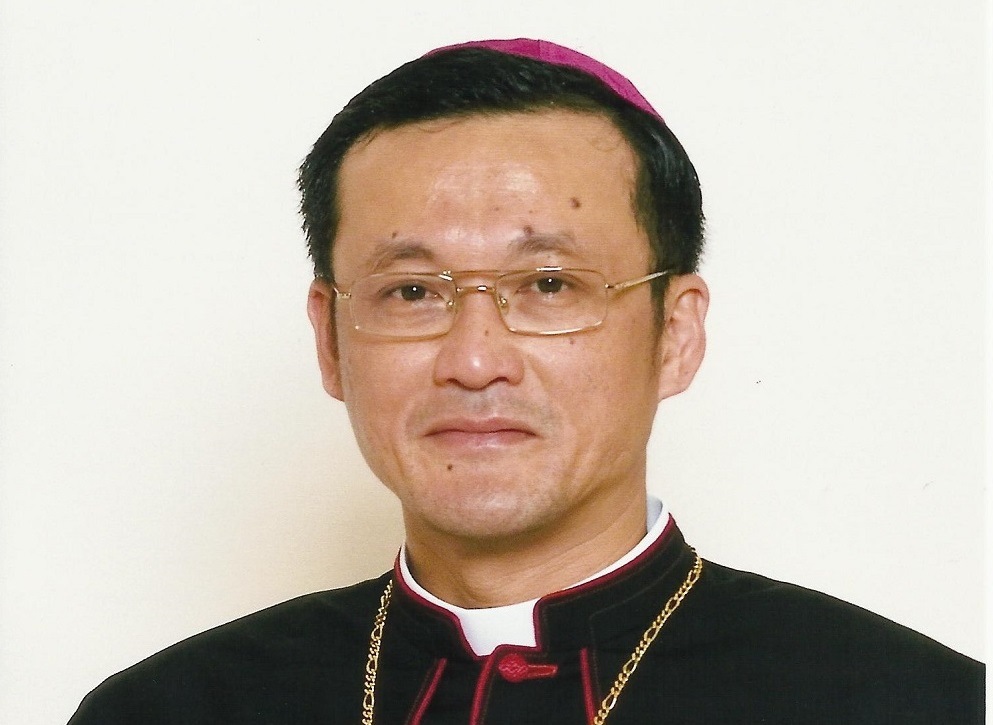














By Joseph Tek Choon Yee
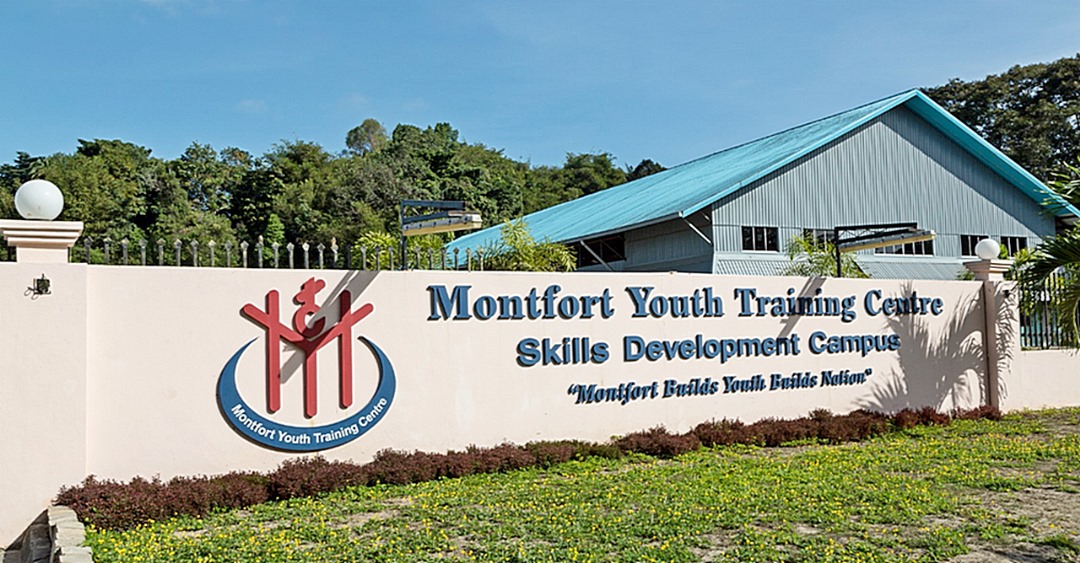
My journey as a board member with the Montfort Youth Training Centre (MYTC) in Kinarut, Sabah began in 2016, though I must confess, it wasn’t entirely of my own design. I was first enticed by the late Helena Kwan and nudged further by Br Francis Xavier Gasper, whose persistence was only matched by their passion. Together, and with many other committed hearts, we helped spearhead MYTC’s fourth module of skills training, a programme close to my own professional roots: oil palm plantation conductorship. Another grand aspiration is in the pipeline, the revival of the girls’ youth training programme.
I still chuckle at the memory of how the deal was sealed. Br Gasper always recalls how my daughter, speaking on my behalf, asked with childlike frankness: “My dad is a very busy person, you know? What exactly does this role entail?” It was a fair question, and one that pierced the armour of polite hesitation better than any formal invitation could.
It was at St Paul’s Chapel that I finally decided, yes, I would commit to this role. Since then, the journey has been one of immense fulfilment: working alongside the Brothers, fellow board members and the dedicated management team, all united by a common vision of empowering youth who deserve not just training, but dignity and hope.
But my true affirmation lies in witnessing the transformation of young men who graduate from MYTC. Their journey is far more than education alone, it is a story of growth, resilience and the unlocking of their hidden potential through guidance, mentorship and the strength of a supportive community.
And yet, stepping into this role makes one quickly realise the value of knowing the story behind it, the Montfortian roots that ground MYTC, the pioneering Brothers who laid its foundation, and above all, the daring spirit of its founder, Saint Louis-Marie de Montfort.
This, then, is my telling of that story.
St Louis Marie Grignion de Montfort
Every saint has a signature style. Francis had his birds, Ignatius had his spiritual exercises, and Louis-Marie de Montfort? He had a pen that wouldn’t stop, a voice that could rattle villages, and an imagination stubborn enough to believe that even the poorest children deserved to learn.
Born in 1673 in Montfort-sur-Meu, France, Montfort was not the kind of priest who blended into the wallpaper. He preached like a storm, direct, passionate, unafraid to ruffle dignified feathers. His mission was simple: bring people closer to Christ, especially the forgotten and the poor. To do that, he relied on vivid catechesis, Marian devotion and practical works of mercy. He wrote classics like True Devotion to Mary and left behind a trail of stirred hearts. Bishops didn’t always know what to do with him; some welcomed him, others kept him at arm’s length. But Montfort never slowed down. Saints rarely do.
Montfort never drew up plans for a teaching order. He simply preached, taught and established small schools where he could. What he did leave, however, was a vision: education and faith should never be luxuries reserved for the rich. Children of farmers and day labourers mattered as much as princes and professors.
Montfort never worked alone. As he travelled from town to town preaching missions, he was joined by lay brothers who shouldered the practical work: teaching, organising and keeping the mission grounded. By the late 1700s, these brothers had become indispensable; out of nearly 300 missions preached in that century, brothers were present at almost all of them.
When St Louis de Montfort died in 1716, many feared his mission would wither with him. Instead, the seeds he had sown took root and flourished. His zeal inspired new communities that carried the mission forward, the Daughters of Wisdom, the Company of Mary, and lay men who took charge of his schools, later becoming the Montfort Brothers of St Gabriel.
Because of the upheavals of the French Revolution, Louis de Montfort’s beatification process only began in 1825. After decades of effort, he was beatified in 1888 by Pope Leo XIII. Wars and politics delayed the canonisation, but in 1947 Pope Pius XII declared him a saint. His feast day on April 28 honours a saint whose life of preaching, writing and service continues to shape Marian devotion and mission today. Nearly fifty years later, in 1996, Pope John Paul II, deeply shaped by Montfort’s Marian spirituality, prayed at his tomb, honouring the saint he called a spiritual father. His spiritual classics like True Devotion to Mary, inspired Pope John Paul II’s motto Totus Tuus (“totally yours”).
Montfort Brothers of St Gabriel (BSG)
Montfort himself never founded the BSG, but his spirit animates them still. If he were alive today, he would likely still be preaching fiery missions, writing books that unsettled the comfortable and nudging ordinary men to take on extraordinary tasks, like teaching children with nothing but chalk, courage and faith (and today, perhaps with PowerPoint or AI tool for good measure).
Ordinary men stepped up to carry on Montfort’s vision. They weren’t polished clerics but lay brothers convinced that teaching the young was itself a holy calling. The Brothers are called the Brothers of St Gabriel (BSG) because, after the turbulence of the French Revolution, their scattered communities were reorganised in the early 19th century under the leadership of Fr Gabriel Deshayes. He gave them structure, stability and a fresh start.
By 1824, they were officially recognised as the Brothers of Christian Instruction of the Holy Spirit. Later, when their motherhouse was established at a place called Saint Gabriel in France, the name naturally stuck. Finally, in 1853, Napoleon III issued an imperial decree that confirmed their official title as the Brothers of Christian Instruction of St. Gabriel.
The symbolism is fitting. Just as the Archangel Gabriel brought Mary the Good News that would change the world, the Brothers became messengers of hope through classrooms instead of pulpits. Their sermons were not fiery homilies but the quiet rhythm of chalk on blackboards, welding sparks in workshops and lessons that gave dignity to the poor.
The Montfort Brothers live to make Christ present in the world through their consecrated life and community witness. Rooted in fraternity, they commit themselves to education, especially of the young, the poor and the neglected, as their way of evangelisation. Their charism calls them to stand with the marginalised, to listen to the needs and hopes of youth, and to respond with faith, service, and creativity. Always available for the mission of the Church, they remain open to the world, ready to bring light wherever it is most needed.
From those humble beginnings, the BSG spread far and wide, across France, then into India, Africa, and Southeast Asia, including Malaysia and eventually Sabah. Often, they arrived in places where classrooms were mud huts, textbooks scarce and futures uncertain. Yet their mission thrived, proving again and again that education is not only about making a living, but about making a life rooted in faith, service and love.
St Louis de Montfort would surely grin to see the Montfort Brothers today: proof of what he always knew , sometimes the holiest legacies are not the ones you plan, but the ones you inspire.