
























By Alex Hoang
Vietnam is undergoing a profound demographic transition that remains surprisingly underdiscussed: rapid population aging.
According to assessments by the United Nations and the World Health Organization, Vietnam is among the fastest-aging countries in Asia.
What makes this shift particularly challenging is that it is happening before the country becomes wealthy and before a comprehensive system of long-term elderly care has been fully established.
Within just a few decades, the proportion of people aged 60 and above has risen sharply. At the same time, the social arrangements that once sustained older generations — multi-generational households, tightly knit rural communities, and family-based care — are weakening under the pressures of labor migration, urbanization, and rising living costs.
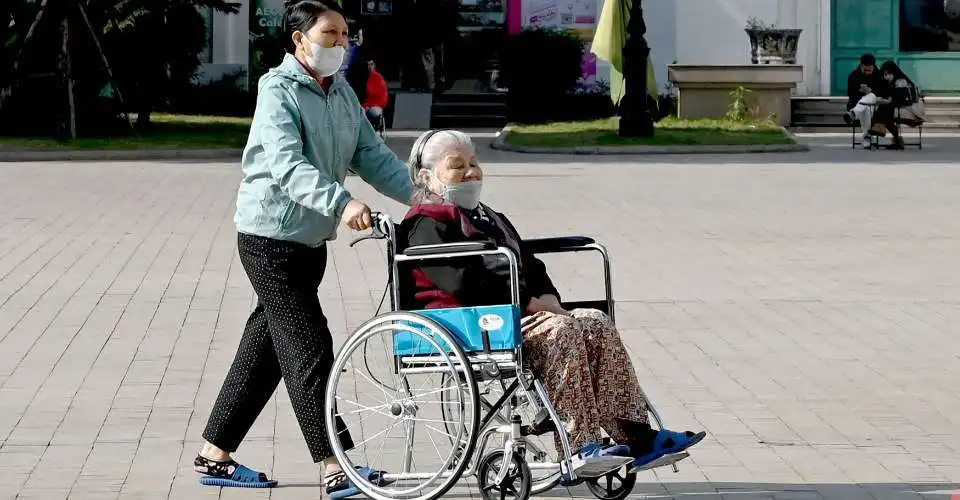
Aging is no longer a distant concern. It is already visible in villages short of working-age adults, in industrial zones where children work far from home, and in the growing number of elderly people living alone, reliant on modest social assistance or irregular community support.
Nursing homes and cultural barriers
In many countries, nursing homes are a routine part of the social welfare landscape. In Vietnam, however, they remain burdened with cultural stigma. Placing parents in a nursing home is often perceived as a sign of filial failure rather than a practical response to care needs.
This moral pressure pushes many families to cope on their own, even when they lack the time, physical capacity, or professional skills required for long-term care.
Meanwhile, alternatives have developed unevenly. State-run social protection centers mainly serve elderly people in extreme circumstances and have limited capacity. Private nursing homes have emerged in major cities such as Hanoi and Ho Chi Minh City, but high costs place them beyond the reach of most families.
As a result, a persistent gap remains — particularly for older people who have neither family support nor sufficient financial resources.
Quiet presence of Catholic religious orders
Within this gap, a less visible reality has taken shape. Across Vietnam, a number of small-scale care facilities are operated by Catholic religious orders. These are not large institutions but long-standing community-based homes that accept elderly people who are poor or alone, regardless of religious affiliation, often without public visibility or formal recognition.
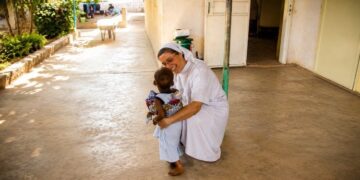
One prominent example is the Little Sisters of the Poor, an international congregation dedicated specifically to elderly care. In Vietnam, their communities have for years provided residential care, basic medical support, and communal life for older people until the end of life. Their work is occasionally documented in Catholic media, yet rarely appears in official social welfare statistics.
Similarly, the Daughters of Charity of Saint Vincent de Paul maintain several homes receiving elderly people living in poverty, particularly in southern Vietnam. Beyond caring for orphans and people with disabilities, their communities increasingly accommodate older adults who lack family support or cannot afford private care.
At the community level, Caritas Vietnam and diocesan Caritas networks play an important role in community-based elderly care. Through regular visits, food and medical assistance, and social connection, they reach elderly people living alone — especially in rural areas where formal services are scarce.
In northern dioceses such as Hung Hoa, Bui Chu, and Thai Binh, where economic conditions remain constrained, many congregations lack dedicated eldercare facilities altogether. Instead, elderly people are taken into convents or cared for through rotating home visits, often with minimal infrastructure and limited personnel.
Invisible care work
A common thread across these arrangements is unpaid care work. In Vietnam, much of elder care — within families and religious communities alike — is carried out without wages and largely by women.
Nuns, like many female caregivers in households, shoulder responsibilities that neither markets nor public policy have adequately addressed. This labor remains largely invisible precisely because it occurs where formal systems do not reach, yet it plays a critical role in preventing social support structures from being overwhelmed.
Care for the elderly in Vietnam is not the responsibility of any single institution. Alongside religious initiatives, state-run social protection centers continue to serve elderly people without family support. Private nursing homes cater to families with sufficient financial means.
At the community level, the Vietnam Association of the Elderly focuses on social engagement and policy advocacy, while some Buddhist institutions maintain small-scale charitable care for older people in need.
In addition, organizations such as HelpAge International Vietnam concentrate on community-based support and policy improvement. Together, these efforts reflect a shared recognition that caring for an aging population requires multiple actors working in parallel.
Social trust, sustainability, and silence
In an environment where care services for thr elderly lack unified standards and oversight, social trust becomes decisive. Families’ choices often reflect whom they trust rather than formal evaluations of quality.
Yet models that rely heavily on moral commitment and personal sacrifice raise questions of sustainability — especially as caregivers themselves age and resources remain limited.
Despite the growing number of elderly people living alone, the issue rarely becomes a subject of sustained public debate. Older people have limited capacity to advocate for themselves or shape policy priorities. Their relative silence, in this sense, is itself a social signal.
The Catholic Church neither seeks nor claims to replace the state in providing care for the elderly. Its involvement points instead to a broader societal reality: when demographic change outpaces institutional readiness, care is often sustained through a patchwork of family effort, community solidarity, and moral commitment.
Population aging is not only a challenge of old age. It is a test of how prepared a society is to care for those who can no longer speak loudly for themselves — and, ultimately, of how it understands responsibility, dignity, and the future into which it is growing. – UCA News
*The views expressed in this article are those of the author and do not necessarily reflect the official editorial position of UCA News.