






By Richard Solomon
ON Feb 22, I attended Mass at the Church of St Joseph, Sentul. It was a memorial Mass offered for a man in France who had recently passed away at the age of 91.
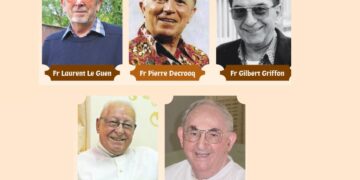
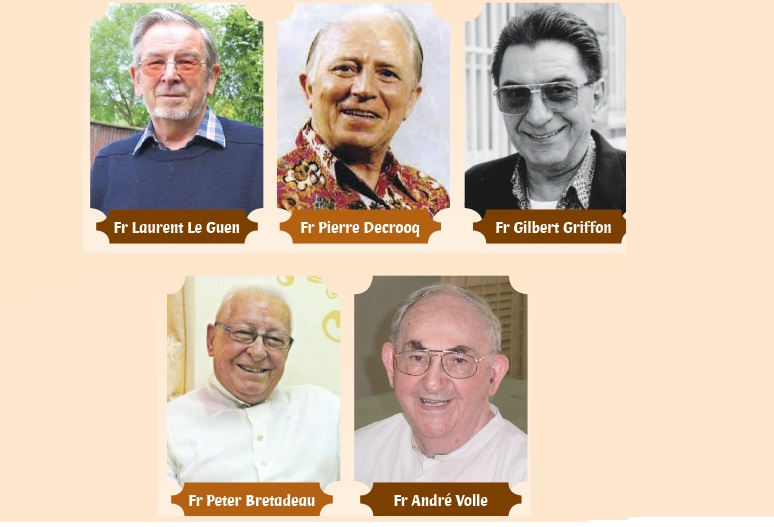
His name was Mr Laurent Le Guen, formerly known to many as Fr Laurent Le Guen.
Yes, he was once a Catholic priest, serving as assistant parish priest of the Church of St Joseph from 1963 to 1966, and later as parish priest from 1967 to 1971. He would later lay aside the priesthood and live as a simple layman, known as Mr Le Guen, having chosen a different path in life.
My first encounter with him took place on a bright Sunday morning in November 1966, at the Church of St Joseph, during a traditional baptism. That morning, he welcomed me into the fold of the Roman Catholic faith.
At the time, Fr Le Guen was the assistant parish priest. Some forty years later, I met him again in Kuala Lumpur — this time accompanied by his lovely wife. To see a man once clothed in the priestly robe now living as an ordinary layman felt strange, almost unheard of, yet entirely true. We spoke briefly, and I told him that he was the priest who had baptised me all those years ago.
Why am I writing about the MEPs?
Because much of the growth of the Roman Catholic faith in Malaysia was nurtured by the MEP priests. They brought us faith, formed our conscience, and guided communities to make a difference in society.
I grew up in Kepong Baru, at the Church of Jesus Caritas. Before the present church building, it began as a corner shop house, and even earlier, on the grounds of the Canossian Convent in Jinjang.
The parish priest then was another Frenchman, Fr Pierre Decroocq. He was my priest from my early childhood until his passing in 1985. He was known for wearing batik shirts and driving a white Toyota KE30 — though one would hesitate to say whether it was the car or his driving skills that got us safely to our destination!
I still remember him walking into our Standard 6 Sunday school class to announce the death of Pope John Paul I. We prayed together for the repose of the pope’s soul.
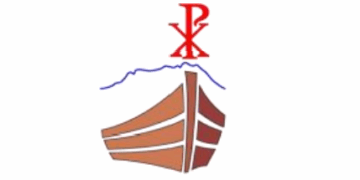
On another Sunday, when our teacher was absent, Fr Decroocq took over the class and asked if we knew the history behind the Jesus Caritas logo. He explained that during his long imprisonment in China, he and fellow priests etched a symbol of a heart with a cross above it onto a prison wall. That wall became their altar.
When he was released, he traced the carving onto paper and somehow brought it with him to Malaysia. That symbol became the logo of Jesus Caritas, a symbol that still identifies the church in Kepong Baru today.
I last served as an altar boy at his funeral in 1985. Wherever he went, he built churches with the support of the Chinese community. Fluent in Mandarin, he brought towkays together to build both church and community.
Another French priest was Fr Gilbert Griffon, often seen zooming around Kuala Lumpur on his Honda CG125. I did not know him well personally, but he was a close friend of my family. I still have a photograph of him carrying me as a baby in our kampung house.
He spoke Tamil quite well. When he passed away, I was given his laptop, a Texas instrument, as a remembrance, though it has since been lost during a house move. Still, the memory of him remains vivid.
Fr Peter Bretadeau was the smallest man in priestly robes I ever met. He came from a family of race car drivers in France, yet he himself was a gentle and fine priest.
In an interview I recorded with him in the early 2000s, he shared how he arrived in Malaya without knowing a word of English. To learn the language, he returned to Standard One at St John’s Primary School, studying English alongside young boys all the way through to Standard Six.
Once he gained basic fluency, he was sent to Tamil Nadu, India, to learn to read and write Tamil. He later returned speaking acceptable Tamil, albeit with a distinct French accent, and was assigned to the Church of the Visitation, Seremban.
He had a witty mind and a cheeky smile, and his boyish appearance endeared him to the community.
One statement he made during the interview has stayed with me ever since: “Don’t preach from the pulpit. Reach out to them in their homes.”
He believed that priests should visit families, support children’s education, help housewives gain self-reliance through tailoring, and even provide sewing machines and training so families could sustain themselves.
Fr André Volle was a giant of a man, especially through the eyes of a teenager. He celebrated weekday Mass at the Cathedral of St John, which I attended before school. My school was next door to the cathedral.
I was initially frightened of him, by his towering presence and his French-accented English, of which I understood very little. Over time, however, I grew comfortable with him.
Wherever they came from, all these men were champions in bringing communities together.
I am deeply grateful to the MEP priests for shaping the minds and hearts of kampung boys like myself. Every MEP priest had something unique to offer.
I know of another MEP priest in Kampong Cham, Cambodia, a Tamil priest who has served there for over 35 years. Each week, he walks nearly 32 kilometres, rain or shine, to celebrate Mass for the Cham people — former slaves — along the Mekong River.
These MEPs truly walked in the footsteps of Christ.
To me, they are all champions. And to them, I offer my salute. – Herald Malaysia