























By UCA News Reporter
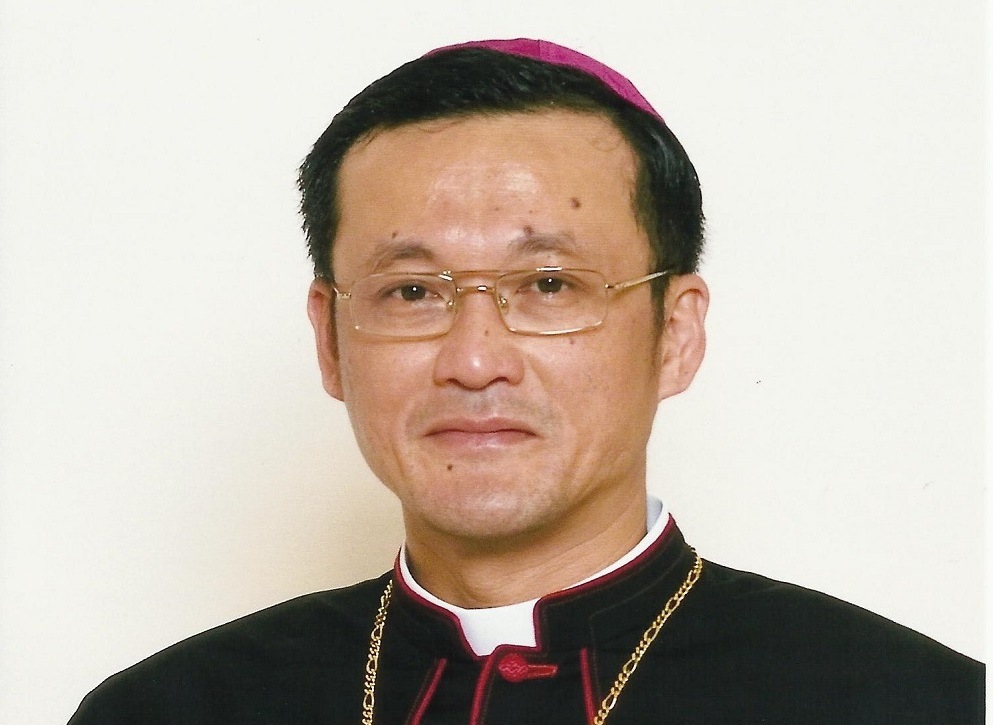
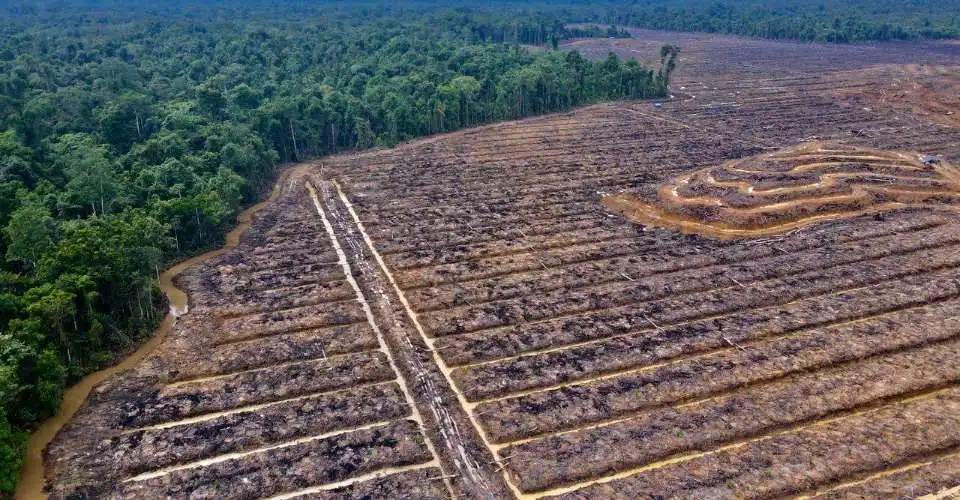
A Catholic bishop has joined rights activists and tribal leaders to oppose a government plan to expand palm oil plantations in Indonesia’s Papua region, terming the move a threat to environment and indigenous communities.
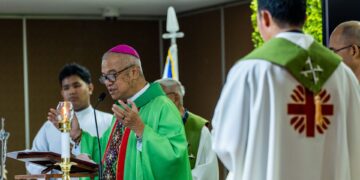
In a statement on Jan 8, Augustinian Bishop Bernardus Baru of Timika said expansion of oil plantations will have higher tolls on environment and forest-dependent local communities than so-called positive impacts claimed by the government of President Prabowo Subianto.
“Therefore, stop clearing forests. If you want the world to end quickly, go ahead. It won’t be long before the end of the world if the government persists with its plan,” Baru said in the statement.
He lamented that the world is becoming “increasingly greedy” and it wants to “destroy everything.”
“Humans should only need what they need,” the prelate added.
The government plan was disclosed in a statement from the President last month that stated, “Oil palms should be planted in Papua so that we can produce fuel from palm oil.”
The president claimed that within five years, all regions of Papua will become self-sufficient in food and energy from palm oil, thus saving national funds currently used for fuel subsidies.
Bishop Baru pointed to the recent devastating flood and landslide in Sumatra Island that claimed more than a thousand lives and blamed environmental destruction for aggravating the climate crisis.
He commended several regional heads, civil groups, and tribal forums for pushing back against the plan.
“Our local officials must also commit to maintaining the forests as customary rights of indigenous communities, because the land holds not only economic value but also sociological, philosophical, and religious values,” he said.
Tribal advocacy group, Pusaka Bentala Rakyat Foundation, reports that already 94 oil palm plantation companies are operating in Papua, covering an area of 1,332,032 hectares.
The foundation’s executive director, Franky Samperante, said that oil palm plantation expansion is occurring in several regions, such as Moi Sigin, Seget, and Klamono districts of Sorong Regency in West Papua.
Already, by 2025, about 6,056 hectares of forests will have been cleared for palm oil plantations, he said.
“This island is under threat, and forest loss occurs annually due to extractive projects, plantations, the timber industry, infrastructure development, and mining, all for the benefit of capital accumulation by a handful of financiers and those in power,” said Samperante.
He said the president’s statement embodies “colonial logic.”
“The most powerful state determines and changes the social life of the people and the natural environment in Papua, as if it were an empty space waiting to be filled by state projects,” he added.
Hendrikus Woro, leader of the Awyu tribe in South Papua, said that the Papuan people have been under threat from the expansion of food and energy self-sufficiency projects since former President Joko Widodo’s term in office.
“We feel the threat, and now we are traumatized by seeing the government clearing natural forests on a large scale,” he said, alluding to the strategic national food estate and energy project, which covers an area of approximately two million hectares.
The Papuan people, he said, do not need the government’s large-scale projects such as palm oil but rather need nature as a source of food and livelihood.
“Sumatra has just faced a major disaster, but why hasn’t the government repented? When the environment is damaged, people are also damaged,” he said.
The World Rainforest Movement strongly condemned the plan in a statement titled “President Prabowo Is Preparing Disaster For Papua,” released on Dec 22, 2025. – UCA News