






Interview by Ruben Sario and Peter Zeter/ Article was written by Ruben Sario
The dozen or so boys were startled awake at the sight of the muzzles of weapons trained at them and a uniformed officer barking out “Di mana paderi kamu?” (Where is your priest?)
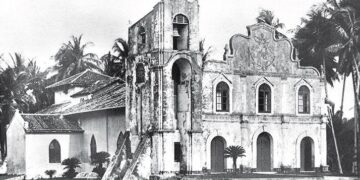
It was in the pre-dawn hours of Dec 1972 and the teenagers, including 14-year-old Ambrosius Stephen Tati, had fallen asleep on the verandah of the Holy Rosary church rectory at Limbahau in Papar district.
The teenagers were supposed to be standing guard at the rectory, on alert after word reached villagers in Limbahau of the detention and expulsion of foreign missionary priests around Sabah, including in nearby Papar, Tambunan and Kuala Penyu, following directives of the then-state government.
Ambrosius and his friends were supposed to be on the lookout for security personnel and do whatever they could to prevent the detention of their rector, Fr John Goedhart.
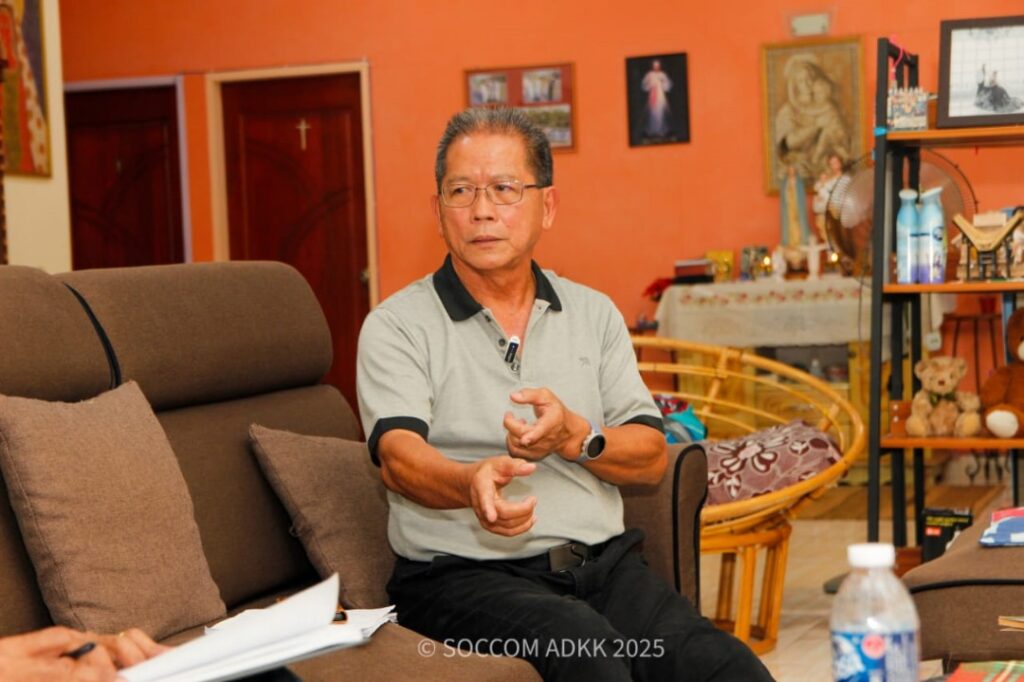
“Looking back, I felt that we were like the 12 sleeping disciples. We had been on guard there for days prior to that,” the now 67-year-old Ambrosius ruefully recalled of the events more than five decades on.
Failing to get a satisfactory answer from the teenagers, the security personnel barged into the rectory but could not immediately locate Fr Goedhart, even after a room-to-room search.
(Ambrosius recalls the security personnel involved appeared to be a combination of those from the police and military.)
It was at this point that the boys went into the church to pray the rosary together with the then Parish Council chairman, the late Applonius Majinal who had also been with them outside the rectory.
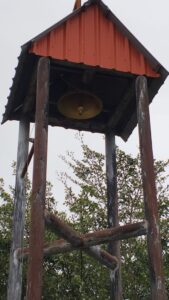
Ambrosius recalled that Applonius along with Limbahau parishioner Sgt Francis Ajun, a policeman, tried to ring the church bell located above the choir loft just above the building entrance but were stopped by security forces personnel. They also cut the ropes to prevent the bell from being rung.
In the meantime, realizing that something was amiss, villagers living in the immediate vicinity of the church located on a small hill began heading there.
A group of intrepid boys, including Gideon Abel Mosito, managed to slip into the church building and clambered up the tower and pulled the remaining length of the rope to ring the bell repeatedly for about an hour until they were forced down by the security personnel.
“The ringing of the bell alerted more people around Papar that something was going on at the Holy Rosary because it’s unusual for the church bell to be rung outside of the Angelus or before Mass,” Ambrosius said.
The ringing of the bell brought more folk from around Papar to the church, many of whom were in the paddy fields as the events unfolded during the “musim tabasan” (harvesting season).
Ambrosius and his friends remained near the rectory on that fateful day as security personnel grew frustrated at their failure to locate Fr Goedhart.
He remembers the security personnel taking up a defensive perimeter around the rectory with some training their weapons on the villagers.
“I couldn’t understand why they had to aim the guns at the villagers who did not even cangkul (hoe) or parang (machete) with them,” said Ambrosius.
“After some time, one of the officers appeared to be worried at the size of the crowd and angry that his men were unable to find Fr Goedhart, and he shouted a threat that his men would conduct a house-to-house search if Fr Goedhart could not be found,” Ambrosius said.
Soon, however, the Holy Rosary church Rector appeared sweaty and his face flushed red. (Ambrosius later found out that Fr Goedhart had hidden behind an open bathroom door and then moved to a cabinet where his vestments hung.)
The uniformed personnel immediately detained Fr Goedhart, who told them that he would go with them but only after celebrating a final Mass with his Limbahau parishioners.
The officer in charge allowed for this, and Fr Goedhart celebrated Mass in the packed church, with some having to stand outside the wooden church building.
Among those who attended the Eucharistic celebration were some of the uniformed personnel.
Ambrosius recalled that the mass lasted nearly two hours, after which Fr Goedhart returned to the rectory and appeared to have decided to make it as difficult as possible for the uniformed personnel to remove him.
After removing his vestments, Fr Goedhart sat down on a rattan chair and told the uniformed personnel that he would not walk out from the rectory.
“At the orders of their officer in charge, personnel carried the chair with Fr Goedhart from the rectory. It was a very emotionally charged moment, with many parishioners weeping at the sight of Fr Goedhart being forcibly removed.
“Some began pulling at the uniformed personnel who were carrying the chair in which Fr Goedhart was sitting, but they eventually managed to get him into their truck and drove off,” Ambrosius said.
He still remembers the profound sense of loss he and the Limbahau folk had at the abrupt departure of their rector.
“And for Christmas that year, there was no Mass for the first time; only a church service with a catechist. It was the bleakest Christmas we experienced,” Ambrosius said.
Leaving a bitter taste among Sabah’s Catholic community, those events however galvanized them further into their faith.
“Like many others, I was upset, but at the same time, I kept asking, ‘Lord, how can I serve You?’ ”
The answer has come with his involvement in church growing, initially from youth-related activities such as caroling to participating actively in the Catholic Charismatic Renewal Movement and organizing Life in the Spirit Seminars (LSS).
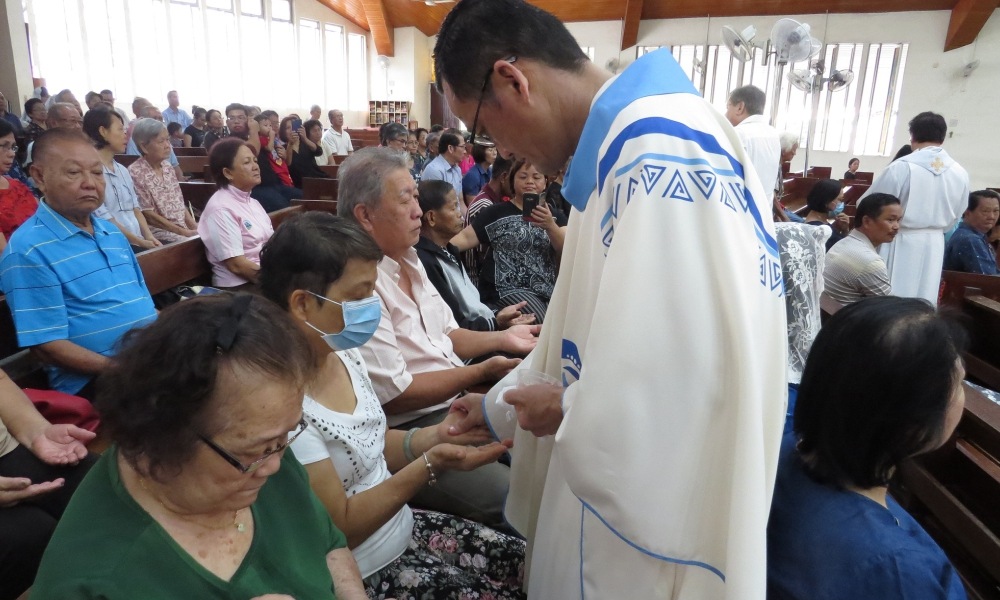
When he moved to Labuan for work in 1984, Ambrosius’ involvement in church activities grew manifold at the island’s Blessed Sacrament church, where he has served, among others, as a communion minister, Parish Council chairman, in the Family Ministry, as well as at the Inisiasi Kristian Dewasa (IKD), where at one point classes were held under a mango tree. His wife, Angelina Jonik Majaham, served in the Women’s League.
He is also part of the Kumpulan Bapa-Bapa ministry, a group of elders who serve at the Blessed Sacrament in various ways.
Reflecting further on the detentions and expulsions of the foreign priests more than 50 years on, Ambrosius said the events planted the seeds of growth which continues to strengthen the Catholic faith in Sabah.
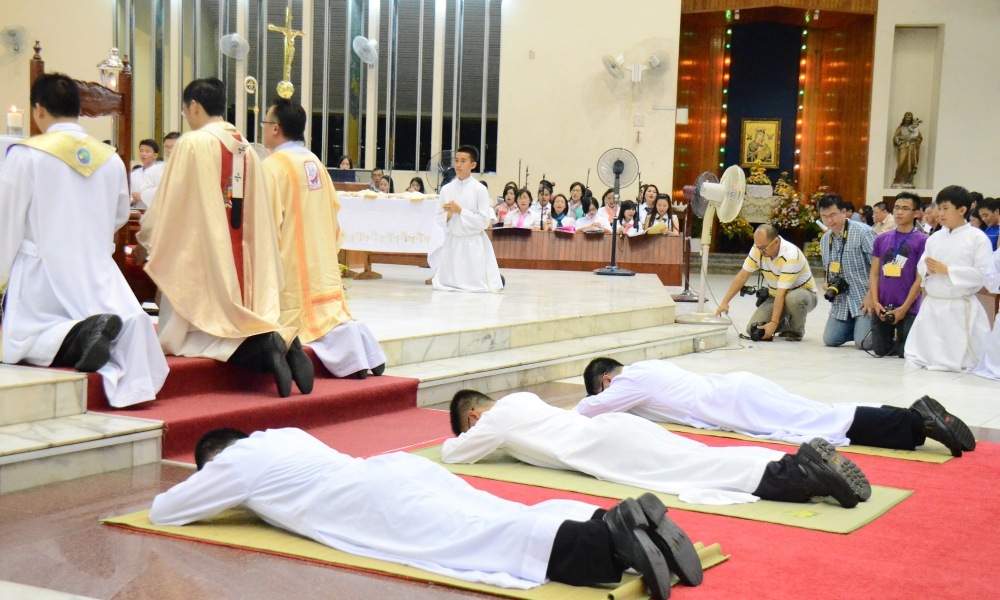
“There was a realization that our locals needed to take up religious vocations. I think before that, we had taken the presence of foreign priests and nuns for granted,” Ambrosius added.
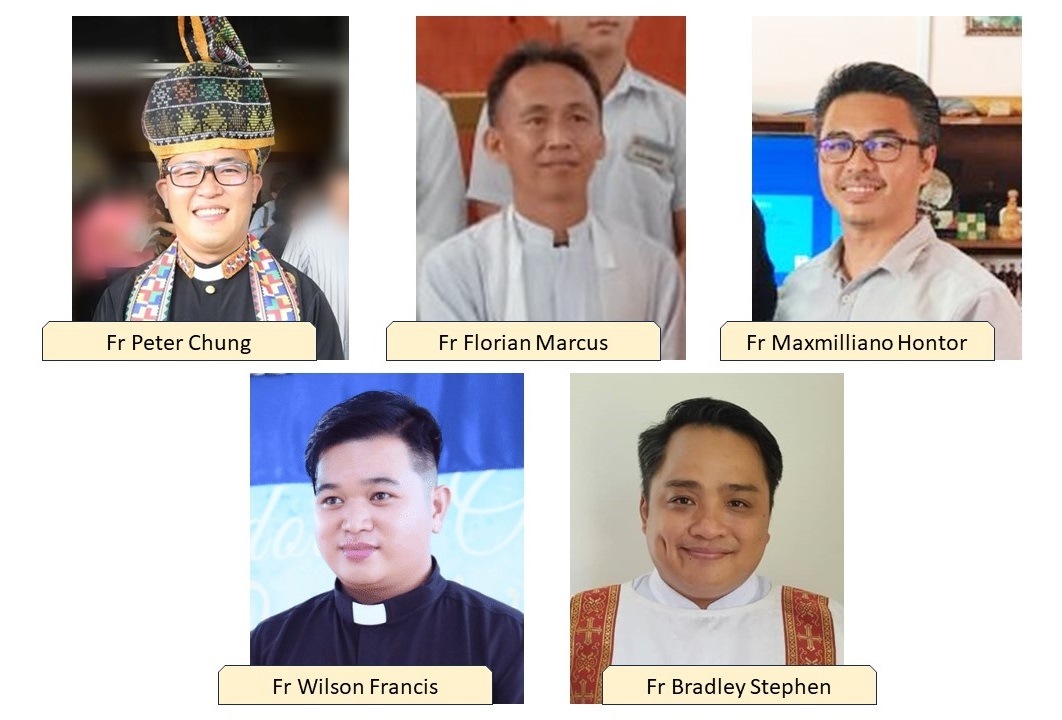
It was with great satisfaction that among the first local ordained priests were the late Fr Augustine Amandus and Fr Alex Sipanul, both of whom were Papar natives.
“Despite the setbacks caused by the expulsions, the church in Sabah continued to grow from strength to strength,” said Ambrosius.
Indeed, like the boys who were startled awake outside the Holy Rosary church rectory five decades ago, Sabah’s Catholic community has been galvanized into strengthening the church to enable the faith to grow continuously, despite the various challenges it has faced over the years.