








By John Singarayar
In the gentle afterglow of the Great Pilgrimage of Hope in Penang, Malaysia, I keep returning to one unwavering truth: hope is not something we can afford to lose.
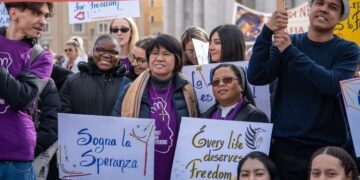
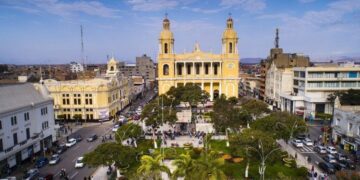
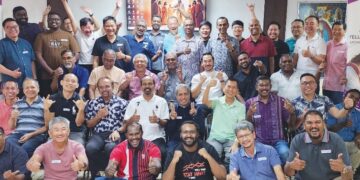
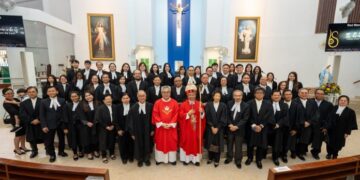
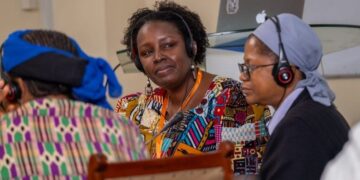
Just weeks ago, on Nov 27-30, bishops, priests, religious leaders, and ordinary believers from across Asia gathered in this vibrant Malaysian diocese for the largest assembly of our continent’s Church in nearly twenty years.
Hosted by the Federation of Asian Bishops’ Conferences and the Diocese of Penang, this gathering transcended the boundaries of a typical religious event. It became a living demonstration of shared faith amid real struggles.
As we enter the Christmas season during this special Jubilee Year, that pilgrimage carries a powerful message for the Asian Church: when the world grows dark with uncertainty, hope is not merely helpful, it is essential to everything we are.
Pope Francis proclaimed this Jubilee Year 2025 as a time for pilgrimage and renewal. The tradition invites us to cross thresholds, like the Holy Doors in Rome, but also to open the often-locked doors within our own hearts.
In Penang, we lived that spirit together. Delegates arrived from nations grappling with political turmoil, economic hardship, and natural disasters, yet they came to pray, share their stories, and recommit themselves to mission.
Cardinal Luis Antonio Tagle, speaking at the opening, urged everyone not to let fear control their decisions or dictate their path forward. He spoke about choosing a different way, moving away from division and toward unity in Christ.
His words reminded us that genuine hope does not pretend that suffering does not exist. Instead, it has the power to transform that suffering into something meaningful.
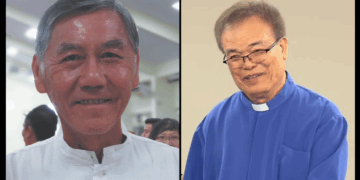
Archbishop Simon Poh addressed the gathering with stark honesty about the challenges facing our communities today. He spoke of economic pressures squeezing families, environmental threats endangering entire regions, and the social fragmentation tearing at the fabric of our societies.
But he framed these crises not as insurmountable walls but as doorways through which grace can enter. This perspective resonates deeply across Asia, where rapid change often brings profound anxiety.
Our Church communities in the Philippines, India, Indonesia, and beyond understand this reality intimately. We have witnessed devastating floods destroy homes and livelihoods, yet we have also seen faith communities respond with extraordinary compassion, rebuilding not just structures but spirits.
The pilgrimage showed us that hope possesses this remarkable quality: it can turn crisis into opportunity, teaching us to recognize God’s presence even in our darkest hours.
As Christmas draws near, this message aligns beautifully with the story of the Nativity. Jesus entered the world not through a grand ceremony but through quiet vulnerability born in a humble stable to parents who found no welcome in the inn. Mary and Joseph were themselves pilgrims, facing rejection and danger, yet they held fast to God’s promise.
For the Asian Church, this Jubilee Christmas echoes that ancient story in fresh ways. We’re called to carry that same light into our own contexts, whether we are ministering to migrant workers in crowded urban centers or supporting farming families in remote villages that development has forgotten.
The pilgrimage’s closing mandate was unambiguous: return home as missionaries, bringing spiritual renewal to your communities. When Cardinal Tagle called us to “walk in the light of the Lord,” he was not speaking in abstractions. He was describing the daily choice to embody hope in ordinary life.
But hope requires more than beautiful words, it demands concrete action. It’s non-negotiable precisely because it is rooted in Christ’s resurrection, not in temporary optimism that fades when circumstances worsen.
Throughout the Penang gathering, we heard powerful testimonies that demonstrated this active hope. Young people shared how they are rekindling faith through digital platforms, reaching peers who might never enter a church building. Women described leading peace initiatives in conflict zones, creating dialogue where violence once dominated. Priests spoke of fostering understanding across religious boundaries, building bridges in communities fractured by suspicion.
These are not isolated heroic acts performed by exceptional individuals. They represent the Asian Church’s collective response to a continent yearning for meaning and seeking authentic spiritual guidance.
As we celebrate Christmas, we must embrace this Jubilee with grace: forgive the debts that burden our hearts, pursue reconciliation even when it is difficult, and fling open doors to those society has marginalized. Hope is not passive waiting, it is the energy that fuels evangelization in a region where Christianity often speaks with a minority voice.
Looking toward the future, the pilgrimage inspires us to build on this momentum rather than let it dissipate. In the months ahead, we should foster more gatherings like this, nurturing a Church that genuinely listens, walks together, and focuses outward rather than inward.
For families gathering around Advent wreaths this season, for parishes preparing midnight Masses, remember what Penang demonstrated: we find strength in unity despite our diversity, and we discover resilience precisely through facing adversity together.
Asia’s Church, with its extraordinary tapestry of cultures, languages, and traditions, has something irreplaceable to offer the wider world, a hope that has been tested by fire, proven authentic through struggle, and remains unbreakable.
In this Christmas Jubilee season, let us hold firmly to that truth. Hope is non-negotiable because God chose to become one of us, making an eternal promise never to abandon us. As stars shine over our vast continent tonight, may they remind us that light always finds a way to pierce even the deepest darkness. – UCA News
*The views expressed in this article are those of the author and do not necessarily reflect the official editorial position of UCA News.