







Fr Shay Cullen
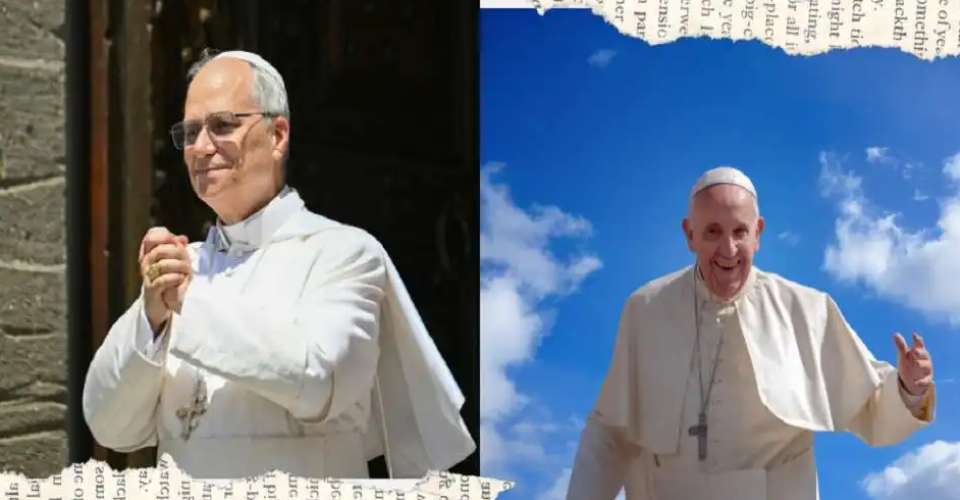
The past year has been a tumultuous and challenging one for all Christians and especially for the Catholic Church and the world. The passing of Pope Francis on Apr 12, 2025, was a great loss to humanity.
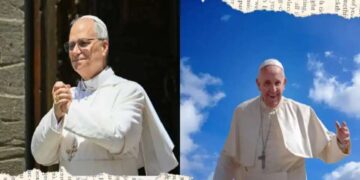
Pope Leo XIV is continuing his legacy. Robert Francis Prevost, who was elected on May 8, 2025, took the name Leo XIV in admiration and respect for Pope Leo XIII, a powerful voice and advocate for human rights, social justice for the poor, and workers’ rights.
With Leo, we can look forward with hope and expectation to a continuation of the progressive papacy of Francis, who was a friend and pastor to the world, especially to the poorest of the poor.
Francis called the Church to be a “Poor Church for the Poor” where bishops, clergy and laity were called to have greater humility, compassion, empathy, service to the poor, and to the migrants. These were the highest values that he emphasized and practiced.
He washed the feet of prisoners, and in 2016, his first foreign visit was to the island of Lampedusa, which was filled with refugees and migrants. There, he “rescued” 12 Syrian refugees and migrants and brought them back on his plane to give them a new home in the Vatican as an example of hospitality to the world.
He was, throughout his papacy, a strong defender of the rights of migrants (his own family were migrants from Italy to Argentina), and in his last breath, he denounced mass deportations of migrants from rich nations as “a disgrace.”
Francis was a humble man, forsaking the pomp of the papal apartment for the more modest and ordinary apartment in the Santa Maria Vatican guest house, where he joined guests for meals and chatted with them. He would also go out on his own to buy reading glasses, shoes, and ice cream.
He wanted to be an “ordinary” person. Some Swiss guards at the Vatican are reported as saying he swore them to secrecy as he sometimes went out at night incognito to visit poor families, as he had done when a bishop in Argentina.
Francis’ most significant impact was made in 2015 through his encyclical, Laudato si’, meaning “Praise to you, Lord” from the poem written by his patron, Saint Francis of Assisi. The poem describes the love of God as seen in the bond of all creatures in nature and the creation.
Francis taught the world that the cry of a wounded creation, seen in the environmental and social crises, is one and the same — the “cry of the earth” is linked to the “cry of the poor.”
He called the encyclical “On the Care of Our Common Home.” He made the protection of the planet and creation a core moral issue of the Catholic Church. He denounced “uncontrolled capitalism” for destroying the earth.
Not only did Francis highlight the cause of climate change due to human greed and exposed a fractured world society that was allowing environmental disasters, but he also tried to mend it with his encyclical in 2020, named Fratelli Tutti or “brothers and sisters all.” This is a call to universal fraternity, global unity to unite the world and face and solve global problems together.
We are all called to care for each other, like the Gospel story of the Good Samaritan, which he quoted. However, he was frustrated by corrupt leaders who had invaded other countries and were destroying communities in Ukraine, Palestine, and Sudan.
These are tasks that persist today and are a great challenge to Leo XIV, as is the issue of child abuse in the world and in the Church.
Pope Francis had to deal with the tragic, painful issue of clerical child abuse. He set up the Pontifical Commission for the Protection of Minors in 2014, which is to hold bishops accountable for preventing and reporting child abuse by priests and religious and to bring the accused to justice.
Then, in Feb 2025, two months before he became ill, he held the first global summit in the Vatican to challenge world leaders to address the suffering of children impacted by violence and hunger. He stood for the “invisible children,” the abandoned who have no identity and are unprotected.
The challenge today continues as we leave behind 2025. The challenges faced by Pope Francis have been taken up by Pope Leo in his Christmas message, “To the city and the world.”
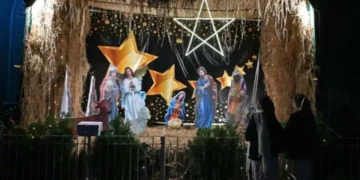
Reflecting on the birth of Jesus in the cold and poverty of an animal shed in Bethlehem, rejected at the inn and left to the misery of the wet and cold, Leo said, “How can we not think of the tents in Gaza, exposed for weeks to rain, wind, and cold?”
He referred to the oppression suffered by the Palestinians, their “collective punishment” and “forced displacement.”
Reports refer to nearly 71,000 confirmed fatalities and approximately 9,500 missing and presumed dead under the destroyed buildings, and it is estimated that more than 171,100 people have been wounded and injured.
The ceasefire has been violated many times by Israel since Oct 2025.
Leo called for the release of prisoners and for Israel to open the “humanitarian corridors” so that food and other needs could be allowed in to help the sick and malnourished population. He condemned the “indiscriminate use of force,” especially the destruction of churches and houses of worship.
The pope’s strong social and moral message is encouraging to all who are working for human rights and dignity.
Both Francis and Leo, our most outspoken popes in recent memory, have expressed through their words and actions the compassion and social justice taught by Jesus of Nazareth.
Their words are for serious reflection, to be understood and acted upon.
As Saint James wrote, “Faith, without action, is dead.”
Our mission as Catholics and Christians is to make faith alive and active, that is, to stand against evil and do good for the poor and bring freedom and love of neighbor into the world. – UCA News
*The views expressed in this article are those of the author and do not necessarily reflect the official editorial position of UCA News.