












By UCA News Reporter
Papua New Guinea’s Cardinal John Ribat has hailed the island nation’s first and only indigenous Saint Peter To Rot as a witness to the country’s turbulent past and a sign of holiness for the present.
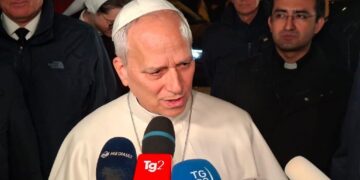
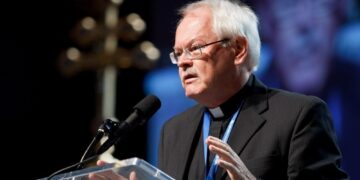
The saint “represents for us the witness of being part of a history of holiness that permeates our land and the entire world,” said Cardinal Ribat, archbishop of Port Moresby.
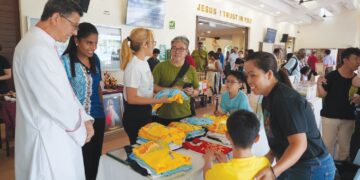
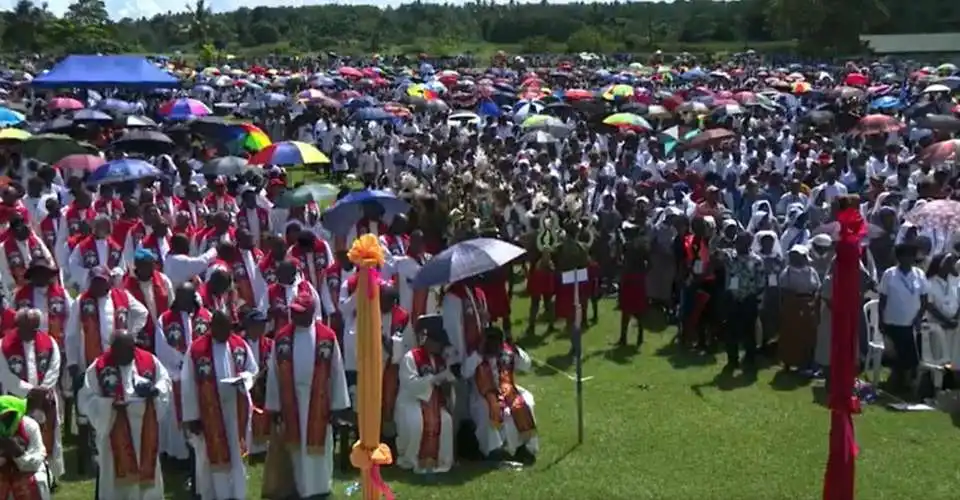
Cardinal Ribat was celebrating a Thanksgiving Mass during the Dec 11-14 gathering at Rabaul, near Rakunai, To Rot’s hometown, the Vatican’s missionary news service, Fides, reported on Dec 16.
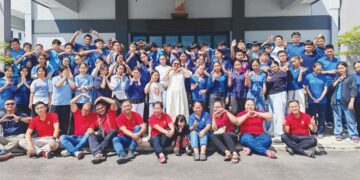
Bishops, religious, and thousands of faithful from across the country and the neighboring Solomon Islands attended the event, held to celebrate the canonization of To Rot on Oct 19 by Pope Leo XIV.
The Catholic Bishops’ Conference of Papua New Guinea and Solomon Islands organized the event.
Born in 1912, To Rot was a lay catechist. He was arrested in 1945 during the Japanese occupation in World War II for his relentless efforts to teach catechism, organize prayer, and defend the dignity of marriage despite a ban on religious activities.
He was killed by lethal injection while in prison. The martyred catechist was declared blessed by Pope John Paul II in 1995.
Ribat said To Rot is ‘a gift for the Church in the country and for the whole world,” and called his canonization “a moment of abundant blessing.”
Ribat claimed that the Catholic faith in the nation, and that of the saint, was a “fruit of the work” of the Missionaries of the Sacred Heart (MSC) who arrived in Rabaul in 1882.
They arrived after Father Jules Chevalier, founder of the MSC congregation, accepted Pope Leo XIII’s invitation to evangelize territories such as Melanesia and Micronesia.
“Now, more than a hundred years later, another Pope Leo , in perfect continuity, has recognized one of our saints: for us in Papua New Guinea,” Ribat noted.
Terming the canonization a “historic milestone,” Ribat stated that the Catholic community there felt “encouraged and blessed.”
To Rot, who was a father of three children and, as a catechist, struggled to keep the family and the community united during the difficult time in the Pacific, Ribat noted, while hinting at the brutal Japanese occupation.
“His story speaks to families today, in our context: let God be a part of your life. Even though the world changes, God’s truth for us remains the same: his love and his salvation,” Ribat said.
The prelate noted that To Rot was “faithful to the end” and remained a “credible and authentic witness” to his Catholic faith.
Among PNG’s estimated 10 million people, Christians form 90 percent of the population. Protestants form a majority at 64 percent, and Catholics are estimated to be at 26 percent. – UCA News