


















By Daniel P Horan
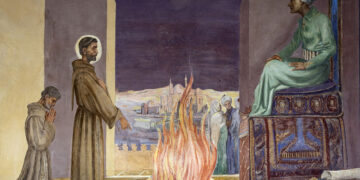
In keeping with my intention to explore the continued relevance, inspiration and challenge of St Francis of Assisi to mark the 800th anniversary of his death, this week’s column is dedicated to a dimension of his legacy that is often overlooked or ignored. While it may sound surprising to some, Francis occasionally practiced what I have come to call “ecclesiastical disobedience,” which is the intentional refusal to obey instructions, rules or conventions from church authorities that conflict with his well-formed conscience.
The concept of ecclesiastical disobedience follows from the more widely known practice of “civil disobedience,” a term that was coined by Henry David Thoreau in an 1849 essay by the same name. The immediate context was his refusal to pay a state tax established to fund a war he viewed as unjust and to financially support the enforcement of fugitive slave laws.
In the decades since its coinage, the concept of civil disobedience has been invoked to describe a range of actions seeking social change in protest of unjust laws, customs or practices. Such has been the case in demonstrations and protests in support of the right of women to vote in the United States, the civil rights movements of the mid-20th century, and nonviolent protests of conflicts like the wars in Vietnam, Iraq and now Iran.
When the unjust circumstances that are protested through intentional disobedience are a matter of church rather than state, then we have an instance of ecclesiastical disobedience.
Continue reading in NCR Online