








Vatican News
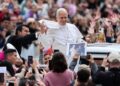
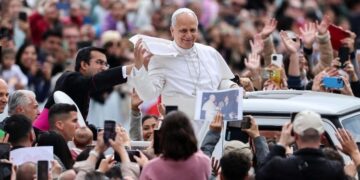
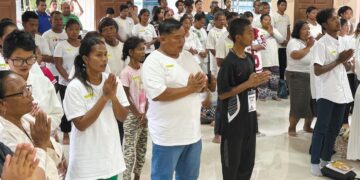
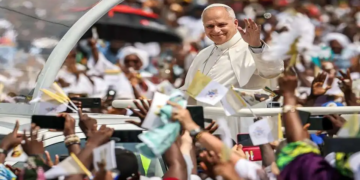
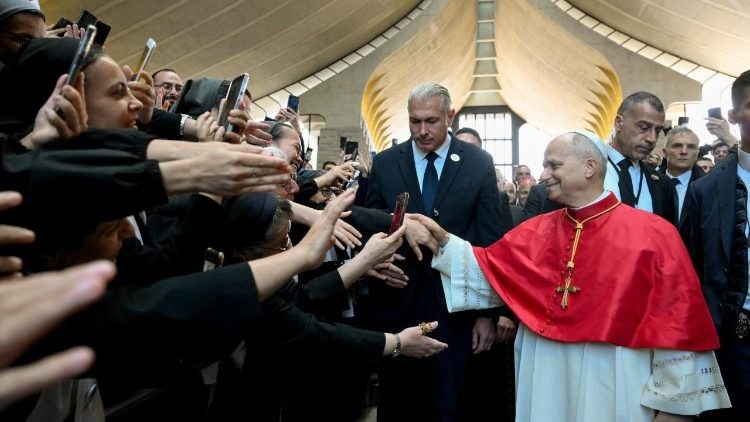
On the second day of his Apostolic Journey to Lebanon, Pope Leo XIV met with bishops, priests, consecrated persons and pastoral workers at the Shrine of Our Lady of Lebanon in Harissa.
Opening his remarks, the Pope underlined the relevance of the visit’s motto, “Blessed are the peacemakers”, by recalling the words of Saint John Paul II when he said that the Church in Lebanon carries the responsibility of sustaining hope.
He noted that the testimonies he had just heard, from four different people, demonstrate that these expectations continue to be met in concrete ways.
Strength from Lebanon’s spiritual heritage
The Pope then turned to what he called the roots of Lebanon’s Christian witness, reflected in the silent prayer of Saint Charbel and in the significance of the Harissa Shrine as a point of unity for the Lebanese people.
He emphasised that perseverance in difficult conditions often originates in prayer – “the invisible bridge which unites hearts” – and in remaining near to Christ, even amid the “sound of weapons” and daily hardships.
Pope Leo also highlighted the anchor featured in the journey’s logo. Quoting the late Pope Francis, he explained that faith, like an anchor in heaven, offers direction and stability.
To build peace, he said, it is necessary to remain fixed on that horizon, choosing love and generosity over the fear of loss.
Examples of coexistence and solidarity
The testimonies shared by pastoral workers shaped much of the Pope’s reflection. He pointed to the example of the village of Debbabiyé, described by Father Youhanna – one of the people who gave their testimony – where Christians and Muslims, Lebanese citizens and refugees continue to live together despite bombardments and scarcity.
The image of a Syrian coin placed among Lebanese ones in the parish alms box, he said, illustrates how each person has the capacity to contribute and receive in charity.
Looking back at Pope Benedict XVI’s 2012 visit to Lebanon, Pope Leo XIV reaffirmed that the Christian response to crisis is to prioritise forgiveness over revenge, unity over division, and service over domination.
He noted, however, that many continue to face injustice and exploitation, particularly those who feel they have no alternatives.
In this context, he underscored the importance of offering young people genuine opportunities, including within Church structures, so that they may find “concrete and viable prospects for growth”.
Migrants, education, and prison ministry
The Pope then turned to the testimony of Loren, an immigrant working to support those forced to leave their homes due to conflict or necessity.
The story she shared, he said, reflects the heavy consequences of war on civilian lives and challenges communities not to remain indifferent. He reiterated that migrants who arrive at Church doors should never feel rejected, but welcomed.
He also acknowledged Sister Dima, who chose to keep her school open during outbreaks of violence, transforming it into a space for learning, refuge, and community-building.
Education, the Pope said, has long been a priority for the Church in Lebanon and must continue, especially for those in extreme situations. “Our first school,” he said, “is the Cross, and our one Teacher is Christ.”
The experience of Father Charbel in prison ministry further illustrated the need to recognise the dignity of each person. Even in places marked by suffering and failure, the Pope said, the Church is called to see signs of God’s mercy and the possibility of renewal.
A call to unity in daily life
Before presenting a Golden Rose to the Shrine, the Pope explained that the gesture symbolises the call to be the “fragrance of Christ” through daily choices rooted in charity and unity. This “fragrance”, he added, is something shared and accessible, not reserved for a select few.
Bringing his address to a close, Pope Leo encouraged the Church in Lebanon to continue fostering peace through steadfast faith, inclusive community life, and practical solidarity, explaining that these remain essential foundations for rebuilding trust and hope in the country’s future. – Vatican News