








By Andrea Tornielli
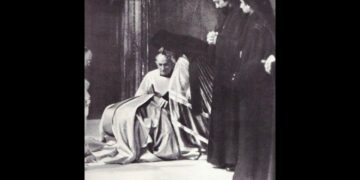
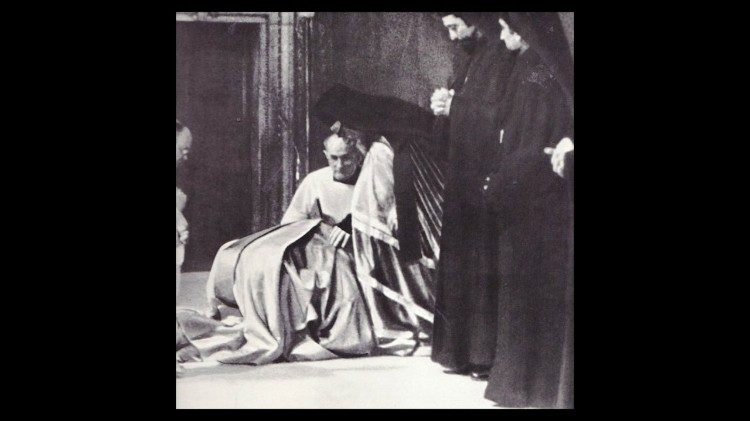
All that remains of that gesture, carried out fifty years ago, is a faded photograph, nothing more.
The Pope had hinted at something only to his personal secretary, Fr Pasquale Macchi: “Whatever I do, do not prevent me, but help me…”.
It was Dec 14, on the eve of the closing of the 1975 Holy Year, and Pope Paul VI was celebrating the tenth anniversary of the act by which the Churches of Rome and Constantinople had consigned their mutual excommunications to history in the Sistine Chapel.
Present at the Mass was the Orthodox Metropolitan Meliton of Chalcedon, representative of Ecumenical Patriarch Dimitrios I of Constantinople.
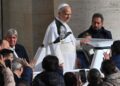
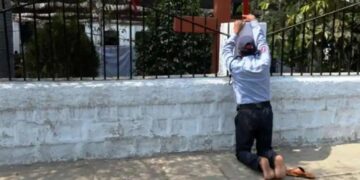
At the conclusion of the celebration, while still wearing his liturgical vestments, the Pope descended from the altar, approached Meliton and suddenly knelt before him, prostrating himself and kissing his feet.
A powerful gesture
“No one knew of this intention,” Fr Macchi later wrote, “except myself, since I had been informed beforehand so that he could carry it out. Everyone was taken by surprise and deeply moved; a long and heartfelt applause followed.”
Pope Paul VI’s carefully considered decision was inspired by Christ’s gesture of the washing of the feet and evoked the events of the Council of Florence, when in 1439 the Orthodox Patriarchs had refused to kiss the feet of Pope Eugene IV.
Cardinal Johannes Willebrands, who was present, would later recall: “Pope Paul VI had a genius for symbolic gestures, gestures that were often more eloquent than words… It was not merely an act of personal humility; above all, it was an act of reconciliation between the two Churches, a reconciliation that was agreed upon in Florence but never brought to completion.”
Only a saint could do such a thing
Metropolitan Meliton would later describe the kiss he received from the Pontiff in these words: “Only a saint could do such a thing.”
Patriarch Dimitrios, for his part, commented: “With this gesture, the venerable and dearly beloved brother to us, the Pope of Rome Paul VI, surpassed himself and showed the Church and the world what a Christian bishop is and can be and above all what the first bishop of Christianity is called to be: a force for reconciliation and for the unity of the Churches and of the world.”
Looking to Jerusalem
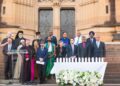
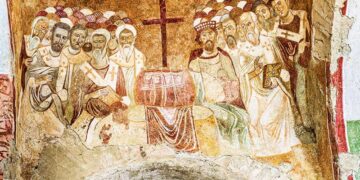
It is important not to forget Pope Paul VI’s gesture. Only a few weeks have passed since the gathering in Iznik—ancient Nicaea—where Christians, together with Pope Leo XIV and Patriarch Bartholomew, commemorated the first Ecumenical Council.
It is equally important not to forget the mission of service to unity entrusted to the Bishop of Rome, as the Churches look ahead to the Jubilee of 2033 and to that return to Jerusalem to recall the origins of our faith. – Vatican News