




























By Keiko Kurane
At lunchtime, a 45-year-old office worker scrolls through his phone as he eats a convenience store meal, alone.
“I’m used to it,” he told UCA News. “But of course, I still want to share a meal with someone, maybe a co-worker, a friend, or family.”
The man, who did not want to be named, said he has followed the same routine for more than 20 years now, though not without question.
Across Japan, many find themselves in a similar situation.
Loneliness remains widespread, even as awareness grows and the government steps up efforts to address social isolation.
A recent Cabinet Office survey, reported by Jiji Press, found that 4.5 percent of respondents often or always felt lonely in 2025, up 0.2 percent from the previous year.
Another 13.7 percent said they sometimes feel lonely, while 19.5 percent said they experience it occasionally.
The survey, conducted in December and released on Apr 14, was sent to 20,000 randomly selected people aged 16 and older, and received valid responses from 59.4 percent of them.
Loneliness was most common among people between their 30s and 50s.
A clear pattern
The data also showed a clear pattern. The less often people eat with others, the more likely they are to feel lonely.
Among those who rarely share meals, 17.3 percent said they often or always feel lonely, compared with 5.1 percent who dine with others once or twice a month, and 3.7 percent among those who share meals about once a week.
For medical and psychological anthropologist Chikako Ozawa-de Silva, the connection points to a wider social issue.
“Loneliness is not a failure on the part of the individual, but on the part of society,” she told UCA News, describing it as a “failure of empathy and intimacy.”
Over time, she said, this can leave people feeling unseen or unneeded.
Eating, she added, is more than a daily necessity.
“Eating together can help people feel seen and recognized, and increase a sense of belonging.”
Yet for many in Japan, opportunities to connect like this have become fewer because of long working hours, smaller households, and social expectations that limit interaction outside work and the home.
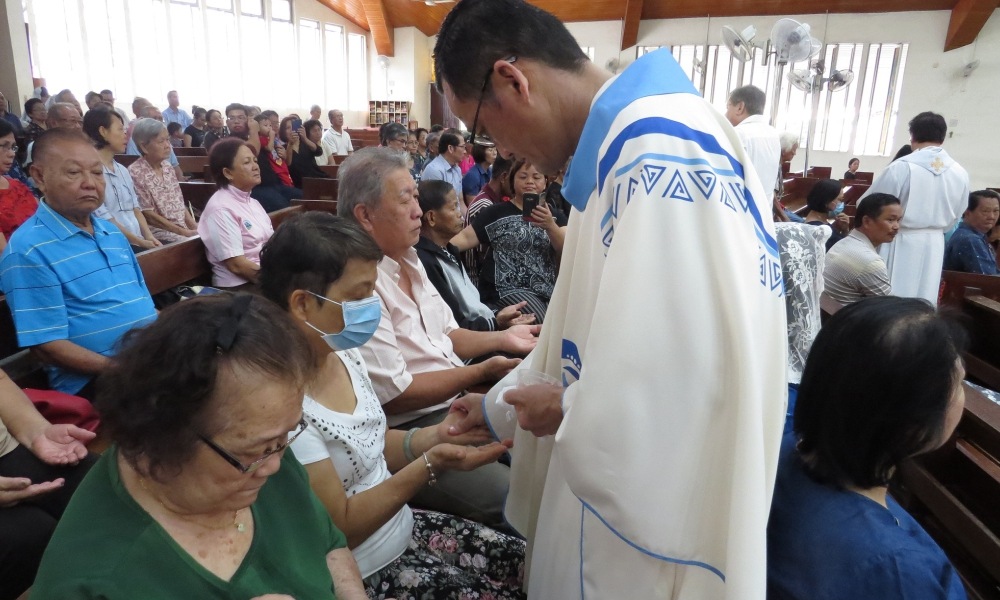
In the parishes he visits, Father Edwin Corros, assistant director of the Catholic Tokyo International Center, said the effects of isolation are often visible.
“I could see it in their eyes, and I also came to learn it through casual conversation or in situations when they sought me for advice,” said the priest, who ministers to foreign communities in Tokyo, particularly Filipinos.
“Many are living alone, far from family, and struggling to feel they belong.”
Among migrants, he said, loneliness is made harder by distance and the challenge of adjusting to a different culture.
“They struggle to adjust, to fit in, and to belong,” Corros told UCA News.
Addressing isolation
For some, simple routines such as staying after Mass, sharing food, and spending time together help ease that feeling.
“For those who have no one to be with, the Church becomes a second home,” Corros said. “They stay, share meals, and spend time together.”
Beyond churches and faith communities, other efforts are also emerging to address isolation.
One example is the spread of kodomo shokudo, or children’s cafeterias, where free or low-cost meals are offered in communities across the country.
Originally created to support children, many of these spaces have grown into informal gathering places for people of all ages.
Organizations such as Musubie, a national nonprofit that supports these initiatives, describe them as ibasho, or places where people can feel safe, accepted, and able to be themselves.
“People in their 30s to 50s, in particular, are a generation that faces strong expectations to fulfill specific ‘roles’ at work and at home,” Kana Tsukahara, spokeswoman for Musubie, told UCA News.
“It is said that the sense of loneliness among people in their 30s to 50s in Japan stems from the current reality that there are few places outside the home and workplace where they can be their ‘true selves,’” she added.
The group says ibasho is more than just a place to pass the time.
“It is not just a place to distract from loneliness, but a space where one’s existence is affirmed,” Tsukahara said.
Such spaces can reach people who may not seek formal help, offering connection before isolation deepens.
Even with government initiatives such as the “You Are Not Alone” campaign, many say the feeling has not gone away.
“I think I’m getting tired of the loneliness,” the office worker told UCA News.
He said he has started looking for groups he can join, hoping to find people to share time and meals with. – UCA News