























Herald Malaysia
THEY said “Amen” — and then many disappeared. Why do young Catholics drift away after Confirmation, and what will it take to walk with them again?
She stood before the altar, clothed in white, radiating a quiet confidence that only youth can carry. The bishop traced the sign of the cross on her forehead with holy oil and spoke the ancient words, “Be sealed with the gift of the Holy Spirit.” She answered, “Amen.” Her family smiled, her godparents beamed, and the parish community rejoiced. Then, slowly and quietly, she disappeared.
This is not the story of one individual, but of many.
Catechists, youth ministers, parents, and parish leaders will recognise this pattern. Young people who were once present at Mass and active in parish life gradually drift away after Confirmation. One missed Sunday becomes many, and before long, the pew remains empty.
Where did they go, and why did they leave?
One young adult, Eric, shared his experience with honesty. He spoke of hearing about love, grace, and humility on Sundays, yet encountered judgment, gossip, and pride during the week. Over time, the gap between what was preached and what was lived became too painful to ignore.
Stepping away did not mean abandoning faith. He continued to believe in love and truth. What he sought was a healthier space in which to encounter them.
His story is not unique. For many young people, the struggle is not with God, but with how faith is lived. A Church that proclaims mercy may struggle to embody it. A community meant to feel like home can, instead, feel distant. Many leave not in rebellion, but in quiet weariness.
Too often, Confirmation is treated like a graduation. Years of catechism seem to culminate in an endpoint rather than a beginning. Yet faith is not a syllabus to be completed. It is a relationship to be lived.
Perhaps the question is not only why they leave, but whether we have walked with them beyond the sacrament. We call them the future of the Church, yet often, struggle to make space for them in the present.
They are growing up in a world shaped by pressure, comparison, and uncertainty about identity and purpose. In Malaysia, this is often compounded by academic expectations and family pressures. They are not primarily searching for rules, but for authenticity, belonging, and meaning. At times, they find this more readily elsewhere.
This is not an accusation, but a lament. The Church has so much to offer.
We are a Church of beauty and mystery, shaped by saints, martyrs, and communities that share life together. We believe in a God who enters into human suffering — becoming flesh and dwelling among us.
Yet if this is never experienced beyond textbooks, if liturgy feels distant, or if questions are dismissed, young people will drift.
But not every story ends in drifting.
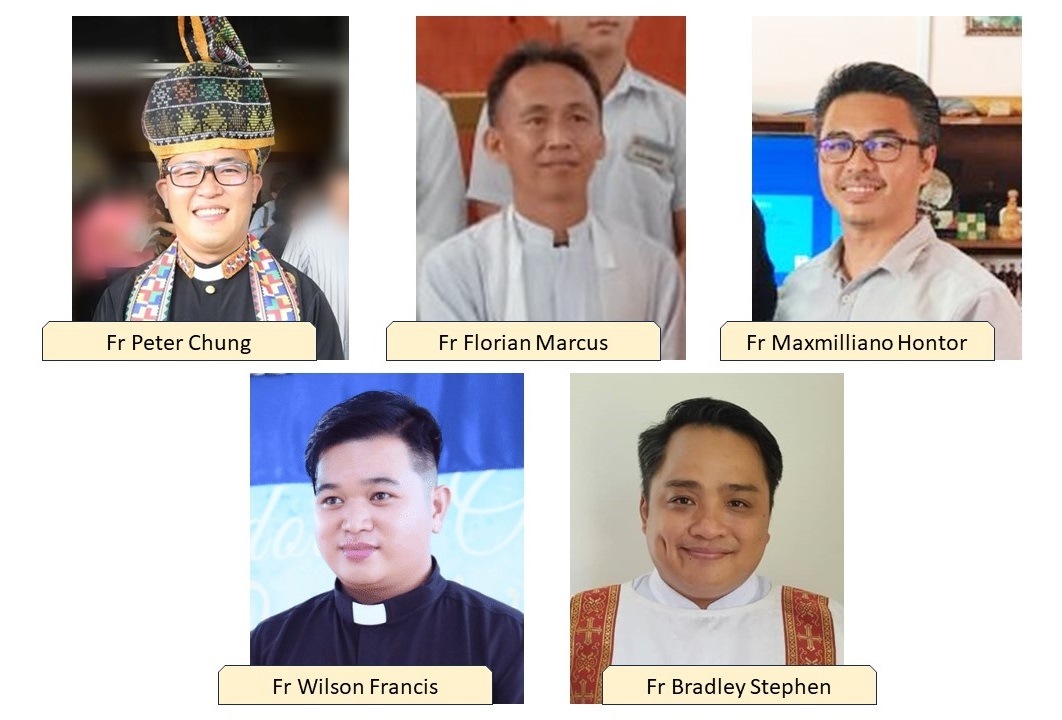
Joel Jeremiah, now a junior apprentice with the Missionary Community of St Paul the Apostle in Kenya, recalls how his journey began with a simple question: “Have you ever thought about being a priest?”
There was no pressure, only conversation and time. Over a simple cup of cappuccino and sirap bandung ais, a new chapter began to unfold.
Joel did not fully understand what he was saying yes to, but that small “yes” became a turning point. Through formation and mission work, he encountered a deep peace. He met people with almost nothing, yet full of hope, and in them he saw God’s love made real.
Serving the poor transformed his understanding of happiness. He realised that love is not about giving things, but about giving oneself.
Joel speaks honestly about doubt and weakness. Yet again and again, he encountered grace.
His message to those who have drifted away is simple: he understands. Like the Prodigal Son, he wandered in search of meaning. When he whispered a small “yes” to Christ, he did not encounter judgment, but embrace.
This is the heart of our faith — a God who invites, waits, and welcomes.
Perhaps young people today do not have less faith, but are growing up in a world that makes it harder to notice God.
The question, then, is not simply why they left, but how we welcome them home.
We are called to respond not with guilt, but with listening; not with expectations, but with accompaniment; and not with programmes alone, but with authentic relationships.
This calls for mentoring, for spaces where young people can speak honestly, and for communities that walk with them beyond Confirmation. The Church is not whole without them.
They once said “Amen.” The journey was never meant to end there. Now it is our turn to walk with them.
If we dare to live our faith with humility and joy, many may rediscover that they were never truly lost.
They are only waiting to come home. – Herald Malaysia