







• About
  • Contact
Monday, September 7, 2026
Catholic Sabah
  • News
    • All
    • Asia
    • Focus
    • Local
    • Nation
    • Vatican
    • World
    Pope Leo to seminarians: Learn to remain with Jesus

    Pope Leo to seminarians: Learn to remain with Jesus

    Caritas Internationalis on Nepal: ‘We must all face the climate chaos’

    Caritas Internationalis on Nepal: ‘We must all face the climate chaos’

    Timor-Leste welcomes home mortal remains of bishops who stood with the people

    Timor-Leste welcomes home mortal remains of bishops who stood with the people

    Poland: parents and bishops oppose changes to religious education rules

    Poland: parents and bishops oppose changes to religious education rules

    Mission of hope in education: A missionary from Congo in Italy

    Mission of hope in education: A missionary from Congo in Italy

    Kesetiaan Tuhan menjadi sandaran pelayanan – Fr Lasius Gantis

    Kesetiaan Tuhan menjadi sandaran pelayanan – Fr Lasius Gantis

    Book on death-row ministry praised by Pope Francis released in English

    Book on death-row ministry praised by Pope Francis released in English

    Seminar mendengar seperti Kristus

    Seminar mendengar seperti Kristus

    Shortage of priests adds to organisational challenges for bishop

    Shortage of priests adds to organisational challenges for bishop

  • Opinion
    • All
    • Im on my Way
    • Kanou Monuhid Lahan Koposizon
    • Making A Difference
    • Mantad Di Katekis Peter
    • Reflection: Straight Talking
    Young Vietnamese Catholics are rediscovering the Latin Mass

    Young Vietnamese Catholics are rediscovering the Latin Mass

    The Hour of Responsibility

    The Hour of Responsibility

    Belonging is our test

    Belonging is our test

    Abortion is never a real choice

    Abortion is never a real choice

    Anthropological reading of ‘Magnifica Humanitas’

    Anthropological reading of ‘Magnifica Humanitas’

    The stranger teaches the Church

    The stranger teaches the Church

    The gift of not knowing in the digital age

    The gift of not knowing in the digital age

    Peter and Paul won’t leave us alone

    Peter and Paul won’t leave us alone

  • Feature
    Sister in Ukraine: Bombs cannot break faith, will to live or desire for freedom

    Sister in Ukraine: Bombs cannot break faith, will to live or desire for freedom

    One Polish sister’s life of service and spiritual promotion

    One Polish sister’s life of service and spiritual promotion

    Losing a loved one to suicide

    When the bloom has left the rose

    Confirmed in faith, sent in mission

    Confirmed in faith, sent in mission

    A Dutch woman’s solo pilgrimage on foot from Maastricht to Rome

    A Dutch woman’s solo pilgrimage on foot from Maastricht to Rome

    Usia menua, semangat tetap muda

    Usia menua, semangat tetap muda

    Losing a loved one to suicide

    Our Sometimes Stingy Hearts

    Losing a loved one to suicide

    A Naivete of the Heart

  • Statements
    CFM 2026 Merdeka and Malaysia Day Greetings

    CFM 2026 Merdeka and Malaysia Day Greetings

    Reshuffle of Priests

    Communique

    Banns of Sacerdotal Ordination

    Banns of Sacerdotal Ordination

    Reshuffle of Priests

    Appointment of New Clergy Office Bearers and Spiritual Directors (2026–2029)

    Masses for Christmas Vigil and Christmas Day 2023

    All Saints and Christmas 2027

    Masses for Christmas Vigil and Christmas Day 2023

    Assumption of the Blessed Virgin Mary (2026)

    Appointment of members to the College of  Consultors

    Appointment of members to the College of Consultors

    Masses for Christmas Vigil and Christmas Day 2023

    Notice on the Matters Concerning Julia Youn of Naju, Korea

  • Chinese
  • Bahasa Melayu
  • Kadazan Dusun
  • JUBILEE 2025
  • About
  • Donate
No Result
View All Result
  • News
    • All
    • Asia
    • Focus
    • Local
    • Nation
    • Vatican
    • World
    Pope Leo to seminarians: Learn to remain with Jesus

    Pope Leo to seminarians: Learn to remain with Jesus

    Caritas Internationalis on Nepal: ‘We must all face the climate chaos’

    Caritas Internationalis on Nepal: ‘We must all face the climate chaos’

    Timor-Leste welcomes home mortal remains of bishops who stood with the people

    Timor-Leste welcomes home mortal remains of bishops who stood with the people

    Poland: parents and bishops oppose changes to religious education rules

    Poland: parents and bishops oppose changes to religious education rules

    Mission of hope in education: A missionary from Congo in Italy

    Mission of hope in education: A missionary from Congo in Italy

    Kesetiaan Tuhan menjadi sandaran pelayanan – Fr Lasius Gantis

    Kesetiaan Tuhan menjadi sandaran pelayanan – Fr Lasius Gantis

    Book on death-row ministry praised by Pope Francis released in English

    Book on death-row ministry praised by Pope Francis released in English

    Seminar mendengar seperti Kristus

    Seminar mendengar seperti Kristus

    Shortage of priests adds to organisational challenges for bishop

    Shortage of priests adds to organisational challenges for bishop

  • Opinion
    • All
    • Im on my Way
    • Kanou Monuhid Lahan Koposizon
    • Making A Difference
    • Mantad Di Katekis Peter
    • Reflection: Straight Talking
    Young Vietnamese Catholics are rediscovering the Latin Mass

    Young Vietnamese Catholics are rediscovering the Latin Mass

    The Hour of Responsibility

    The Hour of Responsibility

    Belonging is our test

    Belonging is our test

    Abortion is never a real choice

    Abortion is never a real choice

    Anthropological reading of ‘Magnifica Humanitas’

    Anthropological reading of ‘Magnifica Humanitas’

    The stranger teaches the Church

    The stranger teaches the Church

    The gift of not knowing in the digital age

    The gift of not knowing in the digital age

    Peter and Paul won’t leave us alone

    Peter and Paul won’t leave us alone

  • Feature
    Sister in Ukraine: Bombs cannot break faith, will to live or desire for freedom

    Sister in Ukraine: Bombs cannot break faith, will to live or desire for freedom

    One Polish sister’s life of service and spiritual promotion

    One Polish sister’s life of service and spiritual promotion

    Losing a loved one to suicide

    When the bloom has left the rose

    Confirmed in faith, sent in mission

    Confirmed in faith, sent in mission

    A Dutch woman’s solo pilgrimage on foot from Maastricht to Rome

    A Dutch woman’s solo pilgrimage on foot from Maastricht to Rome

    Usia menua, semangat tetap muda

    Usia menua, semangat tetap muda

    Losing a loved one to suicide

    Our Sometimes Stingy Hearts

    Losing a loved one to suicide

    A Naivete of the Heart

  • Statements
    CFM 2026 Merdeka and Malaysia Day Greetings

    CFM 2026 Merdeka and Malaysia Day Greetings

    Reshuffle of Priests

    Communique

    Banns of Sacerdotal Ordination

    Banns of Sacerdotal Ordination

    Reshuffle of Priests

    Appointment of New Clergy Office Bearers and Spiritual Directors (2026–2029)

    Masses for Christmas Vigil and Christmas Day 2023

    All Saints and Christmas 2027

    Masses for Christmas Vigil and Christmas Day 2023

    Assumption of the Blessed Virgin Mary (2026)

    Appointment of members to the College of  Consultors

    Appointment of members to the College of Consultors

    Masses for Christmas Vigil and Christmas Day 2023

    Notice on the Matters Concerning Julia Youn of Naju, Korea

  • Chinese
  • Bahasa Melayu
  • Kadazan Dusun
  • JUBILEE 2025
  • About
  • Donate
No Result
View All Result
Catholic Sabah
No Result
View All Result
Home Feature

What is messianic expectation in the Old Testament?

December 8, 2020
in Feature
What is messianic expectation in the Old Testament?

Icon of Christ Pantrocrator  (Dmitry Kalinovsky)

By Manuella Affejee – Vatican City

Dec 8 2020

Every year, the time of Advent – the time of waiting par excellence – allows us to prepare ourselves for the birth of Christ-Emmanuel, the Son of God made flesh in the womb of the Virgin Mary, the Saviour “announced by the prophets”. But what precisely do the Holy Scriptures tell us about this “messiah” of God who will restore justice and peace to Israel? What do they reveal to us about His mission? Here is the analysis of Father David Neuhaus.

Father David Neuhaus, SJ, is the superior of the Jesuits in the Holy Land and professor at the Pontifical Biblical Institute in Jerusalem. He is also the former patriarchal vicar for Hebrew-speaking Catholics.

What is the origin of the word “Messiah”? When did it first appear in Scripture and in what context?

The word “messiah” is derived from the Hebrew word “mashiah”. In Greek, the word is translated in the ancient translation of the Old Testament as “Christos”. It means “the anointed one”. Christians are often shocked to learn that this word appears only about fifty times in the entire Old Testament and almost never refers to a saviour or redeemer.

“Messiah” in the Old Testament refers rather to three different figures in the life of the people of Israel. The first time the word is encountered in the Old Testament is in the Book of Leviticus, in chapter 4, where the “messiah” is the priest (Leviticus 4:3.5.16.17). In that chapter, the role of the priest in offering the sacrifices for sin is described. In the Historical Books, the “messiah”, the anointed one, is the king.

In the Book of Psalms where the word “messiah” appears a number of times, it refers almost always to a king. Many of the royal psalms long for a righteous king, who will rule according to God’s will and thus bring justice and peace.

Both priests and kings were anointed with oil when they were consecrated and they became instituted leaders, the priest in the Temple and the king in the kingdom. There is a third figure also referred to as messiah but who received a different kind of anointing, an anointing by God not with oil but rather with the Holy Spirit, and that is the prophet. However, there is one prophet who was anointed with oil, Elisha (1 Kings 19:16).

It is only in the later books of the Old Testament, especially in the book of Daniel, that we begin to find the word messiah referring to an end of time saviour (cf. Daniel 9:25-26). This book was written at a time of deep crisis as the Hellenistic rulers of Palestine imposed policies that sought to impose Greek culture; and some Jews saw this as an attempt to wipe out Jewish specificity. Jews who opposed the Hellenization policies were persecuted.

This gave rise to a new type of religious thinking in Judaism, the apocalyptic, and it saw that the only way to escape the catastrophic circumstances of the period was through direct divine intervention, the sending of a messiah, who would save humanity from a world gone bad.

Is messianism, the expectation of a providential man who will bring peace and happiness, peculiar to Judaism?

The figure of the messiah as an end-of-time saviour who brings peace and happiness is indeed a late development in Judaism, and marginal even in ancient Jewish literature not included in the Catholic canon of the Old Testament. It is only in the middle of the 2nd century BC that this figure begins to take on a fuller profile as a figure signaling the end of time, the Day of Judgement and the inauguration of the Kingdom of God.

Recent studies continue to insist that waiting for a messiah was not nearly as central to Judaism at the time of Jesus as is generally believed. What is widespread, though, is the belief that God would eventually win victory against the forces of darkness and evil that have troubled the world since the expulsion from Eden. Prophets called the people to return to God, abandoning the evil ways that inevitably led to doom and destruction.

The prophets warn the people that devastation is coming, but they also console the people, recalling that God is faithful and that God will restore kingship (primarily God as king), and this will reestablish harmony. The expectation then was more of a “messianic” time than of a “messiah”, although many Biblical authors attached the coming of this kingdom to the coming of a Davidic king.

On the basis of what the prophets and the psalms say, what portrait can be drawn of this “Envoy of God”? What are the related symbols?

It is important to point out that in the prophetic writings, Isaiah, Jeremiah, Ezekiel and the twelve minor prophets there is no talk of the messiah. In fact, the word is only used twice in Hebrew in the prophetic books (excluding Daniel), one in Isaiah (45:1), when the word is a reference to King Cyrus of Persia, who allowed the exiles in Babylon to return to Jerusalem, and one in Habakkuk (3:13), when the word refers either to a Davidic king or the people itself.

In this literature, there is certainly the dream of restoring the world by means of returning back to God. In the last part of prophetic writing, the twelve books referred to as the Minor Prophets, the theme is “the Day of the Lord”. The expectation is that God will come to rule the earth at the end of time.

For the prophets, part of their end-vision was focused on a king who conformed to God’s will, a new David who would shepherd the people in the return to the straight and narrow path. However, what is described in greater detail than the person of the anointed king (messiah) is what we might call a “messianic” time, a time of peace and justice, a time of restoring creational harmony. This is also true of the psalms that describe the kingdom that will come.

Two currents emerge: royal messianism (son of David) and priestly messianism (son of Aaron). Does this mean that two messiahs are expected?

In fact, the priest and the king are the two anointed figures in the Old Testament. However, when one analyses the Bible historically, one understands that until 587, the destruction of Jerusalem and the Temple there, the preeminent figure was the king because the people had a degree of sovereignty. The dominant archetypes for the king were David and Solomon (both referred to as the anointed ones).

However, after the Return from Exile in the Persian period (540-333), monarchy was not restored. Public space was under Persian rule but a large degree of religious autonomy was granted to the Jews and the space of that autonomy was in the Temple, where the priest presided. This gave rise to talk about the two messiahs, a Davidic (kingly) and an Aaronite (priestly) messiah.

The first intimations of this might be discerned in the book of Ecclesiasticus (dating from the first part of the second century BC and written by the great wise man, Sirach).  Much later, Jewish Rabbinic thinking then developed this into a vision of two different Messiahs, but it is not a clear vision in the writings that preceded the birth of Jesus.

In what way did Jesus correspond to messianic expectations? Can we say that He fulfilled and transcended them at the same time?

Jesus in the New Testament corresponds to the hope for a Davidic king, an anointed one, who brings about the long-awaited kingdom, but he is a shocking surprise that his throne is the cross and his crown is of thorns. He corresponds to the hope of an efficacious priest, who makes a sin offering, but he is a shocking surprise in that his sacrifice is not an animal and its blood, but rather his own self and his life blood.

He corresponds to the hope for a new prophet like Moses and the prophets of old, however he is a shocking surprise when his listeners realize that he is not only the prophesy but is united with the one who inspires prophesy, God the Father.

Christians recognize in Jesus the messiah because he brings all this together in his person and incarnates the fidelity of God to His promises. Jesus will be written about in the very language of these promises, and so it is no wonder that we are able to identify him between the lines of the Old Testament and in the lines of the New.

What is, for you, the Old Testament figure(s) that prefigures Jesus in a particularly significant way?

The careful Christian reader is called to reflect on four great figures in the life of the people of Israel as represented in the Old Testament, the priest, the king, the wise man and the prophet. It is significant that the Christian form of the Old Testament is indeed divided into four parts, each part focusing on one of these figures. In the five books of the Law, the central figure is the priest (seeking to make real the central commandment “Be holy as I am holy” from Leviticus 19:2).

In the Historical Books, the central figure is the king, who is supposed to represent the rule of the one and only king of Israel, God, by studying the Law day and night and ruling by it. In the Wisdom Books, the central figure is the sage, who reflects on creation and through it is able to contemplate God and God’s kingdom in the ordinariness of daily life (as Jesus does in the parables).

Finally, in the Prophetic Books, the prophet recalls the primordial vocation to be a child of a Father who seeks to gather the children and bring them home, pointing to how we obstruct this desire of God and how God nonetheless remains faithful.

These four figures have become collectively what many Christians mean when they say Messiah. – Vatican News


Previous Post

‘Parish Renewal’ at heart of Hong Kong Cardinal’s Advent message

Next Post

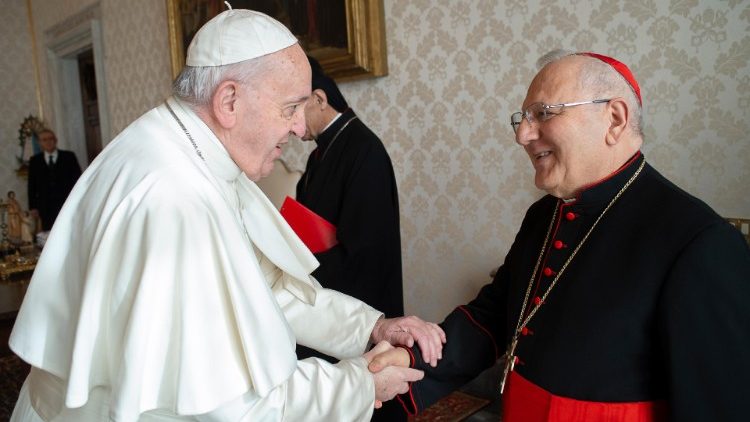
Cardinal Sako: The Pope comes to encourage Christians to remain in the Middle East

Related Posts

Sep 7 2026
Readings

Sep 7 2026

September 7, 2026
Sep 6 2026
Readings

Sep 6 2026

September 6, 2026
Sep 5 2026
Readings

Sep 5 2026

September 5, 2026
Next Post
Cardinal Sako: The Pope comes to encourage Christians to remain in the Middle East

Cardinal Sako: The Pope comes to encourage Christians to remain in the Middle East

Recent News

Pope Leo to seminarians: Learn to remain with Jesus

Pope Leo to seminarians: Learn to remain with Jesus

September 4, 2026
Caritas Internationalis on Nepal: ‘We must all face the climate chaos’

Caritas Internationalis on Nepal: ‘We must all face the climate chaos’

September 4, 2026
Timor-Leste welcomes home mortal remains of bishops who stood with the people

Timor-Leste welcomes home mortal remains of bishops who stood with the people

September 4, 2026
Poland: parents and bishops oppose changes to religious education rules

Poland: parents and bishops oppose changes to religious education rules

September 3, 2026
  • Trending
  • Comments
  • Latest
Minor reshuffle and new appointment of priests

Minor reshuffle and new appointment of priests

July 15, 2024
Enggan punya anak, antara sebab perpisahan suami-isteri

Enggan punya anak, antara sebab perpisahan suami-isteri

May 20, 2025
Expulsion of priests: A loss that turns into strength

Expulsion of priests: A loss that turns into strength

December 15, 2025
Minor transfer of priests

Minor transfer of priests

November 11, 2023
The Church wants to be more the ‘inn’ of the Good Samaritan for the sick

The Church wants to be more the ‘inn’ of the Good Samaritan for the sick

Parishioners are invited to help form prophetic and servant priests

Parishioners are invited to help form prophetic and servant priests

Archdiocesan Notice on SSPX

Archdiocesan Notice on SSPX

April 28 2020

April 28 2020

Sep 7 2026

Sep 7 2026

September 7, 2026
Sep 6 2026

Sep 6 2026

September 6, 2026
Sep 5 2026

Sep 5 2026

September 5, 2026
Pope Leo to seminarians: Learn to remain with Jesus

Pope Leo to seminarians: Learn to remain with Jesus

September 4, 2026
Catholic Sabah

Catholic Sabah is a media organization based in Sabah Malaysia. We bring you the latest Catholic news right to your doorstep!

Follow Us

Browse by Category

  • Asia
  • Bahasa Melayu
  • Chinese
  • Feature
  • Focus
  • Im on my Way
  • JUBILEE 2025
  • Kadazan Dusun
  • Kanou Monuhid Lahan Koposizon
  • Local
  • Making A Difference
  • Mantad Di Katekis Peter
  • Nation
  • News
  • Opinion
  • Readings
  • Reflection: Straight Talking
  • Statements
  • Untold Story of the Living Faith in Sabah
  • Vatican
  • World

Recent Additions

Sep 7 2026

Sep 6 2026

Sep 5 2026

Pope Leo to seminarians: Learn to remain with Jesus

Caritas Internationalis on Nepal: ‘We must all face the climate chaos’

Timor-Leste welcomes home mortal remains of bishops who stood with the people

  • About
  • Contact

© 2024 Catholic Sabah - Powered by KK Top Web.

No Result
View All Result
  • News
  • Opinion
  • Feature
  • Statements
  • Chinese
  • Bahasa Melayu
  • Kadazan Dusun
  • JUBILEE 2025
  • About
  • Donate

© 2024 Catholic Sabah - Powered by KK Top Web.