




















By Petrus Do
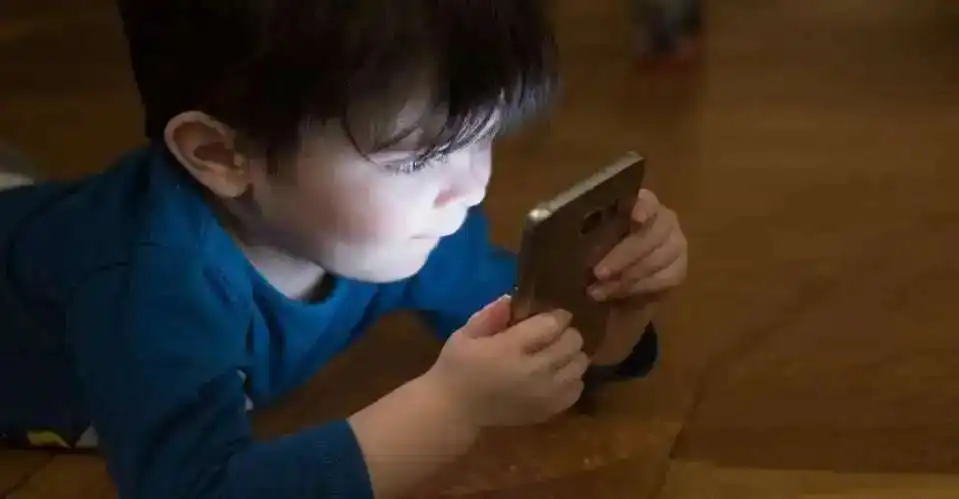
My teenage son used to think I had an answer for everything. Then, as the 2026 World Cup began, he asked me if I knew where Cape Verde was. I hesitated, fumbled, and finally admitted, “I don’t know.” He simply said, “I’ll look it up,” and turned to his phone.
It was a small moment, almost forgettable. But it has stayed with me, because it marked something larger than a lost trivia question.
These days, my son rarely brings me his homework questions either. He asks a chatbot first, then explains the answer back to me. Somewhere along the way, I stopped being his first source of answers.
For most of human history, a parent’s authority rested partly on a simple fact: adults knew more than children, because they had lived longer. Parents and teachers were repositories of answers, and their natural role was to transmit, correct, and confirm what was true.
Artificial intelligence is quietly dismantling that arrangement. Answers are now nearly free and instantaneous, available to any child with a phone. What is left for parents to offer, once the answers themselves are no longer scarce?
The end of the all-knowing parent
It would be easy to mourn this as a loss of authority, and in some sense it is. Yet perhaps what is really being lost is an illusion.
Human beings have never possessed complete understanding. We have only ever had imperfect maps, stories good enough to live by, and models sturdy enough to get us through the winter.
Children in earlier generations believed their parents knew everything, not because parents truly did, but because the world changed more slowly, and the gaps in knowledge could be papered over with habit, tradition, and simple authority.
That cover is wearing thin now, not because today’s parents are less capable than their grandparents, but because the pace of change has outstripped any single mind’s capacity to keep up.
What children need to learn is no longer how to find someone who knows everything. What they need is how to live in a world where even the adults they love are still learning, still revising, still walking forward without a complete map.
Accompaniment, no answers
This shift resonates with something Pope Francis has often spoken of: the ministry of accompaniment, walking alongside another person through uncertainty rather than standing above them with a verdict already prepared.
For centuries, the primary gift a parent offered a child was an answer: which career to choose, how to behave, which path, which mistake to avoid. In a world where answers were scarce, whoever held more knowledge held a real advantage.
AI has opened an entirely different reality, one of abundance rather than scarcity. A chatbot can explain concepts faster, summarize more neatly, and remain more patient than a parent worn down after a long day.
The uncomfortable question this raises is: once answers become abundant, what remains valuable?
An AI system can explain to a child that the sea is blue because of light scattering. It cannot show a child the quiet beauty of a father pausing mid-meal, falling silent for a moment, and saying, “I’m not sure. Let me read more about it tonight.”
A model may forecast how science will advance over the next decade, yet it cannot replace a child’s experience of hearing her mother admit, “I don’t know what the future holds, but I will learn to adapt.”
What a child absorbs in such moments is not information. It is a way of standing before what one does not yet understand.
A small act of self-emptying
There is something here that echoes the Christian understanding of kenosis, the self-emptying described in Philippians, where God did not cling to power but became human, taking on the form of a servant.
Each time a parent dares to say “I’m not sure” in front of a child, something similar, however modest, takes place: a small, voluntary setting-down of the ego.
The silence that follows carries weight because admitting one does not know is costly, not casual. And crucially, nothing collapses afterward. The meal continues. The love remains intact. The child learns that not knowing does not mean losing worth.
This is a lesson in psychological safety, transmitted through relationship rather than content. AI can say “it’s fine not to know” a thousand times, and the words will carry no weight, because no one has staked their ego, their pride, or their love on saying them.
The family as a school of faith
Catholic teaching has long called the family a domestic church, a place where faith is lived before it is taught. Children do not primarily learn from what adults say; they learn from what adults are, especially in unguarded moments.
A lecture on accepting uncertainty tends to slide off. Witnessing someone we love actually live through uncertainty with composure tends to leave a mark.
If AI can now explain doctrine, answer scriptural questions, and summarize the catechism faster than any parent or catechist, then the one thing it still cannot do is live the faith in front of a child.
In many Asian households, where family authority has traditionally carried near-absolute moral weight, this shift may feel especially disorienting, since intellectual authority and moral authority have long been intertwined.
Yet perhaps this disruption offers its own quiet grace.
My son will keep turning to his phone for Cape Verde, for homework, for whatever he needs to know next.
What he will not find there is the sight of someone he loves living honestly: imperfect, unsure, and still steady right in front of him.
That no machine can offer. – UCA News
*The views expressed in this article are those of the author and do not necessarily reflect the official editorial position of UCA News.