












 First reading Ecclesiasticus 48:1-15
The spirit of Elijah fills Elisha
The prophet Elijah arose like a fire,
his word flaring like a torch.
It was he who brought famine on the people,
and who decimated them in his zeal.
By the word of the Lord, he shut up the heavens,
he also, three times, brought down fire.
How glorious you were in your miracles, Elijah!
Has anyone reason to boast as you have? –
rousing a corpse from death,
from Sheol by the word of the Most High;
dragging kings down to destruction,
and high dignitaries from their beds;
hearing reproof on Sinai,
and decrees of punishment on Horeb;
anointing kings as avengers,
and prophets to succeed you;
taken up in the whirlwind of fire,
in a chariot with fiery horses;
designated in the prophecies of doom
to allay God’s wrath before the fury breaks,
to turn the hearts of fathers towards their children,
and to restore the tribes of Jacob,
Happy shall they be who see you,
and those who have fallen asleep in love;
for we too will have life.
Elijah was shrouded in the whirlwind,
and Elisha was filled with his spirit;
throughout his life no ruler could shake him,
and no one could subdue him.
No task was too hard for him,
and even in death his body prophesied.
In his lifetime he performed wonders,
and in death his works were marvellous.
Responsorial Psalm 96(97):1-7
Rejoice, you just, in the Lord.
The Lord is king, let earth rejoice,
let all the coastlands be glad.
Cloud and darkness are his raiment;
his throne, justice and right.
A fire prepares his path;
it burns up his foes on every side.
His lightnings light up the world,
the earth trembles at the sight.
The mountains melt like wax
before the Lord of all the earth.
The skies proclaim his justice;
all peoples see his glory.
Let those who serve idols be ashamed,
those who boast of their worthless gods.
All you spirits, worship him.
Gospel Matthew 6:7-15
How to pray
Jesus said to his disciples: ‘In your prayers do not babble as the pagans do, for they think that by using many words they will make themselves heard. Do not be like them; your Father knows what you need before you ask him. So you should pray like this:
‘Our Father in heaven,
may your name be held holy,
your kingdom come,
your will be done,
on earth as in heaven.
Give us today our daily bread.
And forgive us our debts, as we have forgiven those who are in debt to us.
And do not put us to the test,
but save us from the evil one.
‘Yes, if you forgive others their failings, your heavenly Father will forgive you yours; but if you do not forgive others, your Father will not forgive your failings either.’
__________________________________________
Our Father
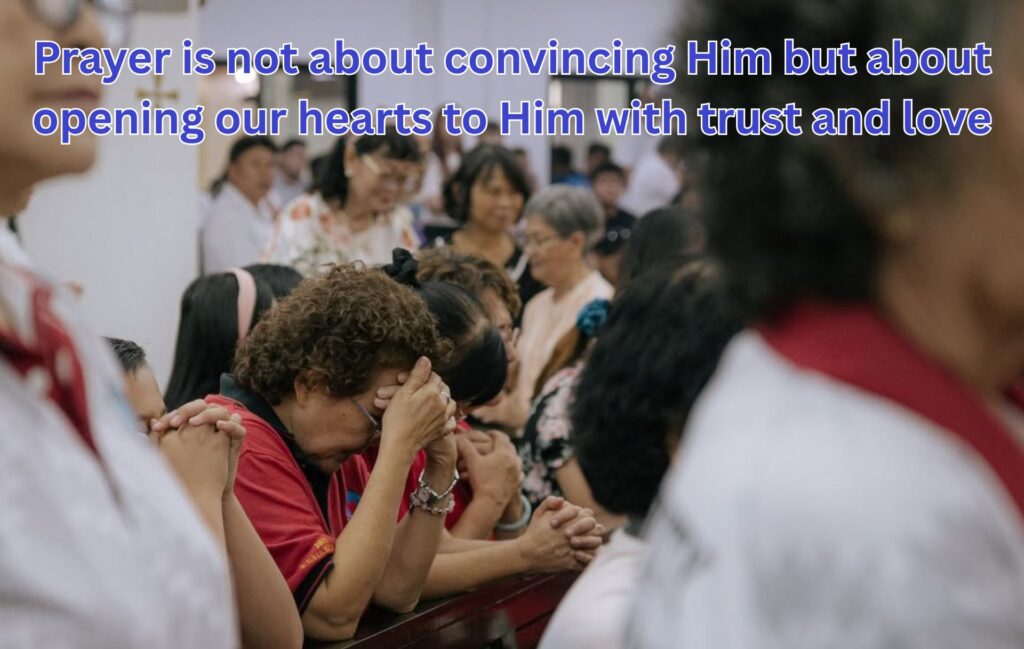
In today’s Gospel, Jesus teaches us not to “babble” in prayer like the pagans, as God already knows our needs. Prayer is not about convincing Him but about opening our hearts to Him with trust and love.
Jesus then gives us the Our Father prayer. He begins by calling God “Our Father,” reminding us of our connection to a larger family and reminding us that we are never alone. “May your name be held holy” means that God be loved in our thoughts, words, relationships and choices. “Your kingdom come, your will be done” signifies surrendering our plans and allowing God to guide our daily lives. “Give us today our daily bread” shows that we trust God to give us what we need today and live without fear of tomorrow. “Forgive us…as we have been forgiven” is a powerful reminder that the mercy we receive from God must be passed on to others. “Do not put us to the test” expresses our desire for God to guide us in walking toward Him rather than away from Him. May we truly mean what we say in the Our Father prayer.
Reflective question:
When I pray the Our Father, do I really mean the words, or do I just say them out of habit?
Acknowledgment: Reflections are based on “Prayer for Living: The Word of God for Daily Prayer Year A” by Sr Maria Jose FMVD