






By Joseph Tek Choon Yee
Read part one here
Different Callings, One Priesthood and One Human Heart
In an era tempted by speed, scale and efficiency, Fr Tobias’ yesteryears at St Mary’s offer a quieter, more demanding lesson: parishes grow deepest not when pastors impress, but when they stay long enough to know their people and love them well.
It would not be honest to suggest that his long ministry was without moments of tension or hurt. Strong convictions and high standards can leave bruises, especially in the close and demanding spaces of parish life. We are all human, priests included, and some who worked with him experienced strain. Yet, with time, what endures is not the difficulty, but the sincerity of his intention: a priest who sought the good of the Church above himself and continuing the journey for the greater glory of God.
Fr Tobias’ story does not end in remembrance; it confronts us as a question within today’s demanding realities of parish life. Amid declining vocations, a shortage of priests, expanding demands and the daily struggles of the faithful, a difficult question quietly surfaces: are diocesan priests still able, amid real constraints, to offer the depth and continuity of pastoral care their vocation calls for? Or has responsibility, often out of necessity, shifted toward structures and committees, sometimes at the cost of closeness to the people they are meant to shepherd?
This is a question for discernment. All priests share one priesthood, but not the same calling. Religious and missionary priests are formed by charism and mission. Diocesan priests are called differently. They belong not to a charism, but to people and place. The parish is not an assignment; it is home. The faithful are not a ministry group; they are their people.
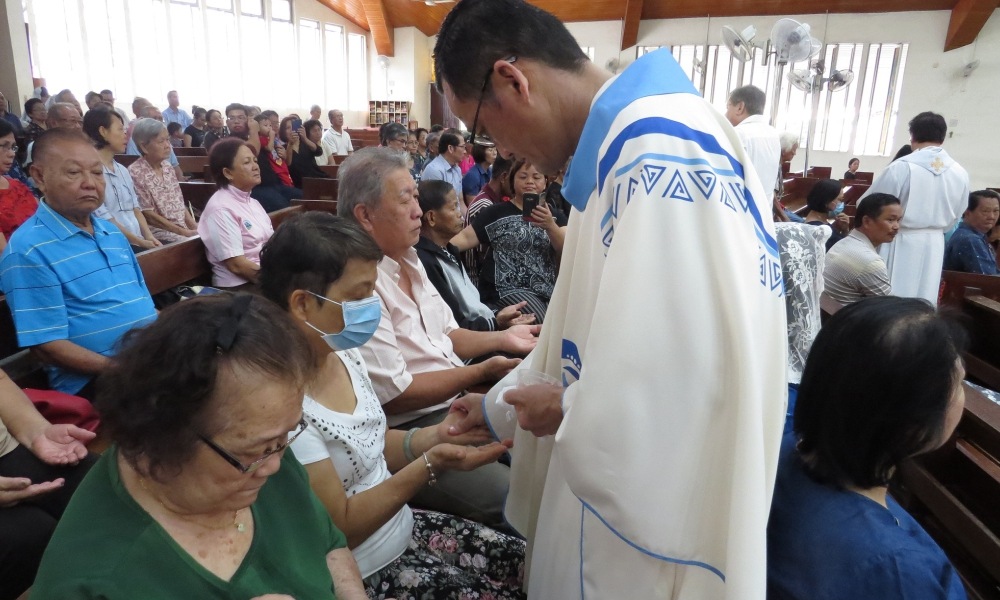
That is why pastoral care is fundamental to the diocesan priesthood. He is called to stay: to preside at the font where life begins, to stand at the altar where grace is shared, to listen in reconciliation, to bless unions, comfort the grieving and commend the dead to God. He walks with families across generations, knowing their stories and silences.
Hidden Cost of Pastoral Fidelity
And yet, here lies the other truth we must name honestly. The priests are stretched thin. They carry on as pastor, counsellor, administrator and spiritual father – often all at once. But behind the collar is a human heart. Priests feel. Priests suffer. And sometimes, priests break.
A parishioner, Raymond Jim recalled a line from Fr Tobias that landed heavily: “Priests have no time to cry.” On the surface, it sounded almost dry, even wry. Beneath it lay the hidden cost of pastoral life – the grief absorbed daily, the burdens carried quietly, the need to keep going because others depend on you.
Recent tragedies in the global Church, includingthe deaths of young priests under immense pressure, remind us that the emotional and spiritual weight of ministry is often borne in silence. As one priest wrote: “Inside every priest there is a human heart. Yes, God is our strength. But we are made of flesh and blood.” Cassocks can hide wounds – loneliness, fatigue, spiritual dryness, the burden of carrying many while having few to carry them.
So how do we hold both truths? Not by asking priests to do more, but by becoming clearer about what truly matters. Delegation has its place. Lay leadership is indispensable. But delegation must never become abdication. Administration can be shared. Pastoral presence cannot be outsourced.
At the same time, pastoral care cannot be sustained on exhaustion alone. Priests need space to rest without guilt, silence without suspicion, renewal without shame. Jesus Himself withdrew to pray. He slept. He asked His friends to stay with Him.
A vocation is not strengthened by denying humanity. It is sanctified by caring for it. Parishes, too, must rediscover community. Priesthood was never meant to be a solo endurance test. It is a shared journey with the People of God.
Home at Last: In Gratitude to the Exiled Shepherds
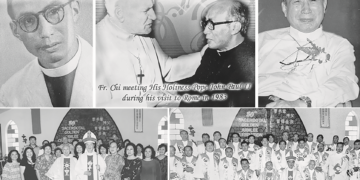
Fr Tobias celebrated his Golden Jubilee of priesthood on Aug 14, 2004, marking 50 years of faithful service at the altar and among the people he loved. He became the first resident of Vianney Home for retired priests. There, he entered a quieter season of priestly life marked by prayer and presence.
In his final months, illness confined him to his bed. He slipped quietly into a coma and died peacefully on Sep 11, 2010, at the age of 86. As Sharon Ho later recalled, on the following morning the Church proclaimed a Responsorial Psalm of rare and tender fittingness: “I will leave this place and go to my Father.” It was not planned. It did not need to be. It simply was a final benediction, spoken without words.
At his Requiem Mass in St Mary’s Cathedral, Sandakan, fellow priests spoke of a man of solid faith; fatherly, understanding, accommodating, deeply attentive to the needs of his people. When I spoke with many parishioners who had known Fr Tobias, their gratitude was often accompanied by tears of remembrance. It was a small but telling sign of how deeply he had been cherished.
A life that had journeyed from China to exile with other China priests, from loneliness to mission, from parish to parish across Sabah, now completed its final passage with the same quiet trust that had marked his priesthood. Not in noise. Not in spectacle. But in peace. And so we take comfort in believing that Fr Tobias has indeed returned to the Father he served so faithfully, received not as a stranger, but as a son who has come home.
In remembering him, we also remember a generation of China-born priests whose lives were shaped by displacement and whose faith was forged in exile. They came without certainty, without familiarity, without applause. They learned new languages, endured loneliness, built parishes from little, and stayed long enough to become fathers to a people not their own. Sabah’s Church was not only served by them, it was quietly formed by them.
The Church does not need priests who burn brightly and briefly. It needs shepherds who can remain, rooted, patient, fully human, fully alive. And perhaps that is the enduring lesson of those exiled priests who came to Sabah, and of Fr Tobias in particular: that faith grows deepest not where pastors arrive impressively, but where they choose, quietly and faithfully, to stay.
As one parishioner, Jacqueline Chu, summed Fr Tobias Chi up simply: a warm smile, a big heart, ever-available, deeply fatherly, human, visionary and ahead of his time; a priest who shaped lives while never ceasing to learn.