












By Noel Mackey, Namyangju City
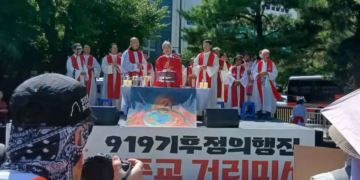
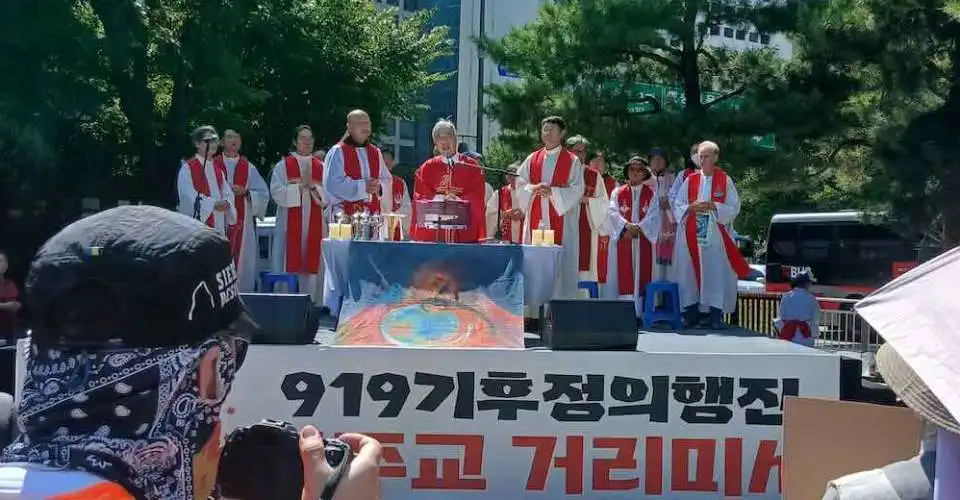
Thousands of Catholics and climate activists gathered at Bosingak Pavilion in central Seoul in September for an outdoor Mass and march calling for climate justice. The annual event, held since 2020, brought together religious groups, labor unions and civic organizations to oppose environmentally destructive development and demand a transition to a low-carbon economy.
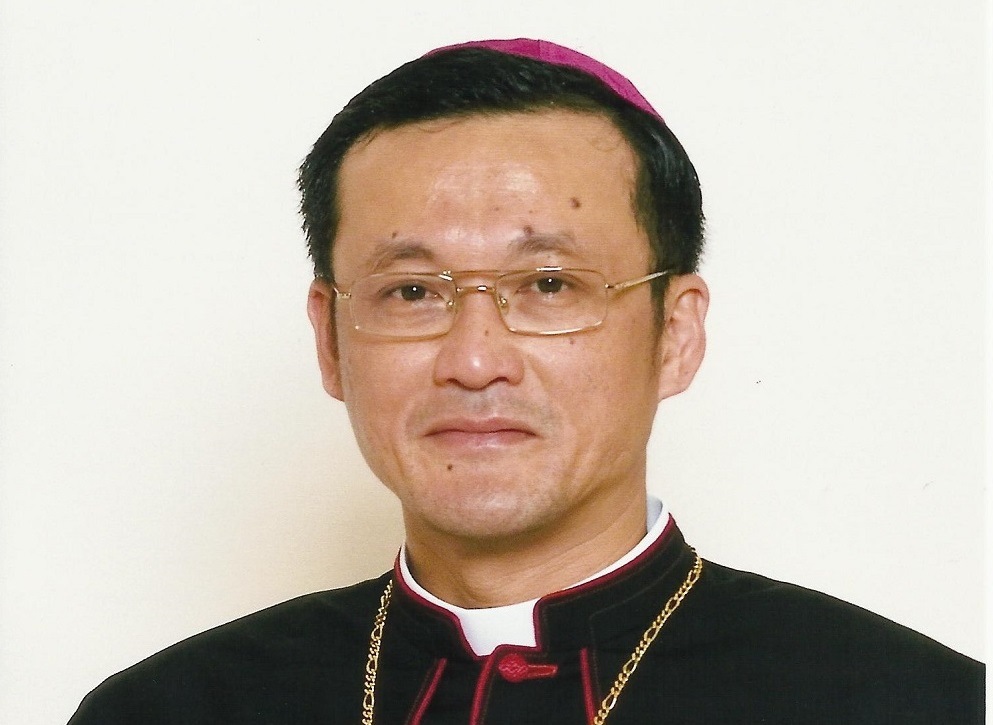
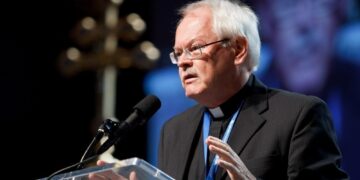
Retired Bishop Kang U-il of Jeju led the Mass on Sep 19, wearing red vestments symbolizing a planet on fire, as did the other concelebrating priests. The Mass preceded a rally through the capital’s streets to mark South Korea Climate Justice Day.
Bosingak Pavilion, a historic bell tower traditionally associated with marking the hours and welcoming the New Year, has become a gathering place for the annual event, which organizers say mobilizes an estimated 20,000 participants each September.
In his homily, Bishop Kang stressed the urgent need to protect the Earth, our common home, and take direct action to address the ecological crisis. He warned that the climate crisis had become an immediate threat to human survival.
This summer, temperatures in Yangsan, South Gyeongsang province, soared to 42 degrees Celsius, while Jeju experienced an extended period of tropical nights. Catholics joined the march in the belief that their participation could help protect the Earth, the only home humanity has.
Recent catastrophic flooding and glacial disasters in Nepal offer further warnings of the dangers associated with a warming climate. Scientists have documented the rapid expansion of glacial lakes in the central Himalayas as global temperatures rise, increasing the risk of devastating floods. Such disasters could strike again, although their timing and location remain uncertain.
Bishop Kang emphasized that protecting creation is not merely an optional ethical choice but a fundamental Christian duty to restore God’s order. He urged Catholics to move beyond passive concern toward active repentance, calling on the Church and wider society to embrace “ecological conversion” and pursue climate justice.
He grounded his reflection in Pope Francis’ encyclical Laudato Si’, which calls on the Church, individuals and policymakers to stand in solidarity with vulnerable people, who often suffer first and most severely from climate change, and to adopt sustainable ways of living.
The bishop also argued that leaders should not simply exercise authority but should help ease the tensions and anxieties experienced by the people they serve. He cautioned against allowing dogma to overshadow genuine human compassion, stressing that “structures are built to serve people, not the other way around.”
Against the backdrop of the climate crisis, he criticized the state’s continued construction of high-voltage transmission towers, expansion of nuclear power and pursuit of major development schemes, including the so-called Three Mega Projects, arguing that such policies ran counter to the need for ecological protection.
He questioned who would benefit from these large-scale projects and called for an end to what he described as a runaway train setting the planet on fire. Christians and other citizens, he said, had a moral responsibility to demand climate justice, protect “living water” and preserve the common home for future generations.
The key focus of this year’s rally was opposition to the government’s plans for three major infrastructure initiatives involving large-scale semiconductor manufacturing, AI-powered manufacturing and the construction of massive AI data centers.
Protesters argued that the projects would consume unsustainable quantities of electricity and water while increasing carbon emissions. They also opposed extending the operating lives of aging nuclear power plants and called for an end to fossil-fuel dependence and destructive development that threatens ecosystems.
Participants carried placards and chanted slogans demanding a “just transition” from a fossil-fuel-dependent economy to a low-carbon one. They called for measures to protect low-income communities, agricultural workers and industrial laborers, who are particularly vulnerable to extreme weather and the economic disruptions associated with the transition.
Nearly 600 civic, environmental, religious and labor organizations co-organized the rally. Conservative police estimates put the number of marchers at about 7,000, while some media reports estimated that 20,000 people took part.
Marchers carried signs made from recycled cardboard and chanted slogans, including “Stop the Runaway Rush Burning the Earth.” They proceeded along major roads in downtown Seoul, using sound trucks, street performances and banners to demand structural reforms.
In a symbolic “die-in,” participants lay together on the pavement to dramatize the threat of ecological destruction and the human toll of worsening climate disasters.
The growing participation of Christians in the rally reflects the importance many place on protecting the Earth as an expression of their faith. In a country of 51 million people, where Christians account for about 31 percent of the population, their presence underscored the call to put care for creation and the well-being of vulnerable communities ahead of rigid dogma and institutional interests. – UCA News
Irish-born Noel Mackey lives in Namyangju City in South Korea’s Gyeonggi Province. A native English speaker, he worked in public schools for 10 years and now works as a freelance teacher, interpreter, translator, and writer.