









By John Singarayar
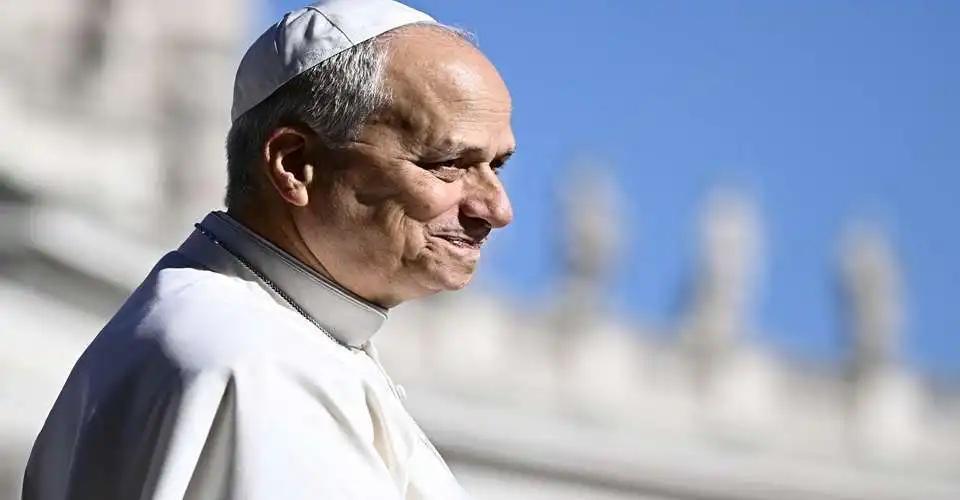
Nobody had Robert Francis Prevost on their shortlist. That may be the most important thing about him, not because surprise is a virtue, but because the fact that he surprised everyone reveals something worth examining about what we have come to expect from powerful institutions and what we have quietly stopped expecting altogether.
He spent years in Trujillo, Peru. Not passing through. Not visiting. Living there, working there, and becoming, over time, the kind of figure that communities in genuine difficulty produce people for and around, someone whose authority is derived not from his title but from the fact that he had stayed. When he returned to Rome in a more senior capacity, he brought something with him that curial life does not easily generate: the knowledge of what it looks like when a system fails a person and the person has nowhere else to go.
He chose the name, Leo. The last Leo of consequence was the thirteenth, who wrote Rerum Novarum in 1891: a document that had the audacity to tell the industrialized world that workers were human beings with rights, not inputs with costs. The choice in 2025 was not nostalgia. It was a signal, directed at anyone paying attention, that this pontificate intended to ask the same uncomfortable question in a new century: what are people for?
The temptation he has so far resisted
The papacy is, among other things, a vast invitation to become something you did not intend. Global visibility does that. Every statement is immediately sorted into political categories, every gesture read as alliance or rebuke, and every silence interpreted as consent or cowardice. Over time, a leader who began with genuine convictions can find themselves managing perceptions rather than telling truths, not through any single dishonest choice, but through the accumulated weight of a thousand small adjustments.
Leo XIV has, so far, resisted this. At his inauguration, he described the Church’s vocation as becoming “a small leaven of unity, communion, and fraternity.” It was a strange image to offer a crowd of hundreds of thousands, which was presumably the point. Leaven does not perform. It does not hold press conferences or position itself strategically. It works from within, slowly, without announcing itself, transforming what it touches not through force but through prolonged contact with something real.
He has also resisted the softer temptation, the one that affects well-meaning leaders more than cynical ones of speaking beautifully about unity while avoiding the specific conflicts that justice actually requires. On a flight to Angola, he named the unequal distribution of wealth as a persistent obstacle to genuine peace. Not poverty in the abstract. Not inequality as a vague systemic concern. The unequal distribution of wealth is a phrase with identifiable causes, identifiable beneficiaries, and identifiable remedies that powerful people prefer not to discuss in those terms.
What he actually believes, as far as anyone can tell
Leo XIV has called economic inequality a “dictatorship.” He means something precise by this. A dictatorship does not merely inconvenience people; it distorts the conditions under which a fully human life becomes possible. It narrows what can be thought, said, and chosen, not always through overt coercion but often through the quiet elimination of alternatives.
He has insisted that migrants carry a dignity that does not depend on their usefulness to a receiving economy and that the Church’s responsibility toward them is not charitable goodwill but structural commitment: to welcome, promote, protect, and integrate them. He has questioned digital cultures that connect people on screens while leaving them inwardly isolated, naming the gap between innovation and communion with more precision than most technology critics manage because he is asking not just what these systems do but what they are doing to the kind of beings who use them.
He has linked all of this to ecological destruction, specifically to the reality that mining, emissions, and environmental damage fall disproportionately on poorer communities, that treating nature as a free input for growth is not just an environmental miscalculation but a moral one, and that an economy measuring success by efficiency while ignoring the cost borne by the vulnerable has confused the instrument for the point.
None of this is unprecedented in Catholic social teaching. What is less common is saying it without softening the diagnosis to protect the audience. Love for the poor, he has written, is not a personality trait or a political preference. It is constitutive of Christian life, meaning a Christianity indifferent to poverty is not a gentler version of the faith but a different thing wearing its name.
Where I am not entirely convinced
The language of dialogue, wielded gracefully, can become a way of postponing the conflicts that genuine change requires. Leo XIV speaks about authentic dialogue with real conviction rooted in the Gospel, characterized by genuine listening, always returning to human dignity as its non-negotiable center. He distinguishes healthy secularism from the hostile kind, insists that European institutions need religion as a moral resource rather than a problem to be managed, and calls for a public culture in which disagreement does not destroy solidarity.
These distinctions are careful. The vision is coherent and attractive.
But I keep returning to a question the documents themselves raise and do not fully answer: what happens when dialogue meets a structure that profits from continuing? What happens when the wound is not a misunderstanding but intentional, when the people causing the harm know exactly what they are doing and have calculated that it is worth it?
A pontificate that can name the wound clearly is genuinely valuable. The harder test: one that is still ahead is whether it can help build the kind of structures that protect workers, migrants, and the poor in ways they can actually see and feel. Inspiration is not nothing. But inspiration without institution eventually exhausts the people it was meant to serve.
I raise this not to diminish what Leo XIV is doing. I raise it because a pontificate this serious deserves scrutiny more than it deserves applause.
Memory, worship, and the shape of hope
One of the least discussed but most quietly important threads of this papacy is its understanding of memory: what it is for and what it does to people when it goes wrong.
In a reflection marking the centenary of the Pontifical Institute of Christian Archaeology, Leo XIV wrote that when memory of the past is illuminated by faith and purified by charity, it nourishes hope. That sentence is doing more work than it appears to. Weaponized memory produces resentment that outlasts the original wound, sometimes for generations. Memory that is held honestly, grieved properly, and eventually released into something constructive can produce the conditions for genuine renewal. The difference between these two outcomes is not time. It is the moral quality of the community doing the remembering.
This connects, in his thinking, to something that sounds liturgical but is actually a claim about psychology and public life: that the moral life is spiritual worship, nourished in the Eucharist, which is not a weekly ritual of agreement among the like-minded but the source from which Christian conscience flows and the summit toward which it returns. When people forget this, when the heart loses its orientation, it does not simply become neutral. It finds something else to organize itself around. Status. Ideology. Resentment. Consumption. Not immediately, and not obviously. But the replacement happens, and its consequences are visible in exactly the places Leo XIV keeps returning to.
A faith that forms conscience without addressing structures is incomplete. Politics that address structures without forming consciences are unstable. He understands both failures. That understanding is rarer than it should be.
What a man from Trujillo knows
There is something specific that years in Trujillo give you that no Vatican appointment can: the knowledge of what it looks like when a person has been failed by every system that was supposed to hold them and is still standing and is still hoping and is asking nothing from you except that you not look away.
Leo XIV has not looked away. That is, in the end, the simplest and most accurate thing that can be said about him. In a world that has perfected the art of looking away: through busyness, through ideology, through the sheer volume of competing claims on attention, a leader who has trained himself, over decades, to keep looking is genuinely unusual.
Whether that is enough for the scale of what the world currently needs, I honestly do not know. The problems are large, the institutions are slow, and goodness, however real, does not automatically become policy.
But there is a prior question, one that tends to get lost in assessments of effectiveness and impact and institutional leverage. It is the question of what kind of person stands at the center of a moment like this one and what they actually believe when no one is measuring the result.
On that question, at least, the answer seems clear.
And it turns out that is not nothing.
*The views expressed in this article are those of the author and do not necessarily reflect the official editorial position of UCA News.