




























By Cong B. Corrales
In the uptown expanse of Manresa, the earth has been laid bare. Where a canopy of 500 trees once stood, there is now only the raw, churned soil waiting for a new project to take shape.
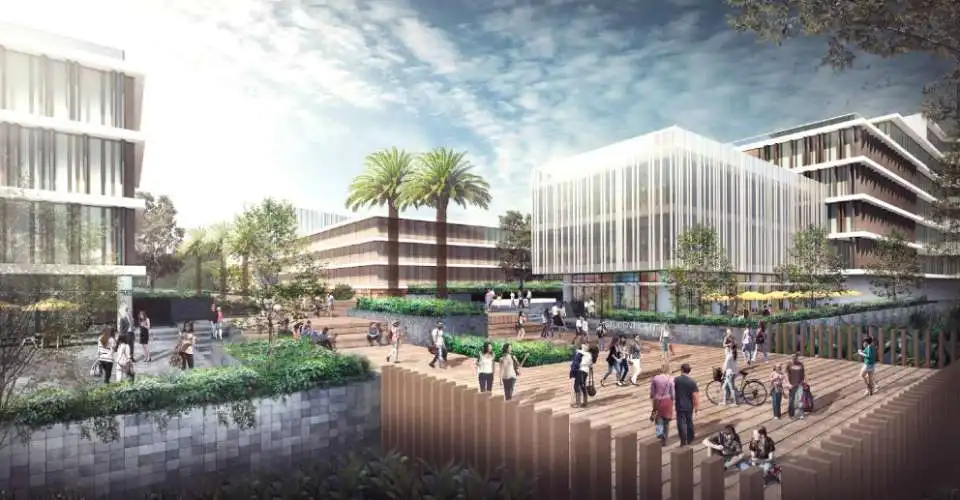
This is ground zero for Xavier University-Ateneo de Cagayan’s (XU) “Campus of the Future” — a sprawling, ultra-modern vision meant to redefine Jesuit education in Mindanao.
But beneath the bulldozed dirt and glossy architectural renderings lies a sleeping giant, awakened by the roar of heavy machinery: a 90-year-old Philippine land law.
The clash between a multi-billion-peso real estate venture and a decades-old land grant condition is unfolding not just as a legal skirmish, but as a battle for the soul of a historic institution.
A vision paved over
To understand the importance of the Manresa soil, one must look back to 1952.
Visionary Jesuit Father William Masterson acquired this land specifically to nurture the university’s College of Agriculture.
It was a space designed by the Church to cultivate stewards of the earth.
Six years later, in 1958, XU etched its name in Philippine education history as the very first Ateneo school to achieve university status.
That same year, a land grant governed by the Public Land Act (Commonwealth Act 141) cemented the property’s destiny. The grant came with a non-negotiable caveat: the land must serve an educational purpose.
Today, 14 hectares of that legacy are being carved out for commercial real estate in a joint venture between XU and Cebu Landmasters Inc. (CLI), a leading developer in Visayas and Mindanao.
For alumni watching the trees fall in the era of Laudato Si’ — Pope Francis’s encyclical demanding environmental stewardship, the irony is bitter.
A project dubbed the “Campus of the Future” is systematically erasing its ecological past.
“The campaign against the sale of the XU downtown campus was successful,” noted alumna Rachel Polistico, watching the uptown development unfold with dismay.
“Now, even the uptown campus will be taken back by the government. Greed can never be satisfied,” she said.
The whistleblowers
The pushback isn’t just moral; it’s heavily fortified by law.
The Concerned Parents, Teachers, Alumni, and Community Against the Sale of the Xavier Campus (Coptac) pulled the emergency brake on the development, pointing directly to the property’s Original Certificate of Title.
Gemma Pabayo-Velasco, a petitioner with Coptac, accused CLI of a massive failure in corporate due diligence. The title, she pointed out, explicitly mandates that the land remain dedicated to education.
“You cannot simply build a commercial hub over an unexpired government restriction,” she said.
“The ownership of XU is not absolute,” explained Ralph Angelo B. Metrillo, legal counsel for Coptac.
He noted that violations of the grant’s conditions trigger immediate rescission of the sale and forfeiture of the property.
He added: “If we pointed this out, the DENR would have missed this.”
The government summons
The Department of Environment and Natural Resources (DENR) didn’t miss it for long.
Prompted by Coptac’s whistleblowing, the DENR Central Office issued a stern memorandum. Taking the threat of forfeiture seriously, Manila directed its regional office to “evaluate the land deal and prepare for possible reversion proceedings.”
The gavel dropped locally on May 11.
The DENR-10, which oversees environmental protection, conservation, and land management in Northern Mindanao, officially summoned XU and CLI.
It issued a 15-day ultimatum for the developers to “submit a written explanation citing the specific laws that authorize the commercial use of the site.”
Project at a crossroads
Despite the looming threat of the national government reclaiming the land, XU and CLI have doubled down on their concrete ambitions.
In an undated joint statement, the partners dismissed the uproar as mere “external noise,” leaning on the Torrens system to claim their title grants them absolute legal certainty to commercialize the space.
They maintain that the modernization of Jesuit education in the region is “non-negotiable.”
Meanwhile, the earth continues to move, and CLI has already begun pre-selling units for the commercial components of the project.
This prompted a stark warning from Metrillo to prospective buyers banking on the blueprint.
“I urge the public to keep track of the developments,” Metrillo cautioned, “especially those who have already invested some of their hard-earned money in this project.”
The “Campus of the Future” currently stands at a crossroads between modern real estate development and historical preservation.
Whether XU and CLI can navigate the legal labyrinth of a 90-year-old public land mandate remains to be seen.
But beyond the courtrooms and DENR summons, the question lingers in the cleared Manresa air: Can a Jesuit institution truly build its future by paving over the roots that made it possible? – UCA News