
























By Joseph Masilamany
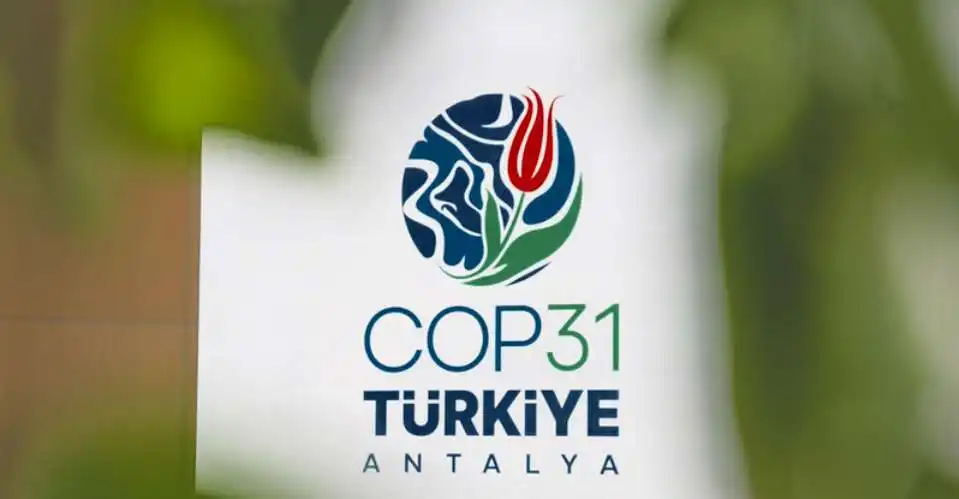
The world will gather in Antalya, Türkiye, from Nov 9-20 for the 31st United Nations Climate Change Conference, better known as COP31. Once again, governments will negotiate, scientists will warn of rising risks, and vulnerable countries will call for greater urgency.
But after three decades of climate conferences, one difficult question remains: why is the world still struggling to turn promises into action?
The answer matters especially to Asia, where millions face the consequences of rising temperatures, floods, droughts, coastal erosion, and worsening air pollution.
For poor families, farmers and indigenous communities living in vulnerable coastal areas, climate change is not an abstract debate about global targets. It threatens homes, livelihoods, food security and health.
COP31 must therefore be judged not by how many leaders attend or how strong their declarations are, but by whether governments can show measurable progress in reducing emissions, financing adaptation, and protecting those most exposed to climate risks.
The challenge is no longer simply to reach an agreement. It is to make existing agreements work.
From Kyoto to Paris: The unfinished business
The international climate process has achieved important milestones. The 1997 Kyoto Protocol established emissions-reduction commitments for participating developed countries. The 2015 Paris Agreement brought countries together around the goal of holding global warming well below 2 degrees Celsius above pre-industrial levels while pursuing efforts to limit it to 1.5 degrees.
These agreements matter. They have helped establish international rules, encouraged countries to set climate targets, and made global warming a central concern of economic and political policymaking.
Yet the gap between commitments and implementation remains deeply troubling.
Governments continue to approve or support fossil-fuel infrastructure even as scientists call for rapid reductions in greenhouse gas emissions. Renewable energy is expanding, but progress varies considerably between countries and sectors. National climate targets do not always translate into policies that can achieve them.
The 2023 Global Stocktake under the Paris Agreement acknowledged the need for a transition away from fossil fuels in energy systems. It also called for tripling global renewable energy capacity and doubling the global average annual rate of energy-efficiency improvements by 2030.
The question for COP31 is whether governments are implementing these commitments quickly enough.
The 1.5-degree goal has become an increasingly urgent warning. Global temperatures have exceeded 1.5 degrees above pre-industrial levels in individual years. This does not, by itself, mean the Paris Agreement’s long-term temperature goal has formally been breached, but it demonstrates how close the world is approaching a dangerous threshold.
Even if limiting long-term warming to 1.5 degrees becomes increasingly difficult, further emissions reductions remain essential. Every fraction of a degree matters because climate risks generally increase as temperatures rise.
COP31 must resist the temptation to treat new declarations as evidence of progress. What matters is whether emissions are falling, fossil-fuel dependence is declining, and countries are preparing their populations for the impacts that can no longer be avoided.
Climate justice cannot remain a slogan
The climate crisis also raises a fundamental question of fairness: who bears responsibility, and who pays for the damage?
Industrialized countries have contributed substantially to historical greenhouse gas emissions. Developing countries, meanwhile, still face the challenge of improving living standards, expanding access to electricity, and creating employment while reducing their environmental impact.
Within Asia itself, responsibilities and vulnerabilities differ considerably. China and India are major emitters, while many smaller and poorer countries have contributed far less to global emissions but face severe exposure to rising seas, extreme weather and agricultural disruption.
Treating Asia as a single bloc with identical interests would be misleading. Nevertheless, its governments share a strong interest in making climate finance, technology transfer, and adaptation support more accessible.
The climate-finance agreement reached at COP29 in Baku called on developed countries to lead the mobilization of at least US$300 billion annually for developing countries by 2035, as part of a broader effort to scale up finance from all sources to US$1.3 trillion annually.
These figures must translate into meaningful support on the ground. Developing countries need to know how much money will actually be delivered, when it will arrive, whether it comes as grants or loans, and whether vulnerable communities can access it.
Climate finance should not leave poorer countries struggling with additional debt as they attempt to protect their people from climate impacts.
Nor should adaptation be treated as a secondary concern. Stronger flood defenses, heat-action plans, resilient agriculture, early-warning systems and reliable public-health services can save lives even as governments work to reduce emissions.
For the Church, these questions concern human dignity and solidarity. Those least responsible for the crisis should not shoulder its highest costs.
Malaysia and Indonesia: A regional test
Southeast Asia offers a practical example of why climate action requires more than national promises.
Recurring forest and peatland fires in Indonesia have contributed to transboundary haze affecting neighboring countries, including Malaysia and Singapore. Smoke crosses borders, exposing millions to unhealthy air and disrupting schools, businesses, transport, and everyday life.
The causes are complex, but the regional consequences are clear: environmental damage within one country’s borders can impose serious costs on people elsewhere.
The ASEAN Agreement on Transboundary Haze Pollution, adopted in 2002, provides a framework for regional cooperation. Yet persistent haze raises questions about the effectiveness of prevention, enforcement, transparency, and accountability.
Companies operating in fire-prone areas should face credible scrutiny, with evidence-based investigations and enforcement. Regional cooperation must also include better public-health warnings and practical measures to protect vulnerable people during severe haze episodes.
This is not simply a dispute between neighboring governments but a shared responsibility for the air people breathe.
The same principle applies to the wider climate crisis. Countries cannot protect their populations effectively if they treat environmental threats as problems confined by political boundaries.
Malaysia must demonstrate credible action at home. Its forests and biodiversity are important environmental assets, particularly in Sabah and Sarawak, but forest-cover figures alone cannot establish whether ecosystems are being adequately protected.
It must also consider forest degradation, peatland emissions, restoration outcomes, and Indigenous communities’ rights.
Malaysia’s energy transition presents another test. Expanding renewable energy, improving efficiency, and modernizing electricity infrastructure must be matched by a credible plan to cut emissions while keeping power reliable and affordable.
A stronger Malaysian position at COP31 would combine these domestic responsibilities with practical proposals for regional cooperation. It should show what the country is prepared to do, what support it needs, and what measurable outcomes it expects from its neighbors.
The moral responsibility to act
Climate negotiations are difficult because countries have different economic interests, development priorities and political constraints. Reaching consensus among nearly 200 parties is not easy.
But the difficulty of negotiations cannot excuse postponing action.
For the Catholic Church and other faith communities, climate action also carries a moral responsibility. Pope Francis’ encyclical Laudato Si’ challenged humanity to recognize the connection between environmental destruction, poverty, and social injustice.
His apostolic exhortation Laudate Deum warned that the response to the climate crisis has been inadequate.
These concerns extend beyond religious institutions. They speak to the responsibility of governments and societies to protect human life, preserve the natural world and consider the consequences of present decisions for future generations.
Climate action cannot be reduced to a choice between protecting the environment and pursuing economic development. Poor communities need jobs, affordable energy, food security and better living conditions. They also need protection from the environmental damage that can undermine those very goals.
A just transition must therefore ensure that the costs of change do not fall disproportionately on workers, low-income households and communities with limited resources.
When COP31 concludes, the world will have another set of decisions to assess. The real test will come afterward: whether governments change their policies, whether promised finance reaches those who need it and whether emissions begin falling at the pace science demands.
Thirty climate conferences have established much of the international framework. The task now is to close the gap between what governments say and what they do.
For Asia’s vulnerable communities, the consequences of delay are already visible. They cannot afford another cycle of promises without meaningful progress.
COP31 must demonstrate that international cooperation can deliver results. Anything less would widen the gap between the climate crisis’s urgency and governments’ willingness to confront it. – UCA News
*The views expressed in this article are those of the author and do not necessarily reflect the official editorial position of UCA News.