











 IN Response to the Statement by Mr Shalmon Sanangan and the Sabah Native Customary Community Organisation (Maans)
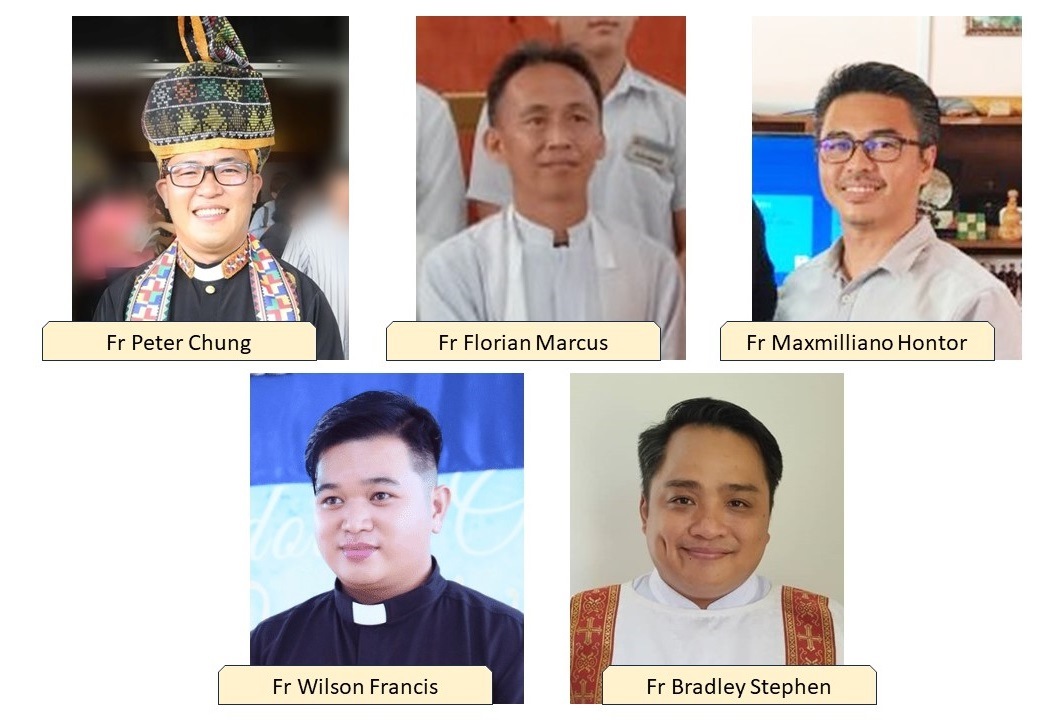
Issued jointly by the leadership of St Michael’s Parish, Penampang, and St Augustine’s Parish, Kinarut
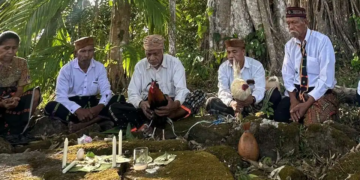
We refer to the statement by Mr Murug Vinangun Shalmon Sanangan, President of the Sabah Native Customary Community Organisation (Maans), published in Daily Express on Oct 21, 2026, concerning the traditional Momisok practice and the call for further clarification, dialogue and assurances from the Catholic Church.
We welcome the opportunity to clarify the matter, address the concerns raised and reaffirm our commitment to mutual respect, peaceful coexistence and the preservation of the dignity of all communities in Sabah. At the same time, we consider it necessary to set out clearly the pastoral purpose and religious context of the announcement made in our parishes.
- The Announcement Was Addressed to Catholics in Two Parishes, Not the Entire Kadazandusun Community
The announcement concerning the Momisok practice was made during the Sunset Masses and Sunday Masses on Oct 10 and 11 2026 in the churches and chapels under the jurisdiction of St Michael’s Parish, Penampang, and St Augustine’s Parish, Kinarut.
The announcement was directed to the Catholic faithful of these two parishes in the exercise of our pastoral responsibility to guide them in matters of faith and Christian living. It was not a directive addressed to the entire Kadazandusun community, nor was it intended to prohibit non-Catholics from observing their customary traditions.
Unfortunately, the announcement circulated widely on social media and attracted responses that extended beyond its original audience and pastoral context. This development appears to have contributed to the perception that the Church was issuing a blanket condemnation or prohibition of Momisok among all Kadazandusun people.
We wish to make it unequivocally clear that this was not the intention. The scope of the announcement must be understood within its proper ecclesial context: the spiritual formation and pastoral care of Catholics entrusted to these two parishes.
- The Pastoral Apology and Clarification Must Be Understood in Its Proper Context
Following the public responses, the Parish Priest of St Michael’s Parish, Penampang, and St Augustine’s Parish, Kinarut, issued a Pastoral Apology and Clarification addressed specifically to the faithful of these two respective parishes.
The apology acknowledged that the original announcement may have been understood too broadly, particularly because it did not sufficiently distinguish between the traditional Momisok practice and forms of inculturation in which certain cultural expressions have been adapted and given a Christian meaning.
The clarification was therefore necessary to avoid misunderstanding and to distinguish between cultural expressions that can be compatible with Christian faith and ritual elements whose beliefs, invocations or religious meanings may contradict Catholic doctrine.
The apology was not an abandonment of Catholic teaching, nor was it a withdrawal of the Church’s responsibility to guide its faithful. Rather, it was an acknowledgement of the need for greater pastoral precision, sensitivity and clarity in communicating that teaching.
We recognise that cultural practices are often complex and that their meanings may vary across communities, families and generations. For this reason, it is important to distinguish carefully between the cultural form of a practice and its underlying religious meaning.
- Inculturation Does Not Mean Accepting Every Traditional Religious Belief
The Catholic Church recognises the value of culture and the importance of expressing the Christian faith through the language, symbols, music, customs and legitimate traditions of local communities. This process is commonly understood as inculturation.
However, inculturation is not simply the addition of Christian prayers or symbols to an existing ritual. Neither does it mean that every traditional religious belief becomes acceptable merely because it is incorporated into a Christian setting.
Authentic inculturation requires that cultural expressions be examined and discerned in the light of the Gospel and the teaching of the Church. Cultural elements that are compatible with Christian faith may be preserved, purified and given an appropriate Christian expression. Elements that contradict the essential truths of the faith cannot be retained unchanged.
The Pastoral Apology and Clarification issued by our parishes remains committed to providing further catechesis and formation so that the faithful may understand these distinctions more fully.
At the same time, we reaffirm our commitment to the teaching of the Church, particularly the Catechism of the Catholic Church, which teaches that the First Commandment requires the worship of God alone and rejects idolatry, superstition, divination and practices that attribute supernatural power to sources other than God (CCC 2110–2117).
Our concern, therefore, is not with the mere preservation of Kadazandusun cultural identity, nor with every cultural expression associated with the departed. Our concern is with those specific religious elements of the traditional practice that, when understood and performed according to their traditional religious meaning, are incompatible with Catholic doctrine.
This distinction is essential if the discussion is to proceed fairly and accurately.
- Respect for Customary Heritage and the Church’s Pastoral Responsibility Are Distinct Matters
We acknowledge the concern expressed by Maans that indigenous customary heritage should not be demeaned, marginalised or indiscriminately rejected. We agree that cultural heritage deserves serious consideration and that the dignity of the Kadazandusun people must always be respected.
Nevertheless, respect for a community and its cultural heritage does not require the Catholic Church to approve every religious belief or ritual associated with that heritage.
Likewise, the Church’s decision to guide its own members in matters of religious doctrine should not automatically be interpreted as an attack on the culture or identity of the wider community.
The present matter concerns the pastoral and doctrinal responsibilities of the Catholic Church towards its own faithful. It is therefore important not to conflate a religious community’s right to determine how its members should practise their faith with an alleged attempt to suppress the customary heritage of an entire ethnic community.
While dialogue is valuable when there are genuine misunderstandings or matters of mutual concern, it should begin with an accurate understanding of the issue. In this instance, the central clarification has already been provided through the Pastoral Apology and Clarification addressed to the faithful of the two parishes.
We therefore respectfully maintain that the matter should not be portrayed as a general dispute between the Catholic Church and the Kadazandusun customary community.
- Respecting Customary Practices and Living the Christian Faith
A distinction must be drawn between respecting customary practices as cultural heritage and personally participating in practices as an expression of religious belief.
A Catholic may appreciate the cultural significance of a traditional ceremony, preserve its historical knowledge, respect elders who maintain its heritage, and participate in legitimate cultural expressions without necessarily adopting every religious belief associated with it.
However, when a particular ritual requires a Catholic to profess or perform religious acts that contradict the faith he or she has embraced, the matter is no longer merely cultural. It becomes a question of conscience and fidelity to Christian belief.
For Catholics, faith in Jesus Christ entails a commitment to follow His teaching even when doing so requires discernment concerning inherited customs. This is not a rejection of one’s ethnic identity. It is a recognition that Christian faith has its own convictions, obligations and boundaries.
Jesus teaches in Matthew 6:24 that no one can serve two masters. In applying this principle, we must be careful not to imply that culture and Christianity are inherently opposed. Rather, the teaching reminds us that where competing religious allegiances arise, a Christian must remain faithful to God.
We therefore call upon all Catholic faithful to examine traditional practices conscientiously, seek proper catechesis and guidance from their pastors, and avoid participating in ritual elements that conflict with the Catholic faith.
- Freedom of Religion Includes the Freedom to Live According to One’s Faith
Freedom of religion is a fundamental right that must be respected. It protects the freedom of individuals and communities to embrace, practise and express their religious convictions, subject to the applicable law.
However, religious freedom does not mean that every religious belief or customary ritual must be accepted by every religious community. Nor does it require a church to suspend its doctrine whenever that doctrine differs from another community’s religious or customary understanding.
The freedom to choose and practise a religion necessarily includes the freedom to live according to the teachings and moral commitments of that religion. For Catholics, this entails accepting the authority of the Church’s teaching on matters of faith and morals.
The Catholic Church does not claim the right to determine what every Kadazandusun person, regardless of religious affiliation, must believe or practise. Equally, no external organisation should presume to determine what the Catholic Church must teach its members concerning the requirements of their faith.
This mutual recognition of boundaries is not discrimination. It is an essential aspect of respecting genuine religious freedom.
- On the Reference to the Native Courts Enactment 1992
We take note of Maans’s reference to the Native Courts Enactment 1992 and the legal recognition of native customary law in Sabah.
We respect the legitimate role of native institutions and the applicable legal framework in matters falling within their jurisdiction. Nothing in our pastoral clarification is intended to deny the dignity of native customary heritage or the proper recognition afforded to it under the law.
Nevertheless, the existence of a legal framework recognising native customs does not, by itself, determine whether a particular religious practice is compatible with Catholic doctrine.
The question before us is not a legal dispute over the validity of a customary practice, nor are we seeking a determination from the Native Courts concerning the beliefs of the wider Kadazandusun community. The issue is whether certain elements of a traditional ritual can be reconciled with the faith professed by Catholics.
These are distinct questions. Legal recognition of a custom and the Church’s doctrinal assessment of its religious meaning operate in different spheres, although both must be exercised within the applicable law and with due respect for the rights of others.
We therefore consider the reference to the Native Courts Enactment 1992 not directly determinative of the pastoral and doctrinal question at hand. We make no assertion that customary law is without legal significance; rather, we maintain that its recognition does not require the Catholic Church to endorse religious elements that conflict with its teachings.
- On the Call for Further Clarification, Dialogue and Assurances
We appreciate Maans’s stated concern that differences of religious interpretation should not lead to discrimination, social division or the denigration of native customary heritage. We share the desire for peace, mutual respect and harmony among Sabah’s diverse communities.
At the same time, the Pastoral Apology and Clarification has already addressed the scope and purpose of the announcement, acknowledged the potential for misunderstanding, distinguished traditional Momisok from forms of Christian inculturation, and reaffirmed the Church’s commitment to catechesis and formation.
In light of these clarifications, we do not consider it necessary to issue a further general assurance that would suggest the Church must reconsider or qualify its doctrine in response to external demands.
The Catholic Church is not seeking to regulate the customary practices of non-Catholics. Its pastoral direction concerns the spiritual welfare and religious obligations of its own members. That responsibility must be respected just as we respect the right of other communities to preserve their own traditions.
Should a specific and genuine misunderstanding remain, respectful communication is always possible. However, dialogue should not be construed as an obligation for the Church to compromise its doctrinal convictions or to seek external approval for its internal pastoral guidance.
We therefore consider the existing pastoral clarification sufficient to establish the intended scope of the announcement, while remaining open to constructive engagement that respects the distinct responsibilities and legitimate concerns of all parties.
- An Appeal to the Catholic Faithful
We wish to conclude by addressing our Catholic brothers and sisters directly.
We are proud of our cultural heritage and grateful for the traditions that have shaped our families, communities and sense of belonging. We should preserve what is good, honour our elders, maintain our language and cultural knowledge, and pass on the richness of our heritage to future generations.
Yet, as Catholics, our cultural inheritance must be lived in harmony with the faith we profess. We cannot preserve a religious practice merely because it is old or customary if its underlying religious meaning contradicts our commitment to Jesus Christ.
We therefore encourage all Catholic faithful, particularly those who continue to practise or participate in Momisok, to approach this matter with humility, an informed conscience and a willingness to receive proper catechesis. Where uncertainty exists, they should seek guidance from their parish priests and catechists rather than rely solely on social media discussions or public commentary.
Our appeal is not to abandon our identity as Kadazandusun people, but to live that identity faithfully as Christians. We can cherish our cultural heritage without embracing every religious belief associated with it. We can respect those who follow different traditions without compromising the faith to which we have committed ourselves.
Let us preserve our cultural heritage with respect, exercise our religious freedom responsibly, and remain steadfast in our commitment to Jesus Christ.
We trust that these clarifications will help restore the proper context of the matter and prevent further misunderstanding. We remain committed to peaceful coexistence, mutual respect and the continued spiritual formation of the Catholic faithful entrusted to our pastoral care.
May our differences be approached with wisdom, charity and mutual understanding, for the good of our communities and the harmony of Sabah.
Issued jointly by:
– The Parish Priest
– The Assistant Parish Priests
– The Religious Communities
– The Parish Catechists
St Michael’s Parish, Penampang, and St Augustine’s Parish, Kinarut