














By Paterno R Esmaquel II
Why does this ceremonial job matter for the global Church?
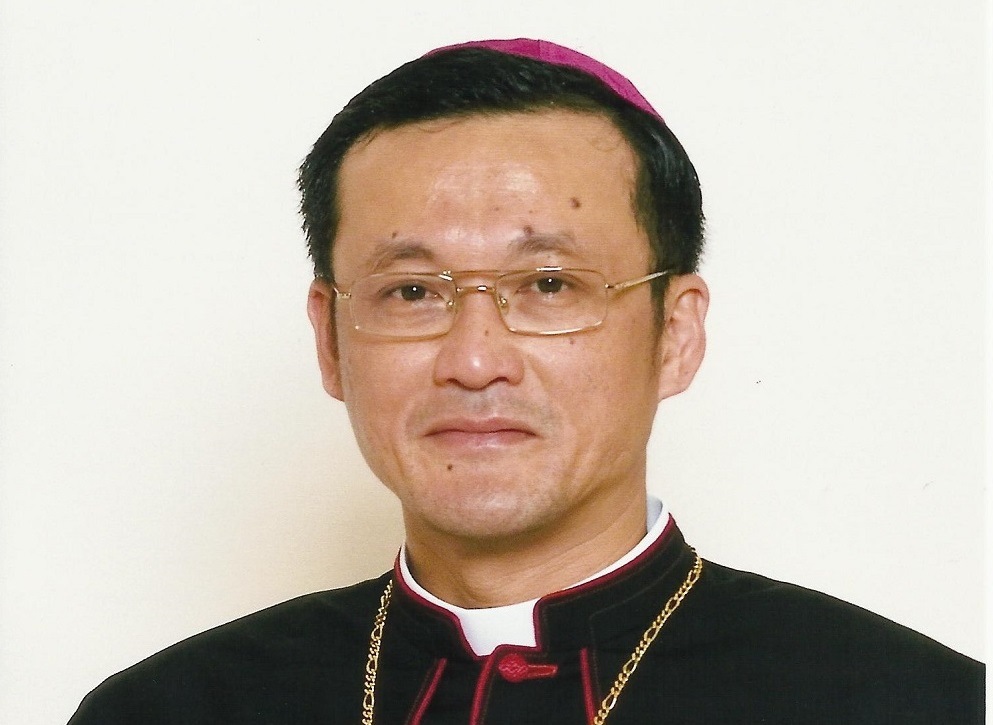
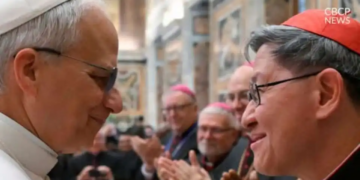
The election of Cardinal Luis Antonio Tagle, a 69-year-old Filipino, as dean of the College of Cardinals has made headlines around the world and drawn cheers, especially in his native Philippines.
The former Manila archbishop, after all, is the first Asian to take on this role, replacing 92-year-old Italian prelate Cardinal Giovanni Battista Re.
Concerning Tagle’s new role, one common question is its impact on the Church, which has 1.4 billion members.
If viewed through the lens of day-to-day governance or policymaking, the role of the dean carries little weight.
The dean of the College of Cardinals is the primus inter pares — the first among equals — in this collegial body of 241 cardinals, whose primary task is to advise the pope and, for those among them below 80 years old, to elect his successor.
The Code of Canon Law states that the dean “presides over the College of Cardinals,” but “neither the dean nor the assistant dean possesses any power of governance over the other cardinals.”
A Vatican News article explains that the dean “will not exercise hierarchical governing authority over his fellow cardinals but rather coordinate their activities.”
The dean takes on his most important role when the pope dies or resigns. He is then responsible for convening and presiding over the conclave, the papal election in which cardinals under 80 elect the pope’s successor. (The dean, however, can only preside over the conclave if he himself is below 80 years old; otherwise, the vice dean should take his place.)
This means we cannot expect much from the dean in day-to-day matters. Other personalities in the Vatican, particularly in its dicasteries, hold more functional roles that help run the Church’s complex bureaucracy.
Neither can we expect much from the dean when it comes to policy, including doctrine.
Church policies do evolve, but the evolution can take decades or even centuries.
We cannot compare the dean of the College of Cardinals to any powerful figure in national politics. Even if the dean occupies such a lofty position, he cannot change even a letter in the Church’s policies.
Only the pope can, in the end, decide such policy shifts with the guidance of the Holy Spirit and the prayerful discernment of the People of God.
What, then, is the big deal about Tagle’s election as dean?
In the Catholic Church, power is measured not only by function or policy. Like other religious traditions, the Catholic Church draws its power largely from symbols — our stories, icons, emblems, and saints. From a religious perspective, we cannot dismiss any position or ritual as “just” ceremonial. What is ceremonial can also be political.
The ceremonial role of Tagle, while lacking in functional or policy impact, is a powerful symbol of the Church’s shift to the Global South.
Over the past few decades, we have witnessed the decline of the Catholic Church in Europe — its traditional power center — and its rise in Asia and Africa.
This year’s Annuario Pontificio, which compiles official Vatican statistics around the world, states that in terms of the number of baptized Catholics, “Europe remains the least dynamic continent, with Catholic numbers rising by only 0.8 percent.”
Africa now holds a slightly larger share of the global Catholic population (20.3 percent) than Europe (20.1 percent), while Asia accounts for 11 percent.
Asia and Africa have also seen growth in the number of bishops (+3.3 percent for Asia and +2.6 percent for Africa), while Europe (+1.1 percent) and the Americas (+1.3 percent) fall below the global average of 1.75 percent.
Yet, according to Annuario Pontificio, “Europe and the Americas together continue to account for roughly 68% of all bishops.”
Thus, while the Church is declining in Europe and growing in Asia and Africa, the hierarchy remains predominantly European.
This has been the case for centuries.
The College of Cardinals, created in 1150, was traditionally composed of European clerics. According to the book Il Conclave: Storia e Segreti, the college was, in fact, 97 percent European until over a century ago.
Today, Europeans still make up the largest number of cardinals, but their percentage has dwindled over the years.
Based on the latest Vatican statistics, the College of Cardinals is now 45 percent European, a far cry from the nearly 100 percent over the past millennium.
In the current composition, 15 percent of cardinals are Asians while 12 percent are Africans.
The last conclave, which elected Pope Leo XIV, saw the biggest number of Asian and African cardinal electors in history — 30 percent combined, compared to 19 percent in the conclave of 2013 (which elected Pope Francis) and 18 percent in the conclave of 2005 (which elected Pope Benedict XVI).
Yet, despite the changing statistics, one thing remained missing — representational leadership — until Tagle was elected dean.
The Filipino cardinal’s new position is a tectonic move towards greater representation of Asia and Africa.
Tagle, as the first Asian dean of cardinals, represents the changing face of the Catholic Church, from a Eurocentric to a more universal and, in fact, more “catholic” Body of Christ.
But the bigger challenge goes beyond ecclesiastical titles or even greater representation of continents.
The election of the first Asian dean of cardinals is a powerful symbol, yet that power derives not from an attitude of dominance, as if to say, “We, the Asians and Africans, are now here to lord it over the Europeans.”
The symbol matters only insofar as it propels Catholics to greater mission.
For Catholics in Europe, especially clerics in the Roman Curia, it serves as a reminder that the Church is larger than the Western world and that an inclusive attitude is part of the New Evangelization.
For Catholics in Asia and Africa, it is not only a matter of pride, but a call for us, former recipients of the European missions, to be the new missionaries for the rest of the world. – UCA News
*The views expressed in this article are those of the author and do not necessarily reflect the official editorial position of UCA News.