













By Ryan Dagur
As the sun dipped behind Wae Sano village, the aroma of cooked cassava, coconut and palm sugar drifted across the grounds of St Michael Church in Indonesia’s Catholic-majority Flores Island in early October.
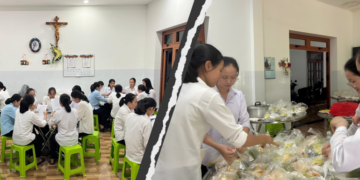
A group of women was busy arranging cassava bread, herbal drinks, honey, coffee and tubers at stalls set up for a traditional festival. Nearby, local rice, corn, sorghum and bean seeds were displayed as reminders of the crops that have sustained families for generations.
At the Wakar small Christian community stall, 61-year-old Elisabet Saila sold lemet — a steamed cake made from grated cassava, coconut and palm sugar for 2,000 rupiah (11 US cents), herbal drinks for 10,000 rupiah and cassava bread for 50,000 rupiah.
Saila did not give sales figures. “We made a good profit,” she said, smiling.
The scene at the parish in Nunang under Labuan Bajo Diocese is common during Sano Nggoang Earth Festival, an annual traditional indigenous festival, held Oct 3-7 this year.
This year’s festivities coincided with the 60th anniversary of St Michael Parish, about a four-hour drive from Labuan Bajo, a popular tourism destination and gateway to world-famous Komodo National Park, home to the giant Komodo lizards.
The parish encircles Sano Nggoang, a 513-hectare volcanic lake surrounded by farms, forests and mountain springs. The lake’s highly acidic, sulfurous waters contrast with the fertile gardens and freshwater sources around it.
The festival focuses on preserving local wisdom through culture, economy and ecology as part of the Church’s commitment to integration, organizers say.
This year’s festivities combined food stalls and seed displays with Catholic prayers, indigenous rituals and discussions on farming and waste management.
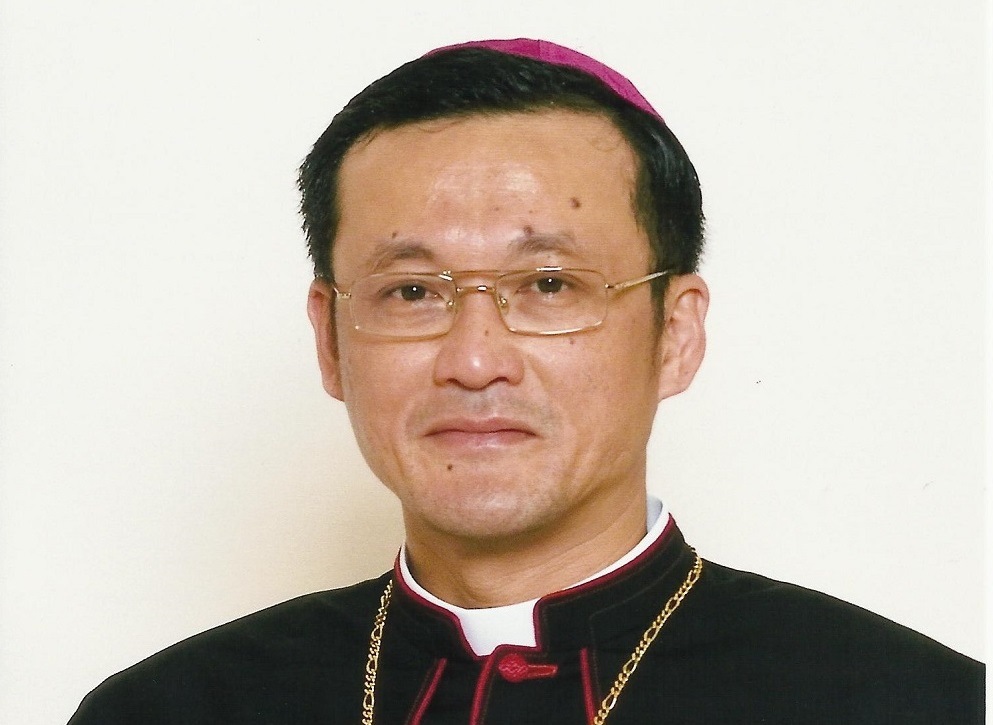
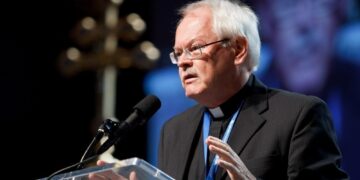
Bishop Maksimus Regus of Labuan Bajo, who opened the festival, said the remote parish had stories to tell through “symbols, togetherness and prayer.”
“Although Nunang Parish is on the periphery, stories from the periphery can transform the ordinary into something extraordinary,” he said.
Ancestral rituals in parish life
Parish priest Father Valerianus Paulus Jempau said the festival brought together Catholic faith and Manggarai heritage by linking worship with farming and customary respect for land and water.
He said Catholicism recognizes that religion and culture are not theological adversaries. The Second Vatican Council insisted on greater recognition of the virtues and wisdom present in different cultures.
“Since then, religion and culture have stood side by side, like two wings of the same bird,” Jempau told UCA News. “The Catholic faith is not present to detach people from their culture.”
He said contextual theology allows Catholics to interpret the Christian faith through Scripture and Church tradition, as well as the social, cultural, and historical realities in which they live.
He dismissed the misconception that indigenous tradition of honoring their ancestors amounts to deviation from faith or even idolatry.
Each evening began with the rosary. Parishioners lit candles for “Mother Earth,” while workshops covered organic farming and livestock practices, natural dyes for weaving, and household waste sorting.
“I think all of this is part of prayer,” Jempau said. “This festival is a moment of reflection.”
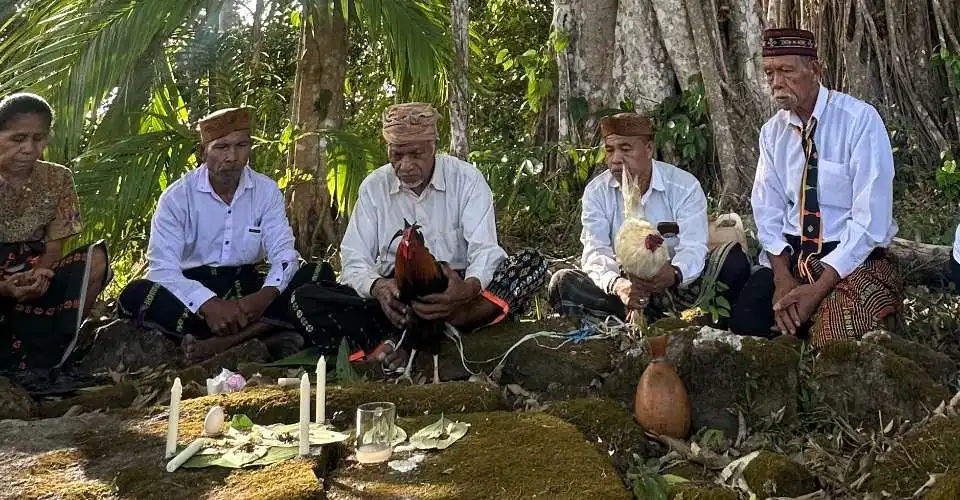
On Oct 6, parishioners walked from the church grounds to sites regarded as sacred in Manggarai custom.
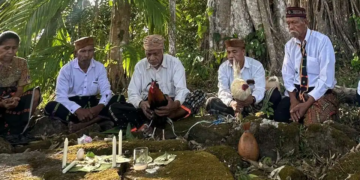
At Golo Lampang, which residents identify as the ancestral settlement of the Nunang people, elders led Barong Compang, a sacred traditional ritual focused on maintaining harmony between the community, their ancestors, and the spiritual guardians of the village environment.
Community leader Yosef Erwin Rahmat described it as a communal rite to seek ancestral blessings at the village’s customary center.
At Wae Kuta, one of the village’s water sources, residents held Barong Wae, a sacred, ancestral thanksgiving ritual that expresses respect for water as a source of life and asks its spiritual guardians to keep the spring flowing.
He called the event a celebration of ordinary parishioners, “not a party for the committee, much less the elite.”
He said the community was reclaiming customs that modernization had pushed to the margins.
Barong Wae, Rahmat said, had not been held by the Nunang parish community for six decades, even though the ritual remains part of the wider Manggarai cultural inheritance.
Jempau said the rituals and prayers reflected parishioners’ dependence on the land and water: they cultivate the soil, eat from their gardens and drink from mountain springs.
Food, income and a changing countryside
For Saila and 53-year-old Defrosa Saina, selling food made from local crops supplements their farming income.
Saina said residents of Wakar village began turning farm produce into marketable food in 2000, with support from the Ayo Indonesia Foundation.
“We work as farmers every day, but when there is an event, we turn local food into different kinds of cakes to sell,” she said.
She hopes the festival will return each year and grow larger, “so that we can sell more products made from the local food we have.”
Ferdinandus Manu, a program coordinator with the local Yakines Foundation, said Nunang’s food sources extend from gardens and forests to rivers and ponds.
Manu said farmers grow tubers, beans, local rice and corn, while nearby forests provide bamboo shoots, ferns and edible leaves known locally as saung sasang and saung ruteng. He said eels, shrimp and freshwater fish also contribute protein to household diets.
“Those sources are still here and still available, although some are beginning to decline,” Manu said.
Manu said mixed-crop fields help maintain food diversity because one plot may contain rice, tubers, beans and vegetables.
But farmers increasingly buy corn and vegetable seeds with pesticides, a practice he warned could reduce soil fertility.
Festival workshops addressed organic agriculture, livestock practices and the preservation of local seeds.
Sowing hope with sorghum
In the parish garden on Oct 5, Delfina Luhur of the Ayo Indonesia Foundation joined Father Jempau and indigenous elders in planting sorghum seeds.
Luhur said the foundation introduced three varieties — Super 1, Bioguna and Super 4 — through a sorghum program launched in 2003. This year, it expanded into West Manggarai for the first time, beginning in Nunang.
“Looking at the local food potential already here, sorghum can certainly be cultivated,” Luhur said.
According to Luhur, Super 1 can be harvested within three to four months, compared with about eight months for local sorghum. She said the longer cycle can discourage farmers from planting local varieties.
Luhur said the foundation nevertheless encourages communities to preserve and plant local varieties.
The foundation is also linking growers with a farmers’ cooperative in Wakar, where sorghum cultivation began last year, and harvests remain small, Luhur said.
It buys part of the crop to encourage continued planting, although production is still sufficient only for local needs.
For Jempau, the effort is part of the parish’s wider responsibility toward the land and water on which local families depend.
“Caring for the environment of Wae Sano therefore means protecting their own source of life,” he said. – UCA News
*Hermanus Kabut contributed to this story.