










By Antonella Palermo
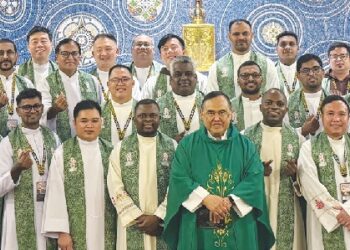
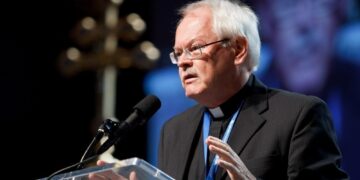
Pope Leo XIV’s visit to Cusco, Peru, at an altitude of 3,400 metres, on Sunday Nov 15, during his upcoming apostolic visit to Peru will be brief but intense. Speaking ahead of the journey that is scheduled to unfold from Nov 11 – 16, taking him from Uruguay to Argentina, to Peru, Father Walter Corsini, Vicar General of the Missionary Servants of the Poor, shares his testimony with Vatican News.
During a visit to Rome, Father Corsini recounts how his vocation began 30 years ago, during what was, for many at the time, truly “the journey of a lifetime.” A priest originally from the province of Bergamo in northern Italy, he speaks of the extraordinary richness of a millennia-old civilisation, the effort required to cover every metre of the mountainous terrain, and the beauty of a natural environment that calls for respect and contemplation.
Father Corsini, what is the story behind your religious congregation?
Our community traces its roots to an Augustinian priest, Father Giovanni Salerno, who was originally from Sicily and died three years ago. He went to Peru in 1968. The story of this new missionary family began in the mid-1980s, with a particular commitment to evangelisation and education in impoverished communities, initially in the Andes themselves.
Over time, we extended our mission to southern Peru, Mexico and Cuba. We are a family comprising several different vocations: priests, consecrated brothers, contemplatives, religious sisters and missionary families. Inspired by the Second Vatican Council, each member brings the light of Christ to different forms of poverty, illuminating them while also recognising their own poverty. We walk together in a spirit of synodality so that we can support one another.
What forms of poverty do people experience in Cusco?
With globalisation, the forms of poverty are much the same throughout the world. But I always say that poverty is like cherries: one leads to another. There is basic material poverty, which also entails a lack of resources, limited access to education and intellectual development, and, in many families, a poverty of social relationships and a moral poverty.
The task, then, is to bring the light of Christ to this underlying spiritual poverty, so that each person, conscious of their dignity as a child of God, can find the tools and means needed to move forward, beginning with self-esteem and the optimism necessary to face life.
We provide school education and vocational training, and we help local communities develop the means to support themselves. We start from the extraordinary reality of the Andes, whose cultural richness has roots that go back well before the Inca civilisation.
How does this immense and extraordinary tradition find a place within the Christian tradition?
I think this is one of those corners of the world where inculturation has perhaps been particularly successful. The Church here is not simply a replica of the Spanish Church; it has its own distinctive character.
The Gospel arrived in a culture that was deeply rooted and very much alive in religious terms. As a result, there is a widespread sense of spirituality, which many visitors today are also rediscovering through what is often called “spiritual tourism.”
This richness clearly needs to be purified and channelled appropriately, but it finds truly remarkable expression in popular piety, for example, in the particular devotion to images of the Madonna and the suffering Christ.
Something that has always aroused my curiosity is the way the suffering endured by this people for various reasons is reflected in the figure of the suffering Christ. He is seen as a companion on the journey, someone who can also give that suffering a new meaning.
A meaning rooted in the Resurrection…
Yes, in the Resurrection. The Andes are a region rich in underground resources, including gold, silver and copper mines, which have often given rise to exploitation.
Thankfully, the Church has done much to address this, frequently taking the lead in defending the dignity of workers and seeking to reorganise society so that these riches, which Divine Providence has bestowed upon this land, can be used in the best possible way.
How does tourism affect the quality of life of indigenous communities?
Unfortunately, tourism can be intrusive and often reveals its negative side. In my view, the pace of life in Andean society is not respected, although I am not sure whether this is necessarily good or bad.
I remember arriving in villages in the Andes 30 years ago and discovering a much more human pace of life precisely because it was slower. It allowed people to savour the different moments of the day.
Coming from Europe, I remember my very first experiences in small villages at high altitude, surrounded by silence. Perhaps for the first time in my life, I felt a sense of the fullness of life: reaching the end of the day with the feeling that I had truly lived every moment of a day filled with life.
Tourism has, of course, brought considerable prosperity and money, and it has led to remarkable progress. Nevertheless, as I said, there is a risk of being overwhelmed by it.
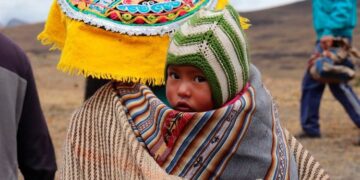
For example, Quechua, one of the languages that predates the Inca civilisation, is spoken in the Andes. Younger generations are beginning to lose it, or to speak a form of Quechua increasingly influenced by Spanish.
Yet we know that behind every language lies a vision of the world, a way of interpreting life. When the structure of a sentence is transformed, our way of looking at life is transformed too. It is a little like losing the glasses through which we see the world.
Efforts are therefore being made to preserve the language, which serves as a bond between many villages. At the same time, we cannot be naive: the world moves forward.
You speak of a way of looking at the world. In Cusco, how do people view nature? Is it a view of an ecosystem that has not yet been wounded?
I would say that I have always noticed a certain melancholy in the way people look at the world.
Take traditional Andean music, for example. It became very popular in Europe after being adapted to a rhythm that audiences on this side of the world could more readily enjoy. In the process, however, the original melody, which is rather melancholic, was often overlooked. That melancholy is clearly rooted in this environment, which in some ways opens up certain horizons while closing off others.
When you live in a valley and travelling from one place to another is difficult, your universe can end up being limited to that valley.
What kind of outlook should we bring to the contemplation of the Andes?
I remember that 30 years ago, going to Cusco was, for many people, “the great journey.” People prepared for it in a particular way, knowing they would have to face considerable altitudes and very steep mountain slopes.
Ideally, we should look at these lands with the same gaze as Jesus, who never humiliated anyone. We should approach them gently.
Our founder always used to say that the poor are holy ground, and that we must therefore take off our shoes and enter barefoot.
We must look without conveying the impression that we consider ourselves the saviours of the world, because that does not help anyone. I myself set out convinced that I was going to be the good Samaritan who arrived in the Andes, already experienced in working with the poor.
But I discovered that I was the poor one. I was the one who needed to encounter other forms of poverty in order to understand my own.
What do you expect from the Pope’s visit to Cusco, brief though it may be?
Rather than waiting for something to happen, I can already see the great fruits of the work being carried out by the Church in Cusco. Although the visit will be brief, it has been preceded by a period of intense preparation.
The catecheses are helping people draw closer to the Church. This is significant, given that a large proportion of the population is Catholic, yet many Catholics not only do not practise their faith but regularly attend what we call Protestant sects.
Why do you think these communities are gaining ground?
Among the various reasons, I think one is their close involvement in people’s family lives. People feel that someone is looking after them. When they attend worship, they can share their problems. There is a strong sense of closeness and personal contact.
These communities are also able to place particular emphasis on expressions of religious life such as dancing and singing, perhaps devoting less attention to intellectual formation.
Will Pope Leo’s meeting with representatives of popular piety also help revive the authentic roots of the Catholic faith?
I think so. This is also a priority for the entire Peruvian episcopate.
Confraternities play an enormous role and sometimes also express elements that go beyond religion, taking on what we might call pagan characteristics.
After the great missionaries who travelled through the Andes — the first evangelisation in the 16th century was a remarkable undertaking — and who gave the Church so many saints, attention often became focused on statues of saints, partly because of the shortage of priests.
There is therefore a major effort underway to purify these rites of such elements, so that they can be lived as an integral part of the Church. They are not something alien that has fallen from the sky; they belong within the life of the Church.
Is there a particular story that has been especially significant in your missionary life?
There is one episode that changed my life and that, in my view, was the Lord’s angel revealing my vocation to me.
I went to Peru as a young volunteer. The first time I had the opportunity to travel into the high Andes, an elderly man who was very poor approached me. It was the first time I had come into contact with someone experiencing real poverty.
I found myself completely defenceless, with all my Western preconceptions and prejudices. I thought, “Here comes someone to ask me for something.” I was ready to tell him, “No, I don’t have anything,” because I was convinced he was going to ask me for food.
Instead, he asked me: “What time will you celebrate Mass for us this afternoon?”
For me, that was a truly powerful moment, like a ray of light. I never saw that man again. But his words continued to work their way into my heart until I came to realise that the poor are one of the languages through which the Lord most readily speaks to us. – Vatican News