










By Terry Friel
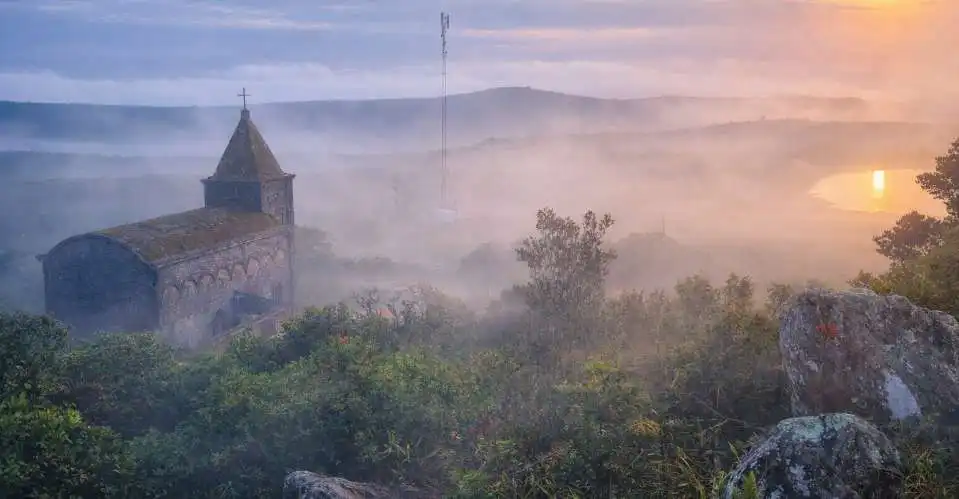
It’s Cambodia’s most iconic Catholic Church. A century-old testimony to the resilience of the Catholic community in this overwhelmingly Buddhist kingdom, through a century of colonial partying, the turmoil of civil war, genocide, Vietnamese occupation and the virtual annihilation of the Catholic faith.
Now it is being brought back to life for its centenary in 2028, a symbol of the steady rebirth of the Church since the dark days of the Khmer Rouge and the Vietnamese invasion and decade-long occupation they triggered.
Mount Bokor is the second-oldest church left standing by the Khmer Rouge, who destroyed almost all the dozens of churches around the country in their pogrom to wipe out all Western influence in their radical quest for an agrarian communist utopia.
Most of those that survived, like Bokor, were repurposed as food warehouses and shelters, and later as military strongholds.
Bokor, with its strategic mountaintop position, was used as a fortress and ammunition bunker by the Khmer Rouge well into the 1990s.
Cambodia’s oldest surviving Catholic church is St Mary’s, in the village of Taom, 60 kilometers (37.28 miles) southwest of Siem Reap, home to Angkor Wat, and built in 1910.
St Mary’s survived because it, too, was used as a food and livestock barn and as a place to house civilians.
A living Church
The restoration of the weathered, lichen-covered sandstone Mount Bokor church, crowning a 1,000-meter peak in a national park in the Elephant Mountains 200 km southwest of Phnom Penh, is about more than an historic building.
It’s about celebrating the remarkable rebirth of the Catholic Church as a vibrant community since the first missionaries after the ouster of the Khmer Rouge returned in 1989 to a traumatized country with barely 3,000 Catholics still alive.
“We are resurrecting the ruins not merely as a historical monument but as a living Church: a mountaintop sanctuary for prayer, pilgrimage, and evangelization in the spirit of reconciliation and hope,” says Father Will Conquer, a member of the core restoration team and the Steering Committee for the Bokor Church Renewal Project.
“The goal is full liturgical revival: masses, weddings, retreats,” the Paris Foreign Missions Society (MEP) priest based in the beachside tourist and port city of Sihanoukville, 100 km west of the church, told UCA News.
“We are transforming the site into a beacon of faith for Cambodia’s small but vibrant Catholic community.
“It will educate visitors on Cambodia’s Catholic journey while boosting responsible tourism in the region.”
The committee approved the million-dollar restoration master plan on June 11 after years of research, studies and preparation.
It is not yet publicly available, but details can be found at bokorchurch.com.
In addition to its religious mission and tourism and cultural roles, the church will also promote ecological responsibility against the backdrop of the surrounding 1,544.58 sq km Preah Monivong Bokor National Park.
“The project prioritizes strict ecological respect: erosion control, native species planting, biodiversity enhancement, and a minimal footprint,” says Conquer.
“It harmonizes with the misty mountain ecosystem rather than disrupting it.”
The government handed Bokor back to the church in 2017. But restoration was delayed by a range of complications: its position in a pristine national park, the pandemic, the need for long-term safety, engineering and architectural feasibility studies. And money.
A troubled history
The Catholic Church has a centuries-long history in Cambodia.
The first Portuguese missionaries arrived in the 16th century.
The 17th century saw an influx of Catholic refugees from Japan, Indonesia and Malaysia, welcomed by Cambodia’s kings, who had already established a commitment to tolerance and valued their wealth and skills as the kingdom rebuilt an economy shattered by years of war with Thailand at the end of the 16th century.
There were up to 100,000 Catholics, mostly ethnic minority Cham Vietnamese, in Cambodia when the genocidal Khmer Rouge seized power in 1975 after more than a decade of ruthless guerrilla war.
Thousands fled, but up to 60,000 were executed or died from starvation and torture or in forced labor camps.
Among them, the first Cambodian-born Bishop, Joseph Chhmar Salas, and 11 other martyrs whose nomination for canonization is being reviewed by the Vatican.
Almost all of Cambodia’s churches were destroyed by the Khmer Rouge, who killed about two million people in a population of seven million through execution, torture, forced labor and starvation.
Bokor survived because of its militarily strategic position, used as a fortress and ammunition bunker until the Khmer Rouge handed it over to French United Nations peacekeepers in 1993, almost 15 years after they were driven out of Phnom Penh.
The Vietnamese never captured the church from the Khmer Rouge during their 11-year occupation.
Its massive walls are still pockmarked with holes from small arms and machine gun fire.
These will not be patched up by the facelift, a deliberate decision to preserve and honor its troubled history.
A call torebuild not just walls
Over the past quarter of a century, the Catholic Church in Cambodia has recovered to an estimated 20,000-25,000 parishioners in a country of 17.5 million — 97 percent of whom are Buddhist.
But it punches far above its weight, focusing on humanitarian aid, education, social outreach and community development rather than proselytization.
In neighborhoods around a church, many parents choose its school over the government school, even if they are not Catholic.
Its major social presence here is through Caritas Cambodia, which has programs running from mental health to social inclusion and protection, to community empowerment and policy advocacy.
The resource-strapped government has a raft of admirably progressive social policies, but lacks the capacity to implement them, relying instead on civil society groups such as Caritas and Catholic Relief Services.
The symbolism of the Bokor restoration and what the church stands for reaches far beyond Cambodia, says Bishop Olivier Schmitthaeusler, Apostolic Vicar of Phnom Penh and an MEP missionary.
“Bokor Church has stood resilient through the trials of time and the upheavals of history,” he says.
“This restoration project is a call to rebuild not just walls, but the spirit of unity and faith in Cambodia and Asia.” – UCA News