







By Joseph Tek Choon Yee
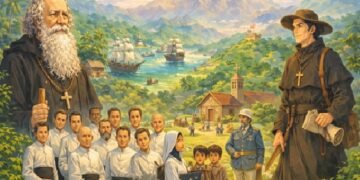
We have many fathers – fathers by blood, fathers-in-law by marriage, godfathers by baptism, and above all, our Heavenly Father. But between earth and eternity walks a special kind for Catholics: fathers who do not raise children, yet dedicate their lives to shepherding souls – some of them coming from far away, across oceans and cultures, to become fathers to a people not their own.
The Catholic story in Sabah was shaped not only by diocesan plans or missionary strategy but also by displacement – by lives uprooted and vocations carried across seas by men who did not choose exile, yet chose fidelity within it.
This pattern belongs to the wider history of mission in Asia, where the Gospel rarely travelled by comfort. Through empire, war and revolution, faith moved through uncertainty and sacrifice. Mission was never about efficiency; it was about staying long enough for faith to take root.
The mid-20th century brought one of its deepest ruptures. With the rise of communism in China, religious life was dismantled. Seminaries closed. Priests were silenced, imprisoned or expelled. Many faced a stark choice: abandon priesthood, or abandon home.
Some chose neither retreat nor resentment. They carried their priesthood elsewhere. Behind the language of “mission” and “reassignment” lay a painful human cost – leaving parents, language, culture and birthplace. These men did not set out to be heroes. They simply refused to let history extinguish their vocation.
China-Born Priests in North Borneo: When Sabah Became Home
Scattered across Southeast Asia, a small but remarkable group of China-born priests found their way to North Borneo. They arrived not as pioneers chasing opportunity, but as men shaped by loss, carrying formation, faith and a quiet determination to serve wherever they were sent.
They entered a young local Church still finding its footing, navigating post-war reconstruction, colonial transition and deep cultural diversity. The Mill Hill Missionaries had laid strong foundations of evangelisation, education and parish life. Alongside them came these Chinese priests – trained in China, Macau and Hong Kong – bringing not only sacramental ministry, but linguistic sensitivity and deep pastoral instinct.
Among them were Fr John Tsung (1918–1993), Fr Peter Ma (1925–2013), Fr Aloysius Tung (1926–2016) and Fr Tobias Chi (1924–2010). With the exception of Fr Ma, who later died in New York, the rest would spend their lives and eventually die on Sabahan soil. That detail matters. This was not temporary mission work. Sabah became home.
These priests were not mere sacramental functionaries. They learned the land and its people, travelled rough roads, sat at kitchen tables, listened to grief spoken haltingly and celebrated joy expressed quietly. They served parishes, taught Scripture, formed catechists, accompanied families and carried the invisible weight of souls.
Their ability to minister in Mandarin and Chinese dialects was invaluable to the growing Chinese Catholic community in Sabah. Yet their deeper gift lay elsewhere: they learn how to belong. They did not hover above the community; they entered it. In a Church shaped by linguistic and cultural plurality, they became bridges of communion, helping Chinese Catholic life take root within Sabah’s wider ecclesial tapestry.
Fr Tobias Chi Shu Chang: A Shepherd Who Stayed
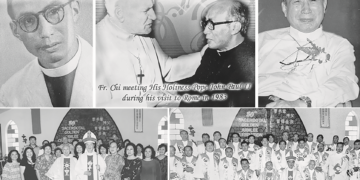
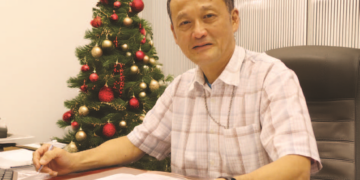
It is within this lineage of exile turned mission, displacement turned pastoral presence – that the life of the late Fr Tobias Chi must be remembered as an example. I relate to him most clearly through my own encounters with him during his years at St Mary’s in the early 1990s. I knew him by presence – by seeing him at work, at prayer, on mission, quietly visionary.
To understand priests fully, we must first appreciate where they come from – their upbringing and formation, their loneliness and struggles, their longing for belonging and their desire to serve. These are not footnotes to their vocation; they are the threads that shape it. Behind every pastoral style lies a personal history, and behind every strength, a wound once carried. For beneath the collar is a human heart. Priests feel. Priests suffer. And, at times, they falter not because they are unfaithful, but because they are human.
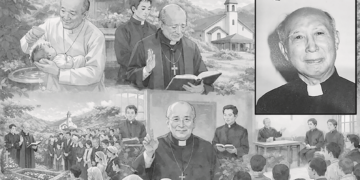
Tobias Chi was born in the small village of Yenki, Manchuria, on Aug 18 1924, and ordained quietly in a Macau chapel on Aug 14 1954, Fr Tobias’ priesthood began far from home. None of his family could be present. Yet the missionaries carried the news back to his village, telling his mother that her son was now a priest. His father has passed on. She wept in quiet joy. From that tender, unseen beginning, Fr Tobias was posted to North Borneo arriving on Oct 8 1954.
For 56 years, he walked patiently with the people of Sabah – not as one who passed through, but as a shepherd who stayed, serving faithfully. His priestly journey carried him across Sabah, from early ministry in Kudat, Lahad Datu, Tenom, Tanjung Aru, and Beaufort between 1954 and 1970, to Sacred Heart, Kota Kinabalu (1970–1983), St Mary’s, Sandakan (1984–1999) and finally St Peter’s, Kudat (2000–2004).
15 Years of Staying: Fr Tobias Chi at St Mary’s Church, Sandakan
Those who knew Fr Tobias as Rector remember a line that became legendary in parish life: “No preparation, no celebration!” It was more than a slogan. It was his pastoral philosophy. Sharon Ho and Magdalene Chu remembered that behind every feast day and liturgy lay careful planning, prayerful preparation and shared responsibility. Little wonder that celebrations at St Mary’s were not only beautiful, but deeply participated – a parish taught to prepare its heart before lifting its voice.
Down Memory Lane – A Shepherd’s Journey with Fr Tobias Chi
When Fr Tobias arrived in Oct 1984, he did not inherit a blank canvas. The parish was already alive. What he brought was discernment – a pastoral instinct for what needed strengthening, gathering and gentle renewal.
He did not rush change. He listened first, observing how people prayed, gathered and struggled to belong in a parish growing in size, diversity and complexity. Evangelisation was his early priority, understood not as persuasion but as invitation. Talks for seekers led naturally, in 1985, to the establishment of Rite of Christian Initiation of Adults (RCIA), anchoring the parish in patient accompaniment. By 1987, evangelisation grew more creative through the Good Tidings Concert and Good Tidings Magazine, drawing together parish groups, language communities, youth and families. Evangelisation, for him, was something the parish learned to do together.
Unity, he knew, required structure that listened. In 1986, he convened the first Annual Delegates Assembly, gathering representatives from every parish group to reflect, discern and elect Parish Council leaders. It was pastoral inclusion – authority shared wisely, not withdrawn.
Among his most significant initiatives were Chinese and Bahasa Malaysia Sunday Masses. Communities grew in confidence and participation as faith found expression in the language of the heart. Three language Coordinating Committees – English, BM and Chinese – were formed not to divide, but to help the parish breathe together.
His care extended to children and families. He strengthened Sunday School, introduced Children’s Liturgy of the Word, and built a Baptismal font for immersion, restoring fuller sacramental expression.
He welcomed movements of renewal – the Charismatic Renewal, the Neo-Catechumenal Way, and marriage and family ministries – not as programmes to manage, but as pathways into deeper communion. Accompany the people and trust the Spirit to work.
At 60 when many slow down, he began learning computers, Chinese programmes and digital publishing, producing bulletins in English, Chinese and BM. Communication was renewed through redesigned three-language bulletins and the column “Word and I”, turning announcements into catechesis and readers into participants.
The parish landscape evolved in service of faith. The once-criticised hillside Grotto became a beloved prayer space, especially during the Feast of the Assumption, when outdoor Eucharistic celebrations allowed theology to breathe under open skies.
The parish also grew outward: a kindergarten in 1990; St Mark’s Church and the St Joseph’s Multi-Purpose Hall in 1993; St Paul’s Church in Ulu Dusun in 1995. He opened the Sibuga Cemetery, renovated St Joseph’s for its Silver Jubilee, and relocated St Mary’s Bandar and St Mary’s Convent schools in 1998 – securing facilities for future generations.
Yet parishioners remember most not what he built, but how he related. He invited them for coffee, listened patiently, encouraged generously, offered advice gently and affirmed quietly. Leadership, for him, was exercised as much in conversations as in councils.
Throughout these 15 years at St Mary’s – the longest chapter of his missionary life – he led steadily. He trusted people, respected culture and language, formed faith patiently, and built only what served pastoral life. When he was transferred to St Peter’s Parish, Kudat on Nov 24 1999, St Mary’s did not simply lose a rector. It released a shepherd who had taught the parish how to walk together.
Fr Tobias once described parish growth as young plants sprouting after rainfall. And perhaps that is the best image of him. He was not the plant, nor the fruit, but the rain. And to those who walk after him, his life leaves a simple lesson: “no preparation, no celebration” and perhaps also this: no surrender, no peace. What he left behind was more than buildings or programmes. He left something rarer – a parish formed by preparation, rooted in communion and taught how to celebrate.
Read part two here