


















By John Singarayar
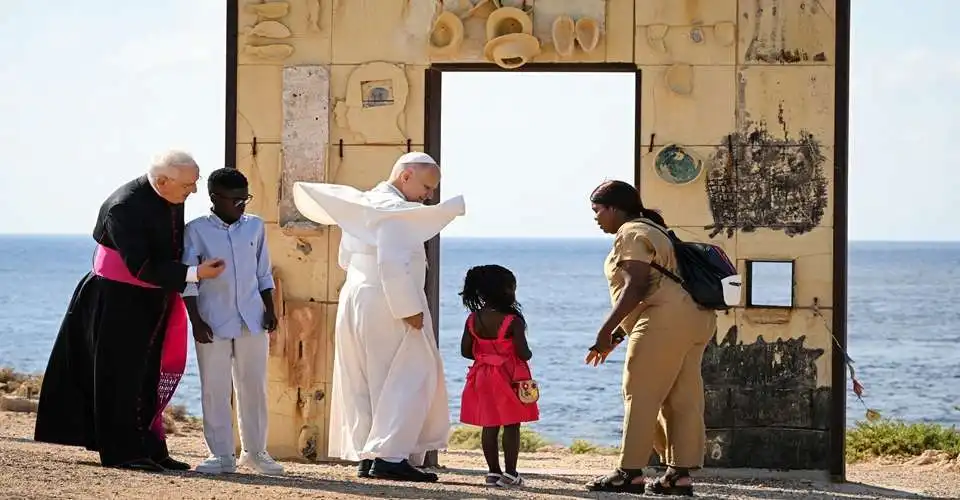
Migration is not only a political issue. It is a spiritual test. It asks what kind of people we are becoming and whether we can still recognize the stranger as a neighbor.
For the Church, this is not an abstract debate. It reaches into worship, teaching, public witness, and the everyday habits that form Christian life.
A Church on the Way
Christian faith has always carried a sense of movement. Scripture speaks often of exile, journey, and return. God’s people are rarely described as settled in the deepest sense; they are called to live as pilgrims, dependent on grace and open to encounter. That is why migration matters so much for the Church. It is not simply a social issue to comment on from a distance. It mirrors something already true about the Christian life.
The Church itself is a people on the way. It does not belong to this age in a final or absolute sense, and that should make it humble. A church that remembers its own unsettledness will be less likely to fear those who arrive from elsewhere. It will also be more prepared to see the stranger not as a problem to manage, but as a person through whom God may still be speaking.
Welcome and responsibility
This does not mean the Church should speak vaguely about kindness and stop there. Migration is shaped by real pressures: war, poverty, climate stress, family separation, and the search for safety. Governments have serious duties here. They must maintain order, protect the vulnerable, and create laws that are fair and workable. The Church should support that task, not undermine it.
At the same time, the Church must be honest about what good migration policy should look like. Legal pathways should be clear. Asylum should be handled fairly. Families should not be torn apart unnecessarily. People should not be left in long uncertainty, unable to work or belong. Order matters, but so does mercy. A policy that values one and ignores the other will not serve the common good for long.
The power of metaphor
Metaphors matter because they shape how people see the world. If migration is described only in terms of pressure, burden, or threat, then fear quickly becomes the default response. But if migration is also seen through the lens of pilgrimage, hospitality, and shared humanity, then a broader moral imagination becomes possible.
That is one reason the football image remains so useful. A national team made up of players from different places can show something simple but important: difference does not destroy unity. It can deepen it. People with different backgrounds, accents, and histories can still learn to trust one another and work toward a common goal. That is not just a sports lesson. It is a social one, and for Christians, a deeply theological one.
What the Church must say
The Church should not reduce migrants to statistics or slogans. It should speak plainly about dignity. Every migrant is first a human being made in the image of God. That truth comes before economics, politics, and utility. Yes, migrants often strengthen the societies they join. They bring work, creativity, care, and new energy. But the Church should be careful not to make usefulness the main reason for welcome.
That temptation is subtle. It is easier to defend migrants when they are seen as contributors. It is harder when they are poor, tired, or dependent. Yet Christian teaching does not allow human worth to rise and fall with productivity. The stranger is worthy of welcome even before any benefit is measured.
What policy requires
Countries need migration policies that are firm, fair, and humane. That means secure borders, but also decent procedures. It means border control, but not cruelty. It means recognizing that people fleeing danger are not the same as those seeking advantage through deception. It also means that integration is not optional. If nations receive migrants, they should also invest in language, work, education, and belonging.
The Church can support this by being practical, not only prophetic. Congregations can help with language learning, legal referrals, friendship, and job support. They can create spaces where migrants are not treated as guests forever but as members who belong. Real welcome requires more than warmth. It requires structure.
A deeper witness
If the Church lives this way, it offers a quiet rebuke to the politics of fear. It says that hospitality is not weakness and that order does not have to be cold. It says that community grows stronger when people are received with dignity and given room to contribute. It also says something more spiritual: that the Church trusts God enough to make space for the stranger.
That witness will never be perfect. Churches will disagree about policy. Communities will struggle with limits. There will be tension, and there should be honest debate. But the Church loses something essential when it lets fear speak more loudly than faith. Welcome is not a side issue. It is one of the ways the gospel becomes visible.
Migration teaches the Church to see more clearly. It reminds us that belonging is not something we own absolutely and that grace often arrives in an unfamiliar form. The stranger can unsettle us, but the stranger can also teach us. If the Church listens well, it will discover that welcome is not only an act of kindness. It is a form of truth. – UCA News
*The views expressed in this article are those of the author and do not necessarily reflect the official editorial position of UCA News.