



















By Antonella Palermo
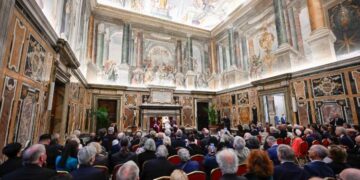
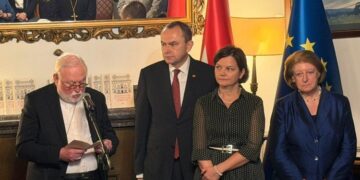
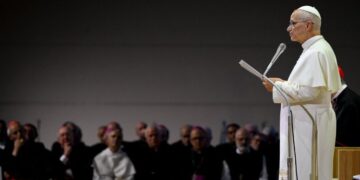
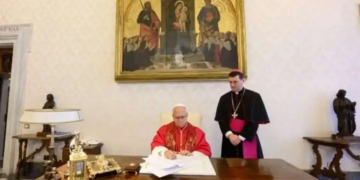
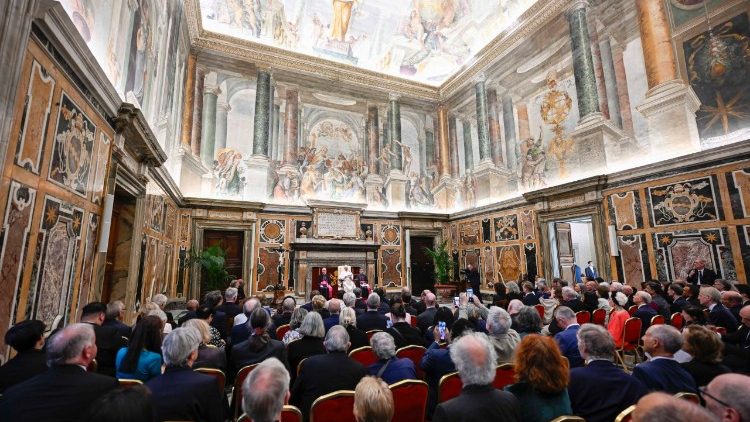
Scientific cooperation is a public good at the service of peace. With this conviction, which is also a hope for the future, Pope Leo XIV addressed around 140 members of the Pontifical Academy of Sciences in the Clementine Hall of the Apostolic Palace. The members are meeting for two days—Sep 24 and 25—at the Casina Pio IV in the Vatican for the Plenary Session with the theme “The Future of Science in a Changing World,” which was preceded by a two-day workshop on “Evolution and Development.”
Ambition and humility, rigor and dialogue, innovation and responsibility—these are the principles that must inspire research and global technological advancement.
Recognizing the risks of technological progress
The starting point of the Pope’s address this morning, Sep 24, was one he has repeatedly emphasized in his encyclical Magnifica humanitas. He cited several passages to highlight both the enormous potential of technology in healthcare, food production, and the pursuit of knowledge about the universe, and, on the other hand, its still-uncertain impact on humanity’s future.
Climate, justice, and human dignity
“The greater our power to transform the world,” the Pope said, “the greater must be our capacity to discern what truly serves God-given human dignity.”
According to Pope Leo, this warning must guide the discernment of those called to make decisions concerning the damage caused by natural disasters, which are striking entire populations with increasing frequency and intensity and, as he once again emphasized, are hitting the poor hardest.
This is a reality already repeatedly highlighted by his predecessor Pope Francis in Laudato si’. From that document, Pope Leo draws on the central and indispensable concept of interdependence among countries and disciplines, but above all on the conviction that “justice” should be the catalyst for every decision made by the community. He made this clear in the following passage:
Interdisciplinary cooperation and solidarity among peoples
Alongside his praise for all the work carried out by the Pontifical Academy of Sciences over the past two years, in collaboration with the Pontifical Academy of Social Sciences, in organizing the Summits on climate resilience, Pope Leo concluded by encouraging continued efforts toward full interaction among scientists, young people, public authorities, representatives of civil society, and members of different religious traditions.
“The challenges of a changing climate,” he explained, “cross every boundary between disciplines, institutions and nations; our response must therefore cross them as well.”