












By Richard Chia
THE remarkable growth of the Church in Sarawak was both a blessing and a burden.
By the mid-1980s, the Catholic population had grown to about 120,000. As new communities embraced the faith and existing parishes flourished, the demands on the local Church increased dramatically. It soon became evident that the ecclesiastical structures established in 1976 would need to evolve to keep pace with this expansion.
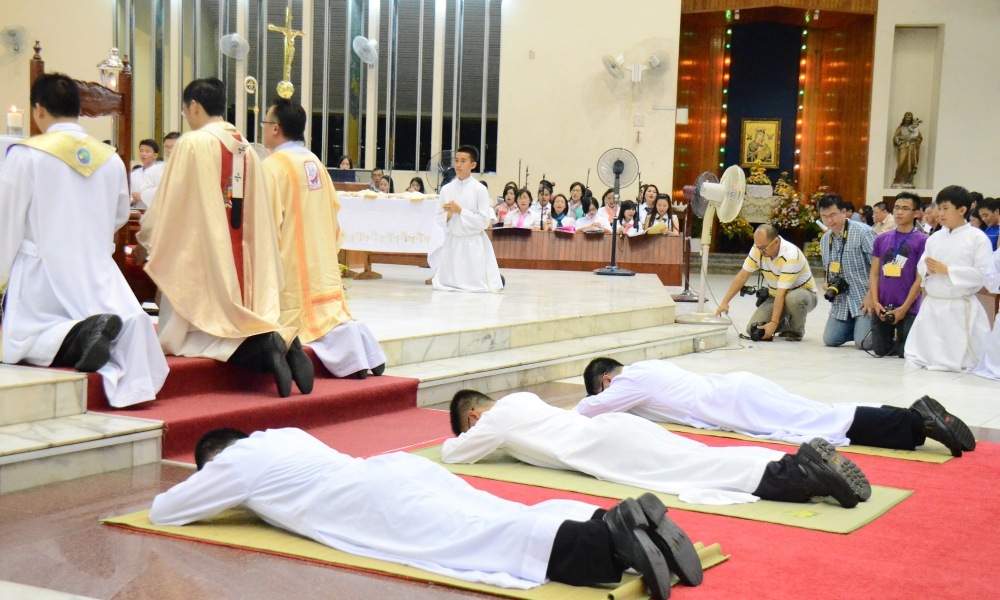
Recognising the need for more effective pastoral care, Pope John Paul II established the Diocese of Sibu on Dec 22, 1986. Carved out of the Archdiocese of Kuching, the new diocese encompassed the divisions of Sibu, Mukah, Sarikei and Kapit. Fr Dominic Su was appointed its first bishop and ordained on Jan 6, 1987.
The creation of the new diocese eased administrative responsibilities, but it did little to solve the Church’s greatest challenge — an acute shortage of priests.
Following the division, the resized Archdiocese of Kuching comprised some 74,000 Catholics served by only 20 priests, six of whom were Mill Hill missionaries and 14 local diocesan clergy. Three years later, the Catholic population had increased to more than 82,000, while the number of priests remained virtually unchanged. In many rural districts, a single priest was responsible for as many as 8,000 Catholics.
The statistics told only part of the story. The real challenge lay in Sarawak’s geography.
Shepherds across rivers and mountains
Unlike urban dioceses, the Church in Sarawak was spread across immense stretches of rainforest, winding rivers and mountainous terrain. A parish often consisted not of one congregation but dozens of scattered longhouses and villages separated by hours — sometimes days — of travel.
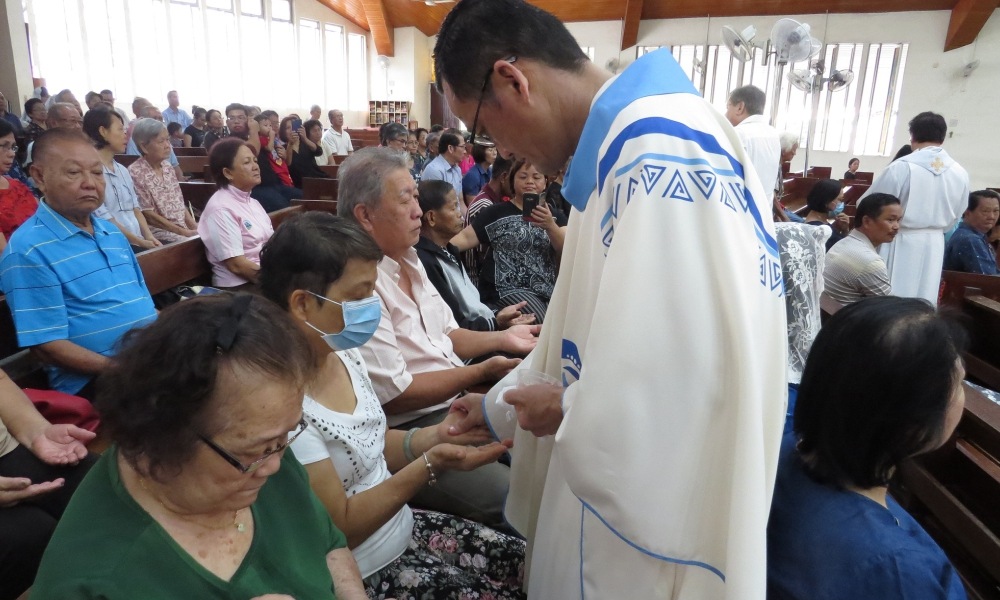
The Parish of St Ann in Kota Padawan was a striking example. Two priests cared for more than 12,000 Catholics spread across 45 outstations. Their ministry involved constant travel, celebrating Mass, administering the sacraments, visiting families, counselling parishioners and nurturing communities that might otherwise see a priest only occasionally.
Even Mondays, traditionally a priest’s day of rest, were filled with marriage preparation, pastoral meetings, counselling sessions and sermon preparation.
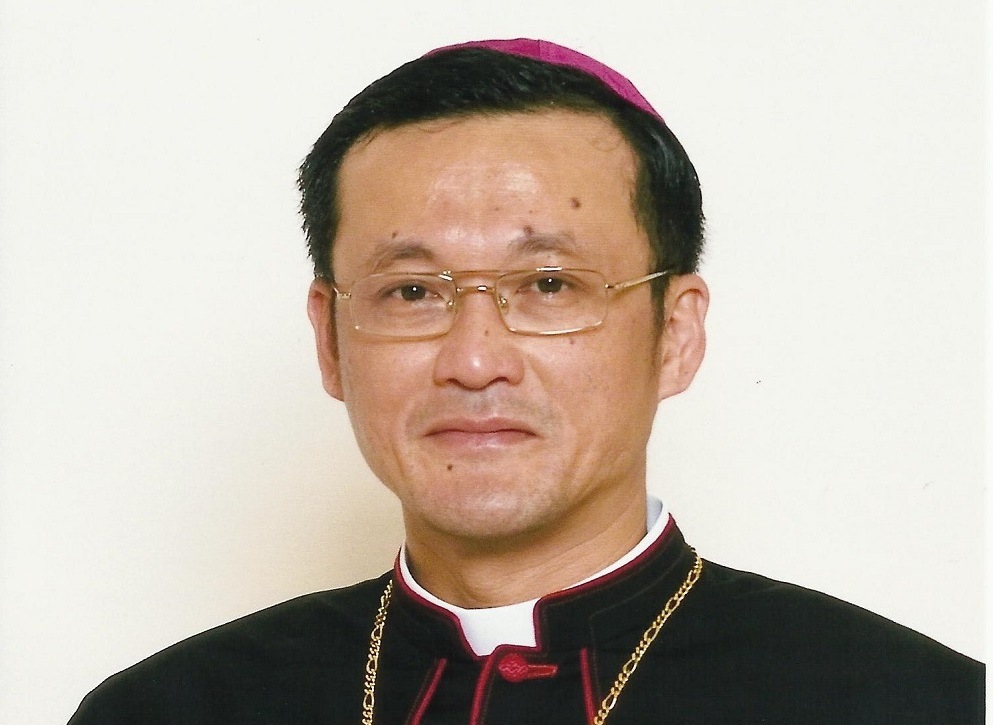
Archbishop Peter Chung himself was no stranger to these hardships. On one occasion, he trekked for three hours through forests, streams and mountain trails simply to administer the Sacrament of Confirmation to Catholics from 70 villages.
Government restrictions on foreign missionaries further compounded the problem. Unlike many dioceses around the world, Kuching could not simply invite additional missionaries to share the workload. The Church had little choice but to rely on its own limited resources while continuing to proclaim the Gospel across one of Southeast Asia’s most challenging mission territories.
By 1991, more than 4,000 people had been baptised in the rural parishes, yet only one priest was ordained that year. Even more worrying, there had been been no new entrants from the Archdiocese of Kuching to the seminary during the previous two years.
By the mid-1990s, nearly three-quarters of the archdiocese’s Catholics lived in rural communities. For many of them, the Eucharist was a precious gift received only once every few months.
The neighbouring Diocese of Sibu faced similar realities. Fifteen priests served 12 parishes and some 415 mission stations, many accessible only after days of travelling by river, through rapids, swamps, mountains and dense jungle.
Reflecting on these realities, Bishop Dominic Su once remarked: “Some mission stations can only have Mass once a year, or once every two or three years. To reach some of the more distant mission stations, we have to travel across rivers, rapids, swamps, mountains and semi-jungle. It takes several days just to reach the community.” The words captured both the enormity of the challenge and the extraordinary dedication of the priests serving the Church in Sarawak.
Forming local shepherds
Archbishop Peter knew that the long-term answer could not depend on foreign missionaries. The future of the Church rested on forming local priests.
Until 1980, seminarians from Sarawak were sent to St Francis Xavier Major Seminary in Singapore and College General in Penang. For many young men from rural communities, however, language proved a significant obstacle, making priestly formation particularly demanding.
To address this need, Archbishop Peter pursued a vision he had first conceived in the late 1970s. In 1985, St Peter’s College Major Seminary officially opened in Kuching.
The seminary became the principal formation house for all four dioceses in East Malaysia — Kuching, Miri, Sibu and Kota Kinabalu. It represented a significant investment in the future of the local Church and a concrete expression of Archbishop Peter’s conviction that East Malaysia must eventually provide its own priests.
Although the seminary produced a steady stream of vocations, it could not immediately replace the ageing missionaries or keep pace with the Church’s rapid growth.
The rise of lay leadership
Faced with an everincreasing pastoral workload, the Church looked increasingly to the laity.
Across Sarawak, catechists and prayer leaders became indispensable partners in evangelisation, especially in rural communities where priests could visit only occasionally.
They taught catechism, prepared children for First Holy Communion and Confirmation, visited the sick and elderly, led Scripture services and prayer gatherings, and accompanied grieving families during wakes and funerals. In many villages, they became the steady pastoral presence that sustained the community between a priest’s visits.
Yet their ministry was not without challenges. Many catechists came from farming families and struggled to balance their pastoral responsibilities with supporting their households. The Church also lacked permanent centres for their systematic formation, although earlier initiatives, including a catechists’ school in Marudi, had laid important foundations.
In 1989, Bishop Dominic Su noted that the Diocese of Sibu had only 14 full-time catechists — 12 indigenous and two Chinese — serving alongside the clergy across its vast mission territory.
These quiet, faithful men and women became the backbone of the rural Church, embodying Archbishop Peter’s conviction that the mission of evangelisation belonged to the whole People of God.
Renewing the Church from within
While pastoral resources remained stretched, Archbishop Peter believed that the Church’s greatest strength lay not in numbers, but in the spiritual vitality of its people. This conviction inspired a series of renewal initiatives that would leave a lasting mark on the archdiocese.
Foremost among them was the first Archdiocesan Eucharistic Congress, held over four weekends in May 1989 and culminating in a grand closing celebration at St Joseph’s Cathedral, Kuching.
The congress sought to deepen Eucharistic faith, strengthen unity among parishes and foster a greater sense of belonging to both the local and universal Church.
Archbishop Peter saw the gathering not as an end in itself but as the beginning of a new way of thinking.
“Today, inter-parochiality is very much needed in the archdiocese and therefore must be earnestly promoted,” he told participants. “I do not consider them as mere possibilities. They are my hope.”
The response surpassed expectations.
Around 20,000 Catholics attended the closing Mass, many rising as early as three o’ clock in the morning and travelling up to 200 kilometres by specially arranged buses to be present. It was one of the largest gatherings of Catholics in the history of the archdiocese.
The momentum continued. During the Feast of Corpus Christi the following year, more than 3,000 faithful once again gathered at St Joseph’s Cathedral to celebrate the anniversary of the congress, a visible sign that the spirit of renewal was taking root.
Looking back, Archbishop Peter described the Eucharistic Congress as a watershed moment.
“It is a source of widespread renewal, deepening Christian faith and giving our people a greater sense of belonging, both to their parish communities and to the archdiocese. It has led to a noticeable growth in the laity’s commitment to their role in the Church and to more active liturgical celebration.”
Sharing responsibility for the Church
That same spirit inspired another significant milestone.
In March 1991, Archbishop Peter established the Archdiocesan Pastoral Council, giving practical expression to the Second Vatican Council’s call for greater collaboration between clergy and laity.
The council was entrusted with promoting Christian formation, coordinating lay apostolates, strengthening evangelisation, encouraging respect for the diverse cultures and religions of Sarawak, supporting the poor and helping the archdiocese fulfil its pastoral mission.
Above all, it reflected Archbishop Peter’s belief that every baptised Catholic shared responsibility for the life and mission of the Church.
A legacy that endures
Looking back, it is remarkable how many of the issues Archbishop Peter identified nearly five decades ago remain relevant today — nurturing local vocations, forming lay leaders, strengthening parish communities, sustaining evangelisation and building a financially responsible Church.
His response to these challenges was never driven by pessimism, but by hope.
Rather than allowing limited resources to define the future, he invested in people — priests, religious and laity alike — convinced that a local Church rooted in faith, united in mission and confident in its calling would continue to flourish.
The Church in Sarawak today stands as a testament to that vision: a Church shaped not merely by its remarkable growth, but by the courage, perseverance and faith of those who accepted the responsibility of building it for future generations. – Herald Malaysia