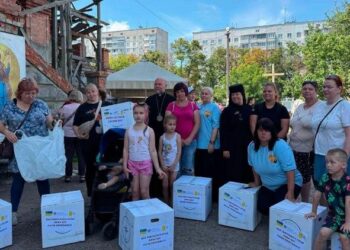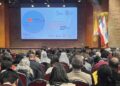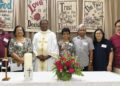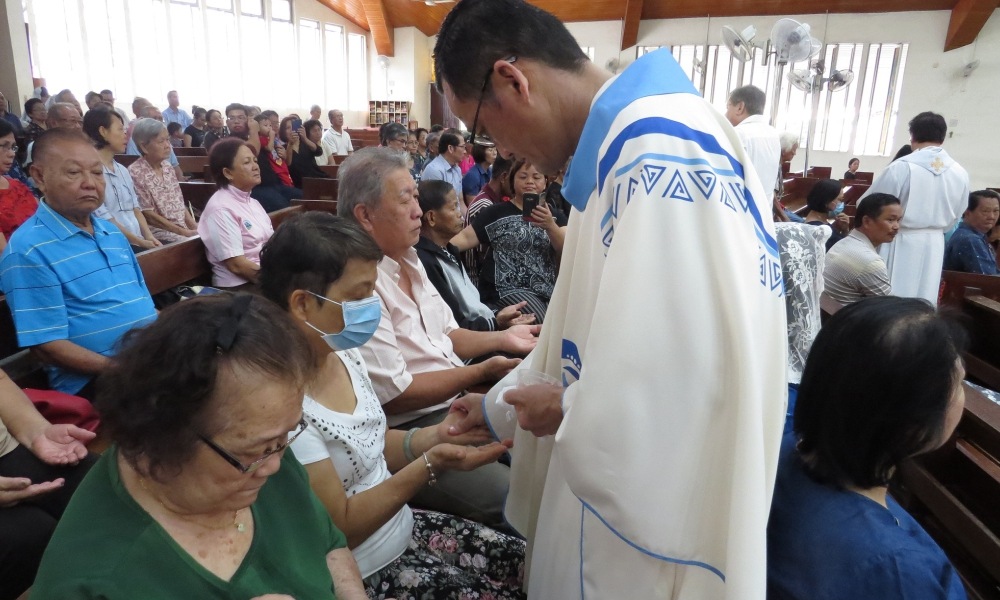
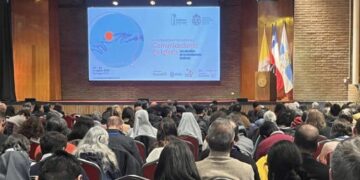
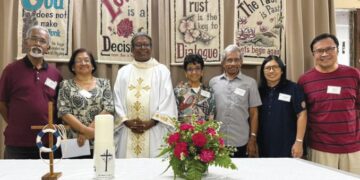

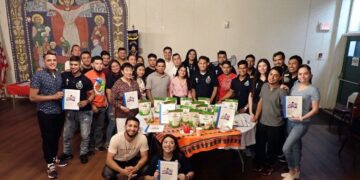













PENANG – “It’s a celebration! Because all are going to learn the art of forgiving.” So declared Fr Raymond Raj in welcoming the 230 parishioners assembled for a formation, 4GIVEN: 1 Cross+3 Nails by Jude Antoine at the Cathedral of the Holy Spirit (CHS).
Fr Raymond emphasised that forgiveness begets forgiveness and is grounded in love. “Don’t act hypocritical – appearing more loving and forgiving to others but not to family members. Also, our bitter truth and irony of seeking and granting forgiveness only at the deathbed. Matthew 5:24 teaches us the need to be reconciled before offering gifts to God.” He continued, “Focus, especially on the one person you find difficult to forgive…” and briefly shared his personal experience of how he finally attained peace after forgiving ‘this one person.’ He left us a stirring aide-memoir for all on how forgiveness and peace are clinched.
Parish Council chairman, Adrian Oyog, led in with, “Let our hearts be in the right place as we reflect and share with our neighbour on ‘what brings me here?’” He stressed on fellowship with others and with God. His lead-ins to the segmented sessions were highly apropos to the day’s topic, as was the praise and worship.
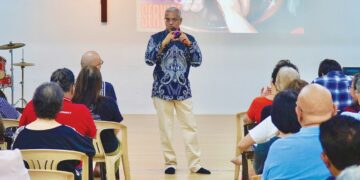
In his first talk, Foundation of Forgiveness, Jude highlighted and fleshed out some introductory points by Fr Raymond. “Forgive before it is too late. It is a grace that comes from God.” He then elucidated that forgiveness is not merely an emotion; nor a moral obligation; it is a decision. It is not a know-how to be mastered, but courage to be mustered, through prayer and then, “just do it!” like Jesus did, on the Cross (Lk 23:34). Forgiving is crucial enough to be included in the faith-defining prayer Jesus gave us. If we say we are the body of Christ who is merciful and forgiving, why aren’t we?
“Unforgiveness is a universal problem. Root of the problem? Pride.” Small wonder, as pride is the first deadly sin! “Unforgiveness holds you captive until you choose to let go and find peace. When you forgive, you become strong; God elevates you.” Jude reminded us how Pope John Paul 11, out of his capacity for love, forgave A?ca for his assassination attempt on him. “God is love, and attracted to love. But the demon, like a leech, holds you captive to hatred out of his miserable attraction to hatred.”
In his second session on Forgiveness of Self, Jude said, “The hardest to do! Guilt, a feeling of self-unworthiness, blocks us. Truly, none of us deserve, or can earn forgiveness.” He then explicated John 8:11 – “Our worth lies in God’s love for us.” We need to see ourselves through the lens of God. “No one is infallible” (Jn 8:7). St Augustine posits that Jesus’ words to the accusers of the woman caught in adultery pricked their conscience, compelling them “to look into themselves, while leaving behind Misery (woman) and Mercy (Jesus). Jesus did not condemn her. He bid her ‘Go and sin no more’ – He gave a second chance. Our real enemy is our attachment to sin; it makes us feel unworthy, miserable, unloved by the self, unbelieving in God’s forgiveness. Only divine forgiveness and divine love received with an open and sincere heart can give us the strength to resist evil.”
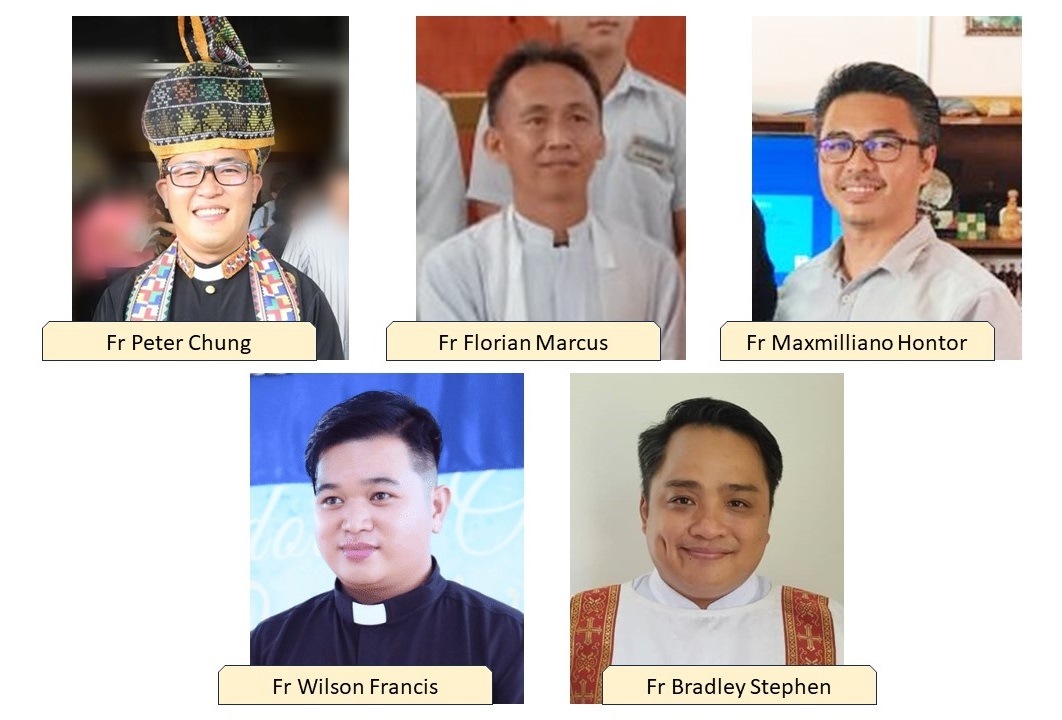
Confession followed, with five priests in attendance.
Speaking next on Forgiveness of and for Family, Jude highlighted that we belong to a particular family chosen by God, for our salvation. “Yet, these are the people we fight with most, judge, and cause tremendous pain. At Fatima Our Lady revealed to Lucia that the last demonic attack would be to destroy marriage and family. Hence, society at large.” Referencing several biblical stories and scriptural quotes, Jude stated, “The solution is healing … through you and me.” Both parents and children need to regain their lost “spiritual authority” by exercising their free will to act against evil; heal brokenness through mercy and forgiveness; and restore familial relationships.
“The Church is a hospital with people who are hurt. If not healed, they will hurt others, in turn,” said Jude when speaking on Forgiveness for and within Community. Problems within a community are unavoidable. “But remember, no one can hurt you without your permission. Your response is important. Don’t take offence. Forgive.” Jude cited Hebrews 12:14 – an exhortation to pursue peace for self and others. An irony, “The very person you despise is the person God chooses to make you holy! You pray for peace, but God gives you conflict! For good reason, to see your heart. Getting angry and staying angry are the cause for skandalon /stumbling – work of the enemy/misery”. In the final analysis, “What is your choice?” – Herald Malaysia