










By Richard Chia
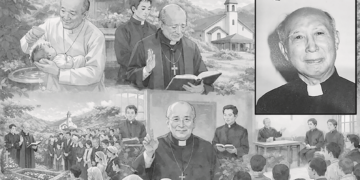
By the time Archbishop Peter Chung reached the canonical retirement age of 75 in 2003, the Archdiocese of Kuching had undergone a remarkable transformation. The foundations laid over nearly three decades — through local priestly formation, stronger lay leadership, pastoral renewal and a renewed missionary spirit — had prepared the Church for its next chapter.
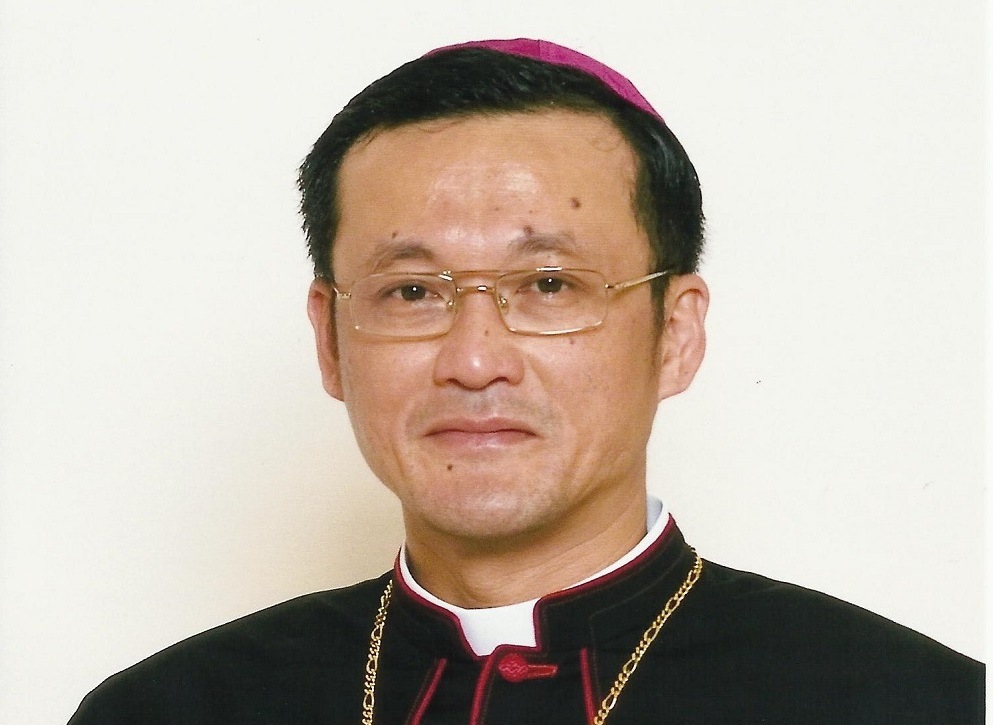
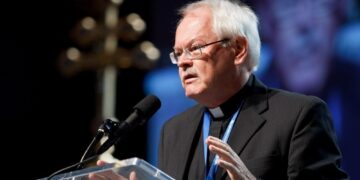
On Jun 21, 2003, Pope John Paul II appointed Auxiliary Bishop John Ha as the second Metropolitan Archbishop of Kuching. Having served as auxiliary bishop since 1998, Archbishop John had worked closely alongside Archbishop Peter and was well acquainted with both the strengths and challenges of the local Church. His installation on Jul 16, 2003 marked not so much a change of direction as the continuation of a shared pastoral vision.
The Church he inherited was vibrant and growing. Across Sarawak, the Catholic population had reached 292,170, comprising 133,000 Catholics in the Archdiocese of Kuching, 90,026 in the Diocese of Sibu and 69,144 in the Diocese of Miri. Yet rapid growth continued to place increasing demands on the Church’s pastoral resources, particularly in priestly formation and the care of expanding parish communities.
Rather than introducing sweeping changes, Archbishop John devoted his episcopate to consolidating the foundations established by his predecessor. He strengthened pastoral structures, encouraged greater collaboration between clergy and laity, and supported the continued growth of the archdiocese’s pastoral commissions. His pastoral leadership reflected a quiet conviction that the Church grows strongest when its people are well formed, actively involved and united in mission.
Recognising that the future of the Church rested with its young people, Archbishop John also gave strong encouragement to youth ministry and vocation promotion. Under his leadership, youth apostolates continued to expand, providing opportunities for young Catholics to grow in faith, leadership and missionary discipleship while discerning their own vocation within the life of the Church.
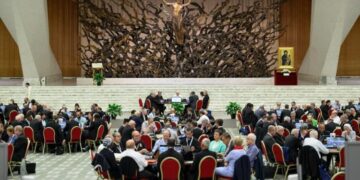
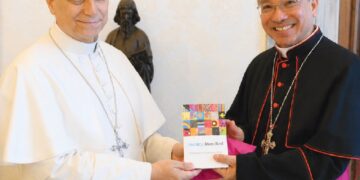
His leadership extended beyond the Archdiocese of Kuching. From 2013 to 2016, Archbishop John served as President of the Catholic Bishops’ Conference of Malaysia, Singapore and Brunei, representing the regional episcopal conference at the Extraordinary Synod of Bishops on the Family convened by Pope Francis in Rome in October 2014.
During the launch of the archdiocese’s 40th anniversary celebrations in 2016, Archbishop John reflected on the journey of the local Church by paying tribute to Archbishop Peter Chung’s enduring legacy. He highlighted three lasting achievements that had shaped the archdiocese: the establishment of St Peter’s College Seminary to form local clergy, the development of parish and archdiocesan pastoral councils that empowered the laity, and the nurturing of local religious congregations.
Celebrated under the theme Pentecost: Christ Filling the Church with the Power of the Holy Spirit, the anniversary was not merely a celebration of history but a renewed commitment to the Church’s mission of evangelisation.
A new generation
Another significant chapter began in 2017.
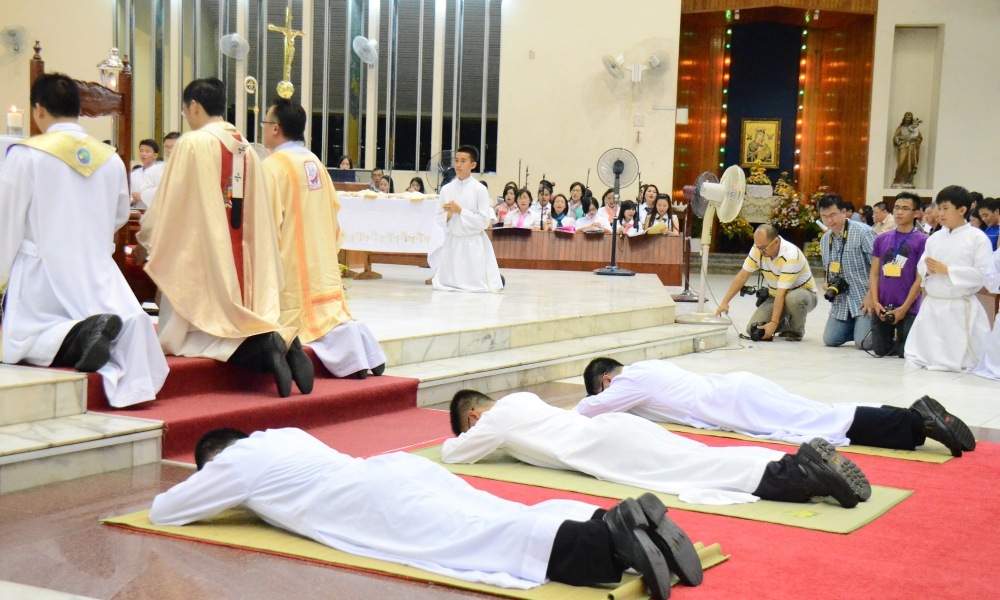
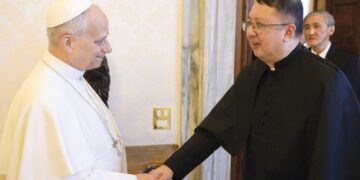
Although bishops normally submit their resignation at the age of 75, Archbishop John requested early retirement upon reaching 70. Pope Francis accepted his request and appointed Auxiliary Bishop Simon Poh as the third Metropolitan Archbishop of Kuching on Mar 20, 2017. Archbishop Simon represented a new generation of Malaysian bishops, together with Bishop Joseph Hii of Sibu and Bishop Richard Ng of Miri. Long before his episcopal appointment, he had become widely known for his pastoral ministry among young people, serving extensively in youth and campus ministry, vocations, seminary formation and parish life. These experiences gave him a close understanding of the hopes, struggles and aspirations of a new generation of Catholics.
At his installation at the Cathedral of St Joseph, Archbishop Simon immediately invited the archdiocese to embark on a process of Review, Reassessment and Renewal (3R). Rather than beginning with program or policies, h e encouraged the faithful to listen — to God, to one another and to the realities facing the Church. Through parish consultations and grassroots participation, the archdiocese sought to discern together the direction the Holy Spirit was leading the local Church.
Echoing words first popularised by Archbishop Julian Leow of Kuala Lumpur, Archbishop Simon urged that the voices of “the least, the last, the lost and the little” must be heard. His vision was one of a listening Church in which every parishioner, including those in the most remote kampungs, had a role in shaping the Church’s future.
His pastoral approach reflected the wider vision of Pope Francis — a Church that accompanies people, walks with them and forms missionary disciples rather than passive observers. Drawing from his years of ministry among young people, Archbishop Simon consistently challenged Catholics to live their faith courageously within their families, workplaces and society.
By the time Archbishop Simon assumed office, the Archdiocese of Kuching had grown to approximately 197,000 Catholics across 11 parishes, serving communities comprising Chinese, Iban, Bidayuh, Melanau, Indian and numerous other ethnic groups. The diversity that had long characterised the local Church remained one of its greatest strengths.
Looking back, the story of the Archdiocese of Kuching is also the story of three shepherds who faithfully built upon one another’s work. Archbishop Peter Chung laid the foundations by nurturing local vocations, empowering the laity and strengthening the Church’s pastoral structures. Archbishop John Ha consolidated those foundations through steady leadership, pastoral formation and regional service to the wider Church. Archbishop Simon Poh has continued that journey by fostering a more listening, participatory and missionary Church. Together, their ministries reflect the quiet but remarkable growth of the Church in Sarawak — a Church rooted in faith, strengthened by shared responsibility and continually renewed by the Holy Spirit as it looks confidently towards the future. – Herald Malaysia