
















By Sandra Ann Inbaraj
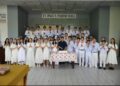
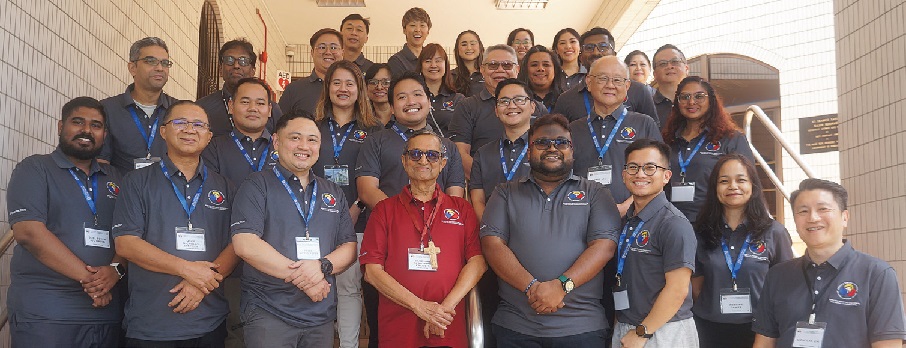
BUILDING communion — not merely creating content — was the central message that resonated throughout the annual meeting of the Episcopal Regional Commission for Social Communications (ERCSC), as Church communicators from Malaysia, Singapore and Brunei gathered from Jun 15–19 to reflect on the Church’s mission in an increasingly digital world.
The meeting opened with dinner on Monday, Jun 15, during which Cardinal William Goh met the delegates, offering his greetings and hospitality.
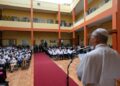
The next day, Cardinal Sebastian Francis, President of the ERCSC, reminded delegates that Church communications is fundamentally a ministry rooted in communion. Citing Gaudium et Spes, he challenged participants to reflect on why the Church communicates, stressing that its purpose is not simply to disseminate information but to foster relationships, build trust and lead people to Christ.
“The role of Church communications is mission-driven,” he said, explaining that authentic communication requires listening and dialogue rather than mere broadcasting. Drawing a distinction between corporate and ecclesial communications, he noted that while organisations seek to build trust, reputation and organisational culture, the Church communicates to bear witness to Christ, strengthen communion, and shepherd the faithful in truth.
He concluded by reminding delegates that communications is a ministry that fulfils the Church’s mandate to “go forth” and proclaim the Gospel.
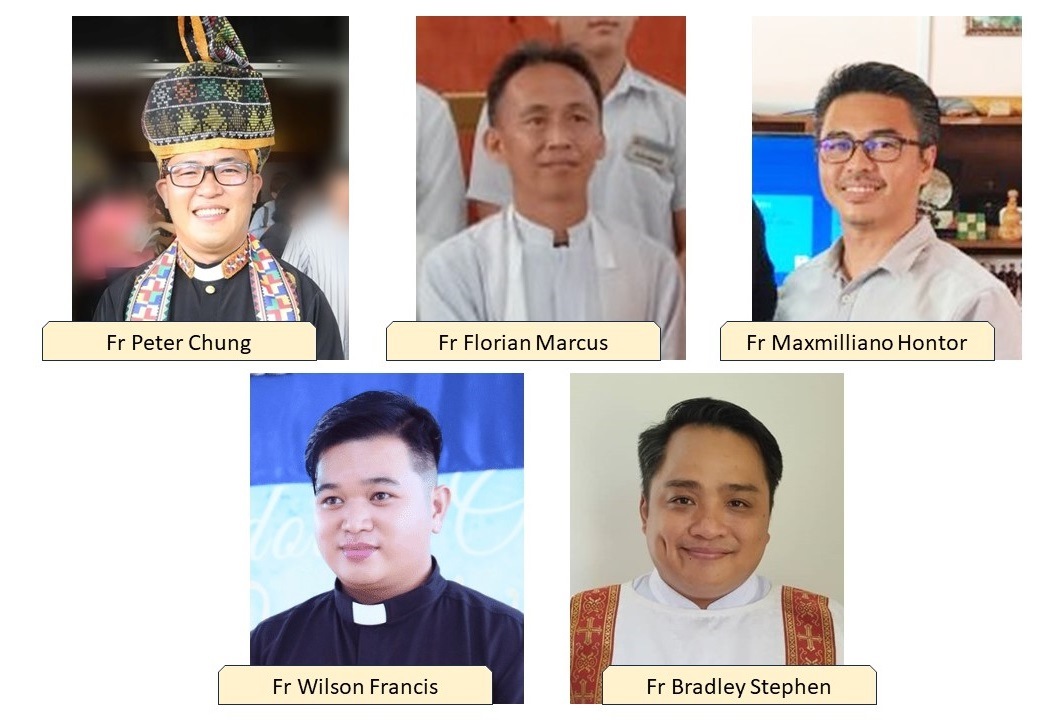
Cardinal Sebastian also thanked Sandriana Anne of the Archdiocese of Kota Kinabalu for serving as secretary before announcing the appointment of Alexander Jacklya from Brunei to the role. Looking ahead to the Malaysia Pastoral Convention in Sibu this September, he highlighted the unity of the nine bishops of Malaysia in speaking and working with one voice. He also expressed appreciation to Cardinal William Goh and the Archdiocese of Singapore for their hospitality, recalling his formative years in Singapore during the 1960s.
AI must serve human dignity
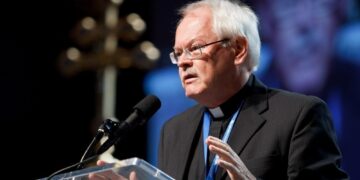
The opening keynote was delivered by Fr Terence Kesavan, seminary formator and Head of Academics in Singapore, who also serves in several Church advisory and formation roles related to digital communications and catechesis.
Drawing on Pope Leo XIV’s Magnifica Humanitas and the 2026 World Communications Day message, Fr Terence explored the growing influence of artificial intelligence and its implications for Church communications. He urged communicators to approach AI with prudence and discernment, ensuring that technological tools always uphold human dignity and remain at the service of evangelisation rather than replacing authentic human encounter.
The session was followed by a “Conversation in the Spirit” facilitated by Gerald Lee, assistant to the Archbishop (Pastoral Alignment), allowing delegates to prayerfully discern the opportunities and challenges AI presents for the Church’s communications mission.
Shared challenges, shared mission
Reports from diocesan communications teams, Catholic media and SIGNIS highlighted common challenges including limited manpower, funding constraints and time pressures. Despite this, delegates expressed growing willingness to collaborate, particularly in preparing communications for the Malaysia Pastoral Convention in Sibu (Sep 9–13).
Towards an integrated communications ministry
A key formation session was led by Daniel Yong, director of Media Relations for the Archdiocese of Singapore, who challenged participants to rethink communications, not as isolated content production but as an integrated pastoral ecosystem.
He said many Church communications efforts remain fragmented, with inconsistent messaging and outdated information across platforms. To address this, he proposed developing a “single source of truth,” supported by coordinated planning, regular content review and audience-focused messaging.
Daniel also introduced a practical communications framework beginning with defining objectives, identifying audiences, crafting a clear core message, selecting appropriate channels and setting measurable indicators of success.
Before joining Church communications, Daniel worked as executive director of Global Media at Marina Bay Sands and spent 14 years as a broadcast journalist and television producer with CNBC.
Telling stories that evangelise
The focus then shifted to storytelling through video, led by Linus Koh, founder and creative director of St Max Story & Media.
A father of six and award-winning filmma-ker, Linus has spent over two decades in media evangelisation and has produced more than a thousand Catholic videos in the past seven years.
Linus reminded delegates that the communicator’s primary responsibility is to foster unity. He encouraged Church communicators to “go where the people are,” rather than expecting audiences to come to the Church.
He urged dioceses to identify and train young people as missionary storytellers and to uncover the many hidden stories of faith within local communities.
Planning for regional collaboration
ERCSC president Daniel Roy outlined key regional initiatives, including preparations for the FABC SOCCOM meeting. Dioceses were assigned responsibilities for communications materials for World Communications Day 2027, while a bilingual countdown campaign for the Malaysia Pastoral Convention will begin in July.
Upcoming initiatives include an AI webinar by the Dicastery for Communication, media literacy training and the FABC SOCCOM meeting in October.
Reaching a new generation
The final session featured the To Be Honest podcast team, who shared strategies for engaging younger audiences through authentic storytelling, trend awareness and multi-format content. They highlighted millennials’ preference for relatability and Gen Z’s demand for authenticity.
Delegates also developed communications strategies for World Youth Day in South Korea.
The meeting concluded with a podcast recording featuring Cardinal Sebastian Francis and other leaders reflecting on Dignitas Humanitas and its implications for Church communications.
The next ERCSC annual meeting will be held in Sandakan from Jun 21–25, 2027. – Herald Malaysia